





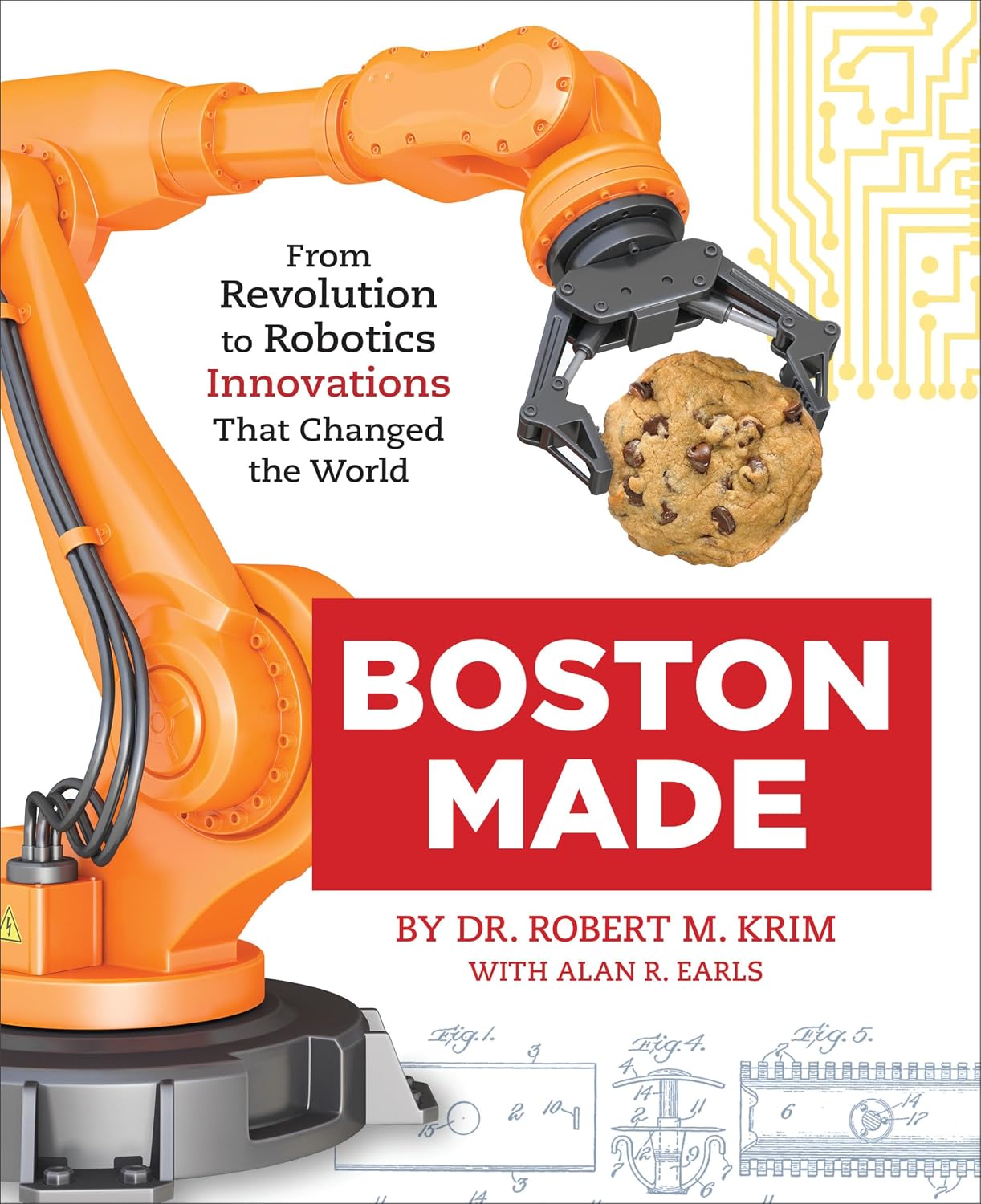
Featured Book: Boston Made: From Revolution to Robotics
By Dr. Robert M. Krim with Alan S. Earls

Boston's abolitionists turned newspapers, lecture halls, churches, and streets into arenas in the national struggle over slavery.

Boston's merchants and sailors connected New England to an Atlantic economy that brought wealth, risk, exploitation, and global influence.


In March 1776, American forces fortified Dorchester Heights and made the British position in Boston untenable.

George Washington arrived outside Boston in 1775 to turn a collection of provincial forces into an army capable of confronting Britain.

The Battle of Bunker Hill proved that colonial forces could stand against British regulars, even in defeat.

On April 18, 1775, lanterns, riders, church towers, boats, and alarm networks carried the news that British troops were moving.

Months before Lexington and Concord, a British move to secure gunpowder triggered a massive militia mobilization across Massachusetts.

Britain answered the Tea Party by closing Boston's port and tightening control over Massachusetts—measures that helped unite the colonies.

On December 16, 1773, protesters destroyed East India Company tea in Boston Harbor and transformed a tax dispute into an imperial showdown.


Paul Revere was far more than a rider: he was a silversmith, engraver, businessman, messenger, networker, and master of revolutionary communication.



Twelve brands, one front door. Find the right Boston Made site in a couple of taps.
Open DiscoverEvery story from every Boston Made site lands in the Reader within a minute of going live.
Open ReadShop the Boston Made store, PUPWEAR gear for dogs and the Boston Made Pets shop.
Open ShopFollow the Where's Taylor? trail across the network or play the Boston Made Arcade. Fan-made and just for fun.
Open PlayOne free Boston Made Account works on every site. Boston Made+ is the optional paid membership for members-only stories, tools and perks.
Open CommunityWebsites, software and business services, plus the company behind the network and investor information.
Open Work with us