Connect with us

Weather where you are

Choose your location or share it once. We round your coordinates to about 1 km before sending them to our site and MET Norway for your forecast. Your choice stays in this browser tab.

Stay close to Boston

Get new Boston stories and Boston Made company updates, delivered as browser notifications.

Choose Enable notifications, then allow notifications in your browser.

Your browser subscription is stored by Boston Made and delivered through your browser’s push service. You can turn notifications off in your browser’s site settings. Privacy policy

Boston Made Eats

How TGI Fridays Shrank From 13 Massachusetts Restaurants to Three

TGI Fridays had 13 Massachusetts restaurants in early 2024. Three remain, in Everett, Methuen and Stoughton. What closed, what replaced them, what is next.

Published

on

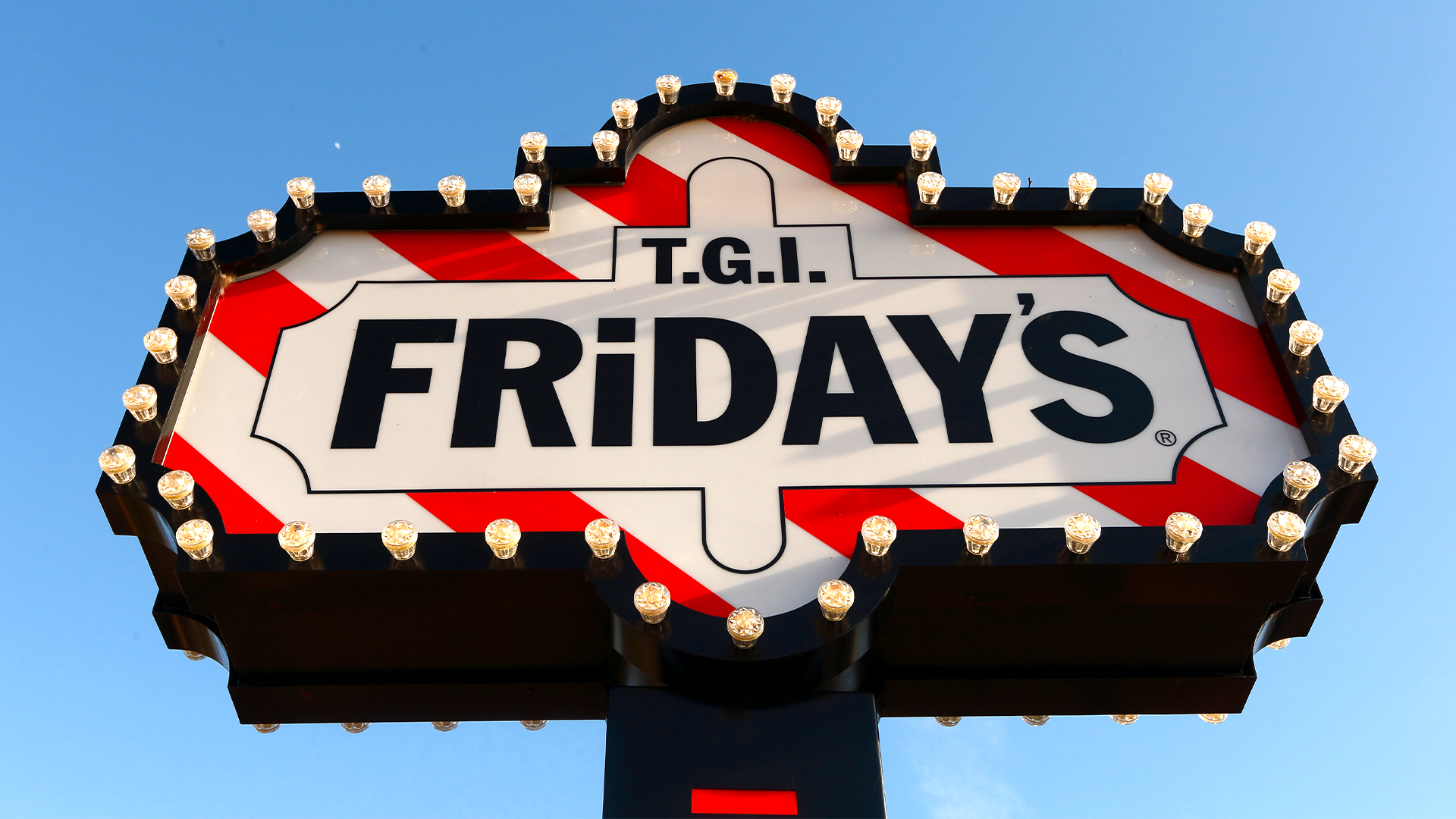
Classic TGI Fridays marquee sign with red-and-white stripes

TGI Fridays began 2024 with 13 restaurants in Massachusetts; since the Millbury location closed in July 2026, the chain’s website lists three, in Everett, Methuen and Stoughton, and the brand carries on as franchised restaurants even as a bankruptcy court winds down its former corporate parent.

Millbury was the latest to go

The TGI Fridays at The Shops at Blackstone Valley in Millbury announced its closing in a Facebook post on Tuesday, July 28, 2026, according to Patch and the Worcester Telegram & Gazette. The restaurant at 70 Worcester-Providence Turnpike was one of the early tenants of the open-air plaza, which opened in 2003, the Telegram reported. A sign in the window pointed diners to the chain’s other Massachusetts restaurants.

Advertisement

Advertisement

Both outlets reported that the company’s website had dropped Millbury and listed only Everett, Methuen and Stoughton in the state. A third-party store tracker, Mogean, counted the same three Massachusetts locations among 69 in the United States as of Oct. 11, 2026. The company has not announced any new restaurant for Massachusetts.

How 13 became three

The contraction came in waves. On Jan. 3, 2024, the Dallas-based company said it was closing 36 corporate restaurants nationwide that it described as “underperforming.” Six were in Massachusetts: Dedham, Danvers, Marlborough, Mansfield, North Attleborough and Seekonk, according to CBS Boston and Boston 25 News. Both outlets listed seven Massachusetts restaurants still open afterward: Boston, Braintree, Everett, Methuen, Millbury, North Dartmouth and Stoughton.

The same day, the company said it was selling eight corporate-owned Northeast restaurants to former chief executive Ray Blanchette, who would run them as a franchisee. Six were in Massachusetts, in Braintree, Boston’s Brigham Circle, Everett, Methuen, Millbury and Stoughton, and two were in Concord and Manchester, New Hampshire, Nation’s Restaurant News reported.

The North Dartmouth restaurant on State Road closed effective immediately on Oct. 24, 2024, the Fall River Reporter wrote, nine days before the corporate parent filed for bankruptcy. Braintree, at 60 Forbes Road, closed in the first week of January 2025, according to Patch and Boston Restaurant Talk. In a report republished by NBC Boston on Feb. 26, 2026, Boston Restaurant Talk said the chain’s only Boston restaurant, at 1626 Tremont St. in Mission Hill, had shut down and been removed from the company’s location list. Millbury followed five months later.

The company’s amended franchise disclosure document, filed in September and summarized by Fast Company, recorded one franchised closure in Massachusetts in 2025 and two so far in 2026. The filing does not name towns, but the timing lines up with Braintree, Boston and Millbury.

Advertisement

What is filling the empty buildings

Several of the former restaurants sit on prominent pads beside shopping centers, and at least two have been re-leased to regional chains. Tavern in the Square took over the Braintree building at 60 Forbes Road, across from South Shore Plaza, Patch and The Patriot Ledger reported; the Ledger said the new restaurant added a 1,200-square-foot patio. In Mansfield, Burtons Grill & Bar leased the former Fridays space at Mansfield Crossing, according to Boston Restaurant Talk and What Now Boston.

At Blackstone Valley, the exit comes while the plaza is adding tenants. Patch reported that nearly 35,000 square feet of new retail space was under development there, with Shake Shack, Sweetgreen and LaserAway among the announced tenants. No replacement tenant for the restaurant had been reported as of late October.

The bankruptcy is ending; the brand is not

None of this amounts to a total shutdown. TGI Friday’s Inc., the corporate entity that owned and ran company restaurants, filed for Chapter 11 on Nov. 2, 2024, in the U.S. Bankruptcy Court for the Northern District of Texas. Franchise-owned restaurants were not part of the case. Judge Stacey G. Jernigan approved a consensual liquidation plan at a hearing on July 23, 2026, Bloomberg Law reported; Nation’s Restaurant News dated the confirmation July 24. The plan distributes the estate’s remaining assets to creditors and winds down the old entity, and court documents show it calls for no further restaurant closures, NRN reported.

Advertisement

The brand now operates under Sugarloaf Hospitality, the investment group led by Blanchette, who returned as chief executive in 2025. Every U.S. restaurant is franchised, according to Fast Company and FSR magazine. Blanchette told NRN that Sugarloaf’s ownership is “independent of, and unaffected by, the parties in bankruptcy.”

The three Massachusetts survivors were all among the restaurants sold to Blanchette in 2024. FSR reported in January that the Methuen restaurant served as the test site for a holiday decor campaign later rolled out across the system.

The national picture

Massachusetts tracks the national decline closely. The chain peaked at 601 U.S. restaurants in 2008, according to Technomic data cited by the Associated Press; FSR also put the peak above 600. Franchise disclosure figures reported by Fast Company show 119 U.S. restaurants at the start of 2025 and 80 at the end of that year. A company spokesperson put the count at 76 in July 2026, the September filing showed 71, and the company’s website listed 69 franchised U.S. restaurants in October, FSR reported. The sources do not reconcile the 71 and 69 figures.

The September filing projected no U.S. openings in 2026. On Sept. 29, the company announced its first domestic development deal in more than a decade, with Bliss Bites LLC, for five restaurants in New York State over three years. Chief operating officer Ashley Kirkley told FSR the company expects about 20 U.S. openings over the next two to three years. None has been announced for Massachusetts.

The Newsroom Take

Going from 13 restaurants to three is a 77 percent drop in under three years, close to the chain’s national slide from 269 U.S. restaurants at the end of 2023 to 69 today. The Massachusetts closures arrived in clusters tied to corporate events: the January 2024 pruning of company stores, the abrupt closings around the 2024 bankruptcy filing, and then franchise closures in Boston and Millbury. The liquidation plan removes one risk, since it calls for no further closures, but it does not remove the ordinary one: a franchise operator deciding that a lease no longer pays. That is how the two most recent Massachusetts closures happened. The quick re-leasing in Braintree and Mansfield also shows that the big boxes remain valuable to landlords, which means a weak Fridays lease can be replaced. For now, Massachusetts is a holdout market, not a growth market, for the brand.

What it means for you

  • Check the chain’s online locator before driving to a TGI Fridays. Everett, Methuen and Stoughton are the only Massachusetts listings, and recent closures were announced on local Facebook pages with little notice.
  • When the corporate parent filed in 2024, the judge allowed the gift card program to continue; court papers showed about $49.7 million in outstanding cards, Fortune reported. Anyone holding an older card is better off using it at an open restaurant than waiting.
  • Workers at the remaining restaurants are employed by franchise operators, not by the liquidating corporate entity. Anyone with a claim against TGI Friday’s Inc. can follow the case, No. 24-80069 in the Northern District of Texas.
  • Shoppers near South Shore Plaza, Mansfield Crossing and Blackstone Valley should expect former Fridays pads to keep turning over to regional restaurant chains.

Test yourself

1. How many TGI Fridays restaurants were operating in Massachusetts at the start of 2024?

Answer: Thirteen; six closed in January 2024, leaving seven, according to CBS Boston and Boston 25 News.

2. Which three Massachusetts locations does the chain still list?

Answer: Everett, Methuen and Stoughton, after Millbury closed in July 2026.

3. What does the liquidation plan confirmed in July 2026 actually do?

Answer: It distributes the remaining assets of the old corporate entity, TGI Friday’s Inc., to creditors and winds it down, while franchised restaurants keep operating under Sugarloaf.

4. What replaced the former TGI Fridays in Braintree?

Answer: Tavern in the Square took over the building at 60 Forbes Road, across from South Shore Plaza.

Discussion

  1. Did the 2024 sale of six Massachusetts restaurants to a former chief executive slow the state’s decline, or only delay it?
  2. Should restaurant chains give the public and employees more notice before closing a location?
  3. What should replace large casual-dining buildings at suburban plazas: new restaurants, or other uses entirely?

From the network

  • Boston Made Reader — every story from the family in one free reading app.
  • BOSSTOX — markets, capital structures and corporate restructurings, explained.
  • Boston Made App — the news wire for Boston politics, business and city life.

Sources

Boston Made Reader Boston Made family Boston Made Reader Free e-reader app for long reads, wires and books. Visit site →

Advertisement

Latest stories

View all

Boston Made Eats

Thanksgiving 2026: Plentiful Turkeys, Cheaper Eggs and Pricier Beef

Turkeys are plentiful but pricier, eggs are down sharply and beef keeps climbing. What New England’s Thanksgiving table will cost in 2026.

Published

on

A roasted turkey on a farmhouse table set for Thanksgiving with pies, squash, cranberries and brown eggs in autumn window light

With Thanksgiving a little more than two weeks away, the numbers behind the New England holiday table are coming into focus, and they tell a mixed story. Turkeys are plentiful, eggs have fallen sharply from last year’s record highs, and grocery inflation overall has cooled to a moderate pace. But the bird itself costs more than it did a year ago, beef keeps climbing, and eating out continues to rise faster than cooking at home.

For Boston-area households deciding between a home-cooked feast, a farm-raised bird and a restaurant reservation, the latest federal forecasts and industry data offer a practical guide to where the money goes this year.

Advertisement

Advertisement

Plenty of birds, but not cheaper ones

The turkey supply has recovered from a difficult 2025. According to Texas A&M AgriLife Extension, in an analysis published Nov. 6 by High Plains Journal, turkey production has rebounded after falling more than 8% last year. The number of birds headed to market is up about 3%, and heavier average weights push total pounds up nearly 6%. AgriLife economist David Anderson summed it up simply: “That tells me there are plenty of turkeys.”

Plenty, however, does not mean cheap. Wholesale whole turkeys averaged $1.80 per pound in late October, compared with $1.69 in the same week of 2025, a year when wholesale prices had already jumped roughly 70% from about 99 cents. The national average retail price for a conventional frozen whole turkey in early November was $1.26 per pound, up from $1.03 a year earlier, according to the same analysis.

The U.S. Department of Agriculture’s October World Agricultural Supply and Demand Estimates point the same direction. The agency put its fourth-quarter wholesale price for frozen whole hens at 175 cents per pound, slightly above 172.2 cents a year earlier, and raised its 2026 turkey production forecast to 5.134 billion pounds. For 2027, USDA expects wholesale turkey prices to ease to about 145 cents per pound.

Avian influenza remains a background risk. A handful of highly pathogenic outbreaks have been reported in recent weeks, but Anderson said they are not enough to significantly affect holiday supplies. More grocery stores were featuring turkeys in late October than at the same point last year, with roughly 2,500 stores nationwide advertising frozen whole birds, and he expects more promotions as the holiday nears.

Eggs are the bright spot; beef is the budget buster

Bakers have reason to cheer. USDA’s Economic Research Service, in its October Food Price Outlook, forecasts retail egg prices will fall about 29.3% in 2026 after the bird-flu-driven spikes of the past two years. The WASDE report puts fourth-quarter wholesale eggs at 120 cents a dozen, down from 192 cents a year earlier.

Advertisement

Beef is a different story. The same outlook projects retail beef and veal prices will rise about 8.7% this year. A University of Illinois farmdoc daily analysis from October attributes the climb to a shrinking cattle herd, with beef cow inventory around 28.5 million head in July, down 1% from a year earlier, alongside unusually strong consumer demand. Rebuilding herds takes years, so relief is not imminent. Families planning a prime rib or brisket alongside the turkey should expect a noticeably bigger bill.

Other categories that show up on holiday menus are also rising faster than average: the ERS forecasts fresh vegetables up 5.8% and sugar and sweets up 6.5% for the year, while dairy is roughly flat and poultry overall is up about 1.2%.

Cooking at home versus dining out

The broader picture favors the home cook. ERS forecasts food-at-home prices will rise about 2.3% in 2026, while food-away-from-home prices are projected to climb about 3.5%. Since December 2019, grocery prices are up about 33% and restaurant prices about 38%, according to the farmdoc daily analysis of federal price data.

Advertisement

That gap matters in Greater Boston, where many restaurants offer prix fixe Thanksgiving dinners or take-home feasts. Those packages bundle labor, rent and service costs that have been rising faster than ingredients, and they tend to sell out early. For some households, the convenience is worth it; for others, the numbers argue for a home kitchen.

The local-bird option

Massachusetts also has a network of farms raising fresh turkeys for the holiday. The state Department of Agricultural Resources maintains a turkey farm locator through its “Massachusetts Grown and Fresher” program, and notes that buying directly from the grower lets shoppers ask exactly how and when a bird was raised and processed. Farms such as Stillman Quality Meats in Hardwick take deposits on fresh holiday turkeys, with pickup at the farm and at Boston-area farmers markets, and warn that late cancellations are charged in full.

Local, pasture-raised birds generally cost well above the supermarket frozen average, and supplies are limited by what each farm raised this season. Shoppers who want one should reserve now rather than closer to the holiday.

The Newsroom Take

The Newsroom reads this year’s data as a story of a recovered supply chain that has not yet translated into lower prices. Turkey producers had a hard 2025, and the industry is rebuilding margins at the same time feed costs are falling. Consumers should therefore expect retailers, not farmers, to decide how cheap the holiday bird gets, which makes loss-leader promotions in the final two weeks the most important variable for shoppers.

The wider gap between grocery and restaurant inflation is the more lasting trend for the region’s dining scene. Boston restaurants have spent much of this fall announcing closures, and holiday packages are one of the few high-margin opportunities left on the calendar. Diners who value a particular neighborhood spot may find that a Thanksgiving pie order or a gift card does more to keep it open than a single dinner out.

What it means for you

  • Do not lock in a supermarket turkey too early; promotions typically deepen in the last two weeks before Thanksgiving.
  • If you want a fresh, locally raised bird, reserve now and check cancellation terms before paying a deposit.
  • Budget extra for beef roasts and fresh produce, which are rising faster than the overall grocery bill.
  • Eggs and dairy are among the cheapest parts of the meal this year, so pies and baked sides are relatively good value.
  • Comparing a restaurant package with a home-cooked meal? Factor in that dining-out prices are rising about a point faster than groceries.

Test yourself

What was the national average retail price of a conventional frozen whole turkey in early November?

Answer: About $1.26 per pound, up from $1.03 a year earlier, according to Texas A&M AgriLife Extension.

Which holiday staple does USDA expect to fall roughly 29% in price this year?

Answer: Eggs. USDA’s October Food Price Outlook forecasts retail egg prices down about 29.3% in 2026.

Are restaurant prices or grocery prices rising faster in 2026?

Answer: Restaurant prices, forecast to rise about 3.5%, compared with about 2.3% for food at home.

Where can Massachusetts shoppers find a local turkey farm?

Answer: Through the state Department of Agricultural Resources’ turkey farm locator, part of the Massachusetts Grown and Fresher program.

Discussion

  1. Will you buy a supermarket turkey, a local farm bird, or skip turkey altogether this year?
  2. Is a restaurant Thanksgiving package worth the premium over cooking at home?
  3. Which Boston-area farm or market do you count on for holiday ingredients?

PupWear (.org) Boston Made family PupWear (.org) Dog apparel and gear inspired by Boston the GoldenDoodle. Visit site →

Advertisement

Continue Reading

Boston Made Eats

Charlie’s Kitchen Won’t Reopen: Harvard Square Loses Its 75-Year-Old Burger Landmark

A January dishwasher flood caused $2M in damage and the building has sold. Harvard Square’s 1951 burger landmark is closed for good.

Published

on

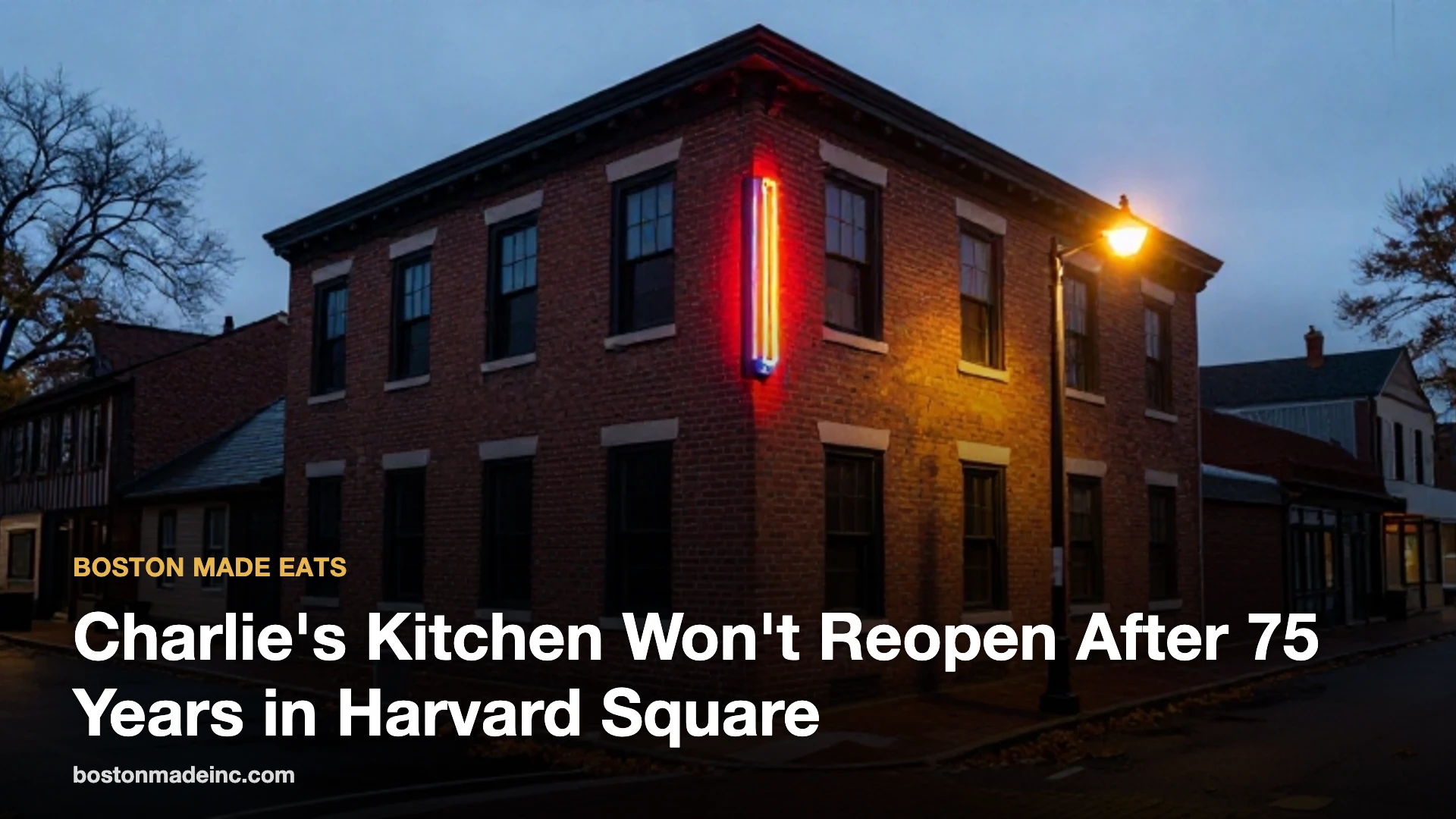
Illustration of an old brick tavern building at dusk with dark windows on a quiet college-town street

Reported from public sources as of Sunday, Nov. 8, 2026.

Charlie’s Kitchen, the Eliot Street burger joint and bar that fed Harvard Square for 75 years, will not reopen. Owner and head chef David Toraji Oshima announced the decision on Friday, Nov. 6, ending months of uncertainty that began when a malfunctioning dishwasher flooded the building last winter. The Boston Globe, NBC Boston and Boston Restaurant Talk all reported the closure, and the Globe reported that the building at 10 Eliot Street has been sold to a buyer with no plans to bring the restaurant back.

Advertisement

Advertisement

For generations of students, musicians, late-shift workers and families, Charlie’s was the cheap, loud, unpretentious counterweight to an increasingly polished Harvard Square. Its loss lands in the same season that two other Cambridge institutions, Cambridge Common and the Lizard Lounge, announced they will close next spring, and it says a good deal about how fragile even a beloved independent restaurant can be when disaster meets an expensive building.

What happened on Eliot Street

The trouble began in January, when the timing mechanism on a dishwasher failed and water poured through the building, according to the Globe. The restaurant closed temporarily, and damage was eventually estimated at more than $2 million, a figure the Globe, NBC Boston and Boston Restaurant Talk all cite.

Oshima told the Globe that the first- and second-floor ceilings were destroyed, the wiring was waterlogged, walls were crumbling and the building had no running water. He said repair costs had become unsustainable. The landlord and Oshima received an insurance advance, but a full settlement had not arrived, according to the paper.

By late September, the signs pointed toward an ending. The Globe reported then that Charlie’s was selling off furniture, signs and dinnerware, and about a month before Friday’s announcement Oshima held an auction of memorabilia. A second auction of what remains, including restored neon signs, matchbooks with the original logo, pieces of the interior mural and the original sign, will be scheduled later, with updates on the restaurant’s Instagram account.

Oshima told the Globe he had offered to buy the building himself but was outbid. He did not name the buyer. “I didn’t want to sell,” he told the paper.

Advertisement

Seventy-five years of double cheeseburgers

Charlie’s opened in 1951, and public histories credit its founding to Charlie Lambrose. Over the decades it became known for its double cheeseburger, its bars on two floors, a seasonal backyard beer garden and a jukebox that Boston Phoenix readers repeatedly voted the city’s best. In its final announcement, the restaurant described its double cheeseburger as Boston’s most famous, a claim regulars were never inclined to dispute.

Oshima, a Somerville native who previously cooked at Yume Wo Katare in Cambridge and opened The Cornerstone in Somerville, took over ownership and management recently. NBC Boston and Boston Restaurant Talk date the handover to 2024; the Globe reports it as January 2025. Either way, he had only a short run before the flood, during which he updated the menu and renovated the space.

The closure also affected roughly 30 staff members. A GoFundMe raised $25,000 for them, the Globe reported, and while many found new jobs, some returned to their home countries.

Advertisement

Confirmed facts and open questions

Confirmed by multiple outlets: the restaurant is permanently closed; the January dishwasher failure caused more than $2 million in damage; the business opened in 1951; Oshima made the announcement on Nov. 6.

Reported by one outlet so far: the Globe is the main source for the sale of the building, the insurance details and Oshima’s account of his offer to buy it. The buyer’s identity and plans for 10 Eliot Street have not been made public.

Possible next chapter: Oshima told the Globe he is not finished with the restaurant business. His ideal, he said, would be to take over the Cambridge Common space on Massachusetts Avenue after that restaurant closes and bring Charlie’s Kitchen there. No deal has been reported, and readers should treat it as an aspiration rather than a plan.

The Newsroom Take

The newsroom reads this as a disaster story first and a real estate story second. A flood of this scale would test any small operator. Insurance can take months to settle, and a restaurant with no revenue cannot carry payroll, rent and repairs while it waits. Few independents have the cash to bridge that gap.

The sale of the building is what turned a long closure into a permanent one. In a neighborhood where commercial property is scarce and valuable, an old four-story building needing major work is worth more to some buyers as a blank slate than as a home for a dive bar. That is not villainy; it is the economics of Harvard Square, and it is the same pressure that has reshaped the Square for two decades.

What the city loses is a particular kind of place: inexpensive, open late, welcoming to students and long-time residents alike. Those rooms are increasingly rare in Cambridge and Boston, and once they close, they are almost never replaced at the same price point. If Oshima does manage to revive the name a few blocks away, it would be one of the more hopeful turns in a difficult year for local dining. The newsroom will watch for any filings or announcements about the Cambridge Common space.

What it means for you

  • Want a piece of history? Follow the restaurant’s Instagram for the date of the second memorabilia auction.
  • Holding a gift card? Contact the business directly through its social channels; closed restaurants are rarely able to honor cards for long.
  • Love cheap eats? Support the remaining affordable, late-night spots on weeknights, when independents are most likely to lose money.
  • Run a restaurant? Review your business-interruption coverage now. This closure shows how long a claim can take to settle.

Test yourself

What caused Charlie’s Kitchen to close in January?

Answer: A dishwasher’s timing mechanism failed and flooded the building.

How much damage did the flood cause?

Answer: More than $2 million, according to several outlets.

What year did Charlie’s Kitchen open?

Answer: 1951.

Which space has the owner said he would ideally like to take over?

Answer: Cambridge Common on Massachusetts Avenue, which is set to close next spring.

Discussion

  1. Should a beloved restaurant’s name and recipes survive a move to a new address, or is the building part of what made it special?
  2. What, if anything, should Cambridge do to keep affordable, late-night places in Harvard Square?
  3. What is your favorite Charlie’s Kitchen memory?

BOSSTOX Boston Made family BOSSTOX AI-infrastructure news and research covering power, cooling, chips and capital. Visit site →

Advertisement

Continue Reading

Boston Made Eats

Banyan Won’t Reopen and Wahlburgers Leaves Fenway: A Week of Goodbyes in Boston Dining

Banyan Bar + Refuge won’t reopen after its 2025 fire, Wahlburgers has left Fenway, and more Boston-area closings show the cost of running a restaurant.

Published

on

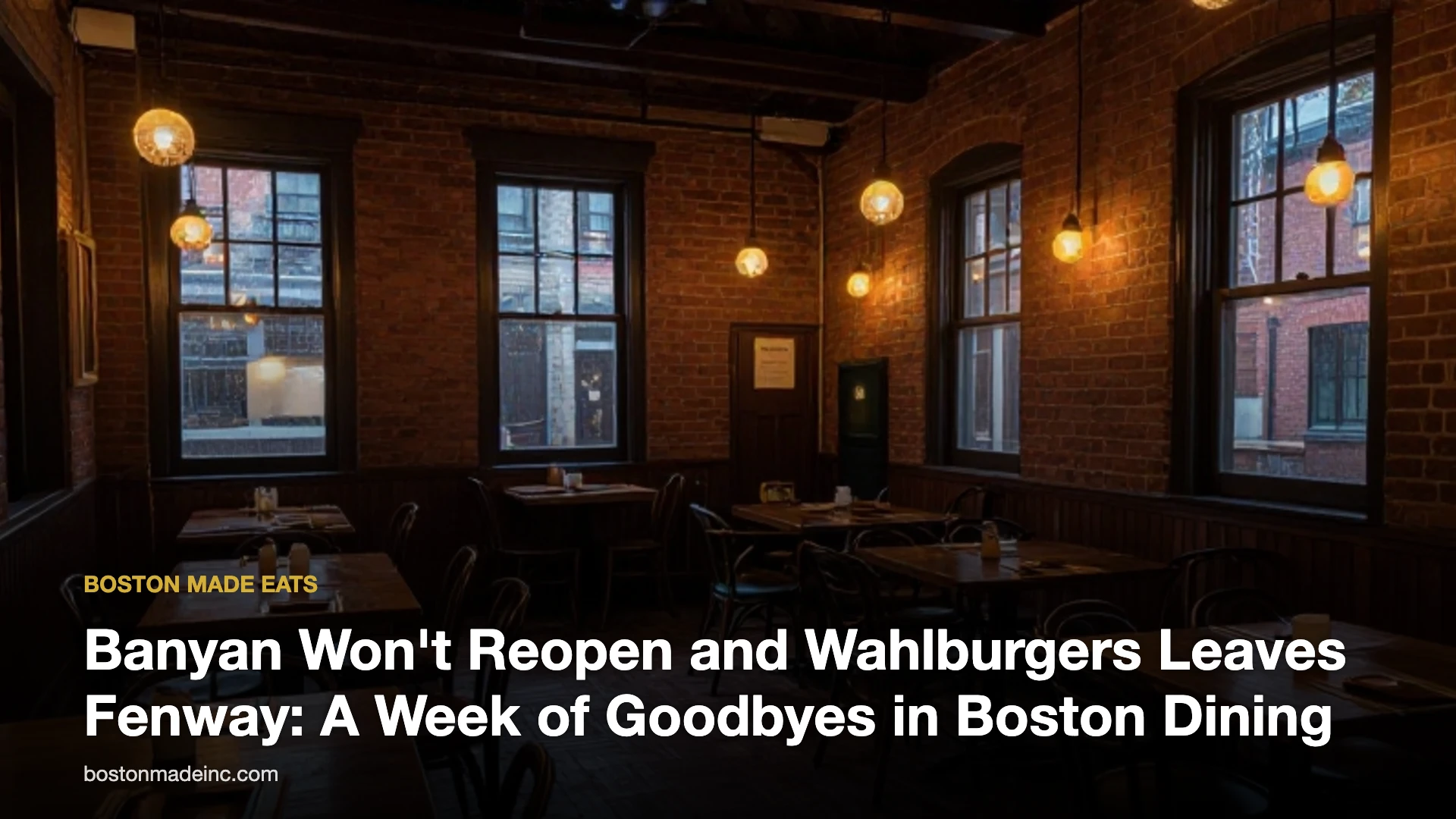
Empty gastropub dining room with chairs stacked on wooden tables under warm pendant lights at dusk

Reported from public sources as of Thursday, Nov. 5, 2026.

Boston’s restaurant calendar is crowded with openings this month, but the first week of November has been just as notable for goodbyes. A South End gastropub that spent more than a year trying to come back from a kitchen fire has decided not to reopen. The last standalone Wahlburgers in Greater Boston has left Fenway. And a pair of suburban restaurants in Burlington have quietly gone dark. Taken together, the closures say a good deal about what it costs to run a dining room in and around the city right now.

Advertisement

Advertisement

Banyan Bar + Refuge will not return

Banyan Bar + Refuge, the Asian-inspired gastropub at 553 Tremont Street in the South End, announced on social media this week that it will not reopen. Both Boston.com and Boston Restaurant Talk reported the decision, which ends a run of roughly a decade on one of the neighborhood’s busiest dining corridors.

The restaurant had been closed since a kitchen fire in the summer of 2025, which struck about a month before its 10th anniversary. What was first expected to be a closure of a few weeks stretched on as the damage proved more extensive than anticipated. Shortly after the fire, the restaurant was also broken into, with electronics stolen and registers damaged, according to Boston.com, which noted that the forced entry by firefighters had left the door unable to lock properly.

Banyan belongs to the Gallows Group, the hospitality company founded by Rebecca Roth Gullo that also runs Blackbird Doughnuts and Sally’s Sandwiches. In announcing the closure, the group said it would put its energy into expanding Blackbird. Gullo told followers she was “enormously proud” of what the Banyan team had built, according to Boston.com. Boston Restaurant Talk had reported in October that the business was being sold. Neither outlet reported what will happen to the Tremont Street space.

Wahlburgers leaves Fenway after about 11 years

A few blocks and a world away from the South End, Wahlburgers closed its restaurant at 132 Brookline Avenue in the Fenway on Saturday, Oct. 31. The company said on social media that the location was closing because its lease was ending, and both Boston.com and NBC Boston confirmed the closure. The company said it is “actively pursuing a new home in the Boston area,” per NBC Boston, but gave no timeline.

The Fenway departure caps a difficult stretch for the burger chain’s home market. The original Hingham restaurant, opened in 2011 by Paul Wahlberg and his brothers Mark and Donnie, closed in late September. The MarketStreet Lynnfield location closed earlier, and the South Bay outlet in Dorchester shut several years ago. According to Boston.com, the remaining Massachusetts locations are two at Logan Airport, plus Plainville and Springfield. Nationally, the company says it opened 10 restaurants this year and plans more in 2027, so the Boston pullback reflects leases and local economics rather than a brand in retreat.

Advertisement

Quieter closings in the suburbs and a JP landmark under pressure

Two other items come from Boston Restaurant Talk alone and had not been independently confirmed by a second outlet when this was published, so they should be read as reports rather than settled fact.

The blog reported that Temazcal Tequila Cantina and Jack’s Coal Fired Pizza at 2 Wall Street in Burlington have both closed. It said Temazcal had been removed from its company’s locations page and a phone call confirmed that Jack’s had closed. Both are run by Rebel Restaurants, which also operates Tony C’s. Temazcal locations in Dedham and Lynnfield remain open, according to the report. No reason was given.

Advertisement

The same outlet reported that the Midway Cafe, the Jamaica Plain bar and music venue at 3496 Washington Street that has operated for nearly 40 years, faces a sharp rent increase from a new building owner. Owner Jay Balerna is looking for a new operator to keep the club going, and the landlord has agreed to delay the increase for about a year, the blog said.

The Newsroom Take

The newsroom sees three different stories here, and it would be a mistake to read them as one. Banyan’s ending is the story of a disaster that never fully resolved. A fire, a break-in and a long rebuild are expensive for any independent operator, and an owner with a growing doughnut brand has to decide where scarce time and capital go. The choice to focus on Blackbird is a business decision, not a verdict on the South End.

Wahlburgers is a lease story. When a chain says a location closed because its lease was ending, it usually means the renewal terms no longer worked. Fenway rents have climbed as the neighborhood has been redeveloped, and a casual burger concept needs a lot of covers to carry a big-city lease. The company’s promise to find a new Boston home suggests it still values the market, just not at that address and price.

The Midway report is the most worrying for the city’s character, if it holds up. Neighborhood bars that double as music rooms rarely survive a doubled rent, and they are almost impossible to replace once they go. The one-year reprieve gives Jamaica Plain time to find a buyer, which is more than many venues get.

The common thread is cost: rent, insurance, repairs and labor all weigh on restaurants whose prices diners already find high. Openings get the headlines, but the closings are a more honest measure of how hard the business has become.

What it means for you

  • Use your gift cards. If you hold a Banyan or Wahlburgers Fenway gift card, contact the company directly about where it can still be redeemed.
  • Support the places you love on weeknights. Slow Tuesdays and Wednesdays are where many independents lose money.
  • Watch the Midway. If you care about local music, follow the venue’s own channels for news on a new operator.
  • Burger fans have options. The Logan Airport Wahlburgers remain open for travelers, and the chain says a new Boston site is in the works.

Test yourself

What event first closed Banyan Bar + Refuge?

Answer: A kitchen fire in the summer of 2025, about a month before its 10th anniversary.

Which brand will the Gallows Group focus on now?

Answer: Blackbird Doughnuts.

Why did the Fenway Wahlburgers close?

Answer: The company said its lease was ending.

Where are the remaining Massachusetts Wahlburgers?

Answer: Two at Logan Airport, plus Plainville and Springfield.

Discussion

  1. Should cities do more to help restaurants recover after fires and other disasters?
  2. Is a neighborhood music bar like the Midway worth public support to keep it open?
  3. Which Boston closing from the past year do you miss most, and why?

Fenway Web Boston Made family Fenway Web Web design, development and SEO studio — custom websites for small businesses, churches and local brands. Visit site →

Advertisement

Continue Reading
Advertisement

Advertisement

Ad

Advertisement

Trending

--:--·---·--°