
Connect with us

Weather where you are

Choose your location or share it once. We round your coordinates to about 1 km before sending them to our site and MET Norway for your forecast. Your choice stays in this browser tab.

Stay close to Boston

Get new Boston stories and Boston Made company updates, delivered as browser notifications.

Choose Enable notifications, then allow notifications in your browser.

Your browser subscription is stored by Boston Made and delivered through your browser’s push service. You can turn notifications off in your browser’s site settings. Privacy policy

Boston Made Stories

Countdown to 20: The Newsroom’s Ten-Day Celebration of Taylor Swift’s Debut Album

Taylor Swift’s debut album turns 20 on October 24. Starting today, the Boston Made Newsroom publishes a new story every other day, each with something to play. Here is the schedule, a live countdown and a quick quiz.


Published

on

A hand writing in a notebook with a pen

BOSTON — In ten days, one of the most important debut albums of the century turns 20. On October 24, 2006, a 16-year-old songwriter released Taylor Swift on a brand-new Nashville label, and nothing about popular music was quite the same afterward.

The Boston Made Newsroom is marking the occasion the only way we know how: thoroughly. Starting today, we are publishing a new story every other day, each with something to play, leading up to the anniversary itself on October 24.

Advertisement

Advertisement

Until Taylor Swift’s debut turns 20

—days
—hours
—minutes
—seconds

October 24, 2006 → October 24, 2026

What’s coming

  • Oct 16 — The Bluebird night. How a teenager with a guitar went from a Pennsylvania Christmas tree farm to a Nashville publishing deal and a record contract.
  • Oct 18 — Track by track. All 11 songs on the original album: who wrote them, how long they run, and what each one is about.
  • Oct 20 — Radio, Myspace and opening slots. How the album found its audience one radio station, one blog post and one arena opening set at a time.
  • Oct 22 — The Debut Bracket. Eleven songs, head-to-head, until you crown your favorite.
  • Oct 24 — Twenty years. The full anniversary story, with the stats, the masters saga and a 10-question trivia game.

The album in 60 seconds

Taylor Swift was released by Big Machine Records on October 24, 2006. It has 11 songs on the standard edition, every one of them with Taylor’s name in the writing credits; she wrote three on her own. It produced five singles, including country No. 1s “Our Song” and “Should’ve Said No,” and its 157 weeks on the Billboard 200 made it the longest-charting album released in the 2000s. The RIAA certified it 8× Platinum in September 2025.

Taylor Swift performs at Yahoo headquarters in Sunnyvale, California, in May 2007.
Taylor Swift performs at Yahoo headquarters in Sunnyvale, California, in May 2007, during the debut-album era. Photo: Brian Cantoni, CC BY 2.0, via Wikimedia Commons.

Quick quiz · 4 questions

Which debut-album song are you today?

Four questions, one song from 2006. No wrong answers, only track numbers.

Advertisement

Pick a Friday night.

Someone wronged you. You…

Your ideal soundtrack is…

Your motto:

Sources

Boston Made is not affiliated with or endorsed by Taylor Swift or her record labels. Photos are freely licensed from Wikimedia Commons and credited under each image.

How to Follow Along

The series is built to be enjoyed in order, but each story also stands on its own. If you are joining partway through, start with whatever date interests you most and work back from there. A few suggestions for getting the most out of the ten days:

  • Listen as you read. Every story comes with something to play. The debut is short enough to hear in a single sitting, and hearing a song right after reading about it changes how it lands.
  • Keep your quiz result. The song you get today makes a fun starting point for the Debut Bracket on October 22. See whether your favorite survives.
  • Bring a friend. Trivia and brackets are better with an argument. Send the series to the person who still knows every word.
  • Come back on the 24th. The anniversary story pulls the threads together, with the trivia game waiting at the end.

What the Numbers Actually Mean

The album’s statistics are impressive on their own, but they are even more striking once you know what they measure.

Advertisement

8× Platinum

A Platinum certification from the RIAA marks one million units in the United States. Eight times Platinum means eight million. Since the RIAA began counting streams toward album certifications, a unit can come from a purchase or from an equivalent amount of streaming. A certification reached nearly two decades after release shows that new listeners are still finding the record, not just the fans who bought it in 2006.

157 weeks on the Billboard 200

The Billboard 200 ranks the most popular albums in the country each week. Staying on it for 157 weeks means the record was among those albums for roughly three years. Most albums appear for a short burst around release and then fall away, so a run that long reflects steady demand rather than a single big week.

Every song co-written by the artist

Writing credits matter in the music business because they determine who shares in a song’s publishing income and, just as importantly, whose voice the song carries. For a debut artist, a writing credit on every track is a notable statement, and it set the pattern for everything that followed.

Why a Debut Is Worth Revisiting

First albums are often treated as rough drafts, the record an artist made before figuring things out. Sometimes that is true. But a debut also captures something that can never be repeated: the moment before anyone knew what would happen next. The songs were written without the weight of expectations, and listening to them now is a reminder that every long career starts with someone taking a chance on a small, specific idea.

That is what this series is really about. Twenty years on, the story of a teenager, a guitar and an unproven label is also a story about what it takes to start anything.

Questions Readers Ask

Do I need to know the album to enjoy the series?

Not at all. Each story explains its context, and every one includes something to listen to.

Is this series connected to the artist or her labels?

No. Boston Made is not affiliated with or endorsed by Taylor Swift or her record labels.

When does the countdown end?

On October 24, 2026, twenty years to the day after the album’s release.

Boston Made Foundation Boston Made family Boston Made Foundation The philanthropic arm of the Boston Made family. Visit site →

Advertisement

Latest stories

View all

Service · Nov 25, 2026Write Image Descriptions After You Choose the Actual CropAn image description should reflect the image a visitor actually receives. Writing it before the final crop can leave a description that mentions a…Read story

Boston History

Clash of Empires: How a Global War Changed Boston Forever

The Seven Years’ War stretched from North America to Europe, the Caribbean, Africa, and Asia—and its aftermath pushed Boston toward revolution.

Published

on

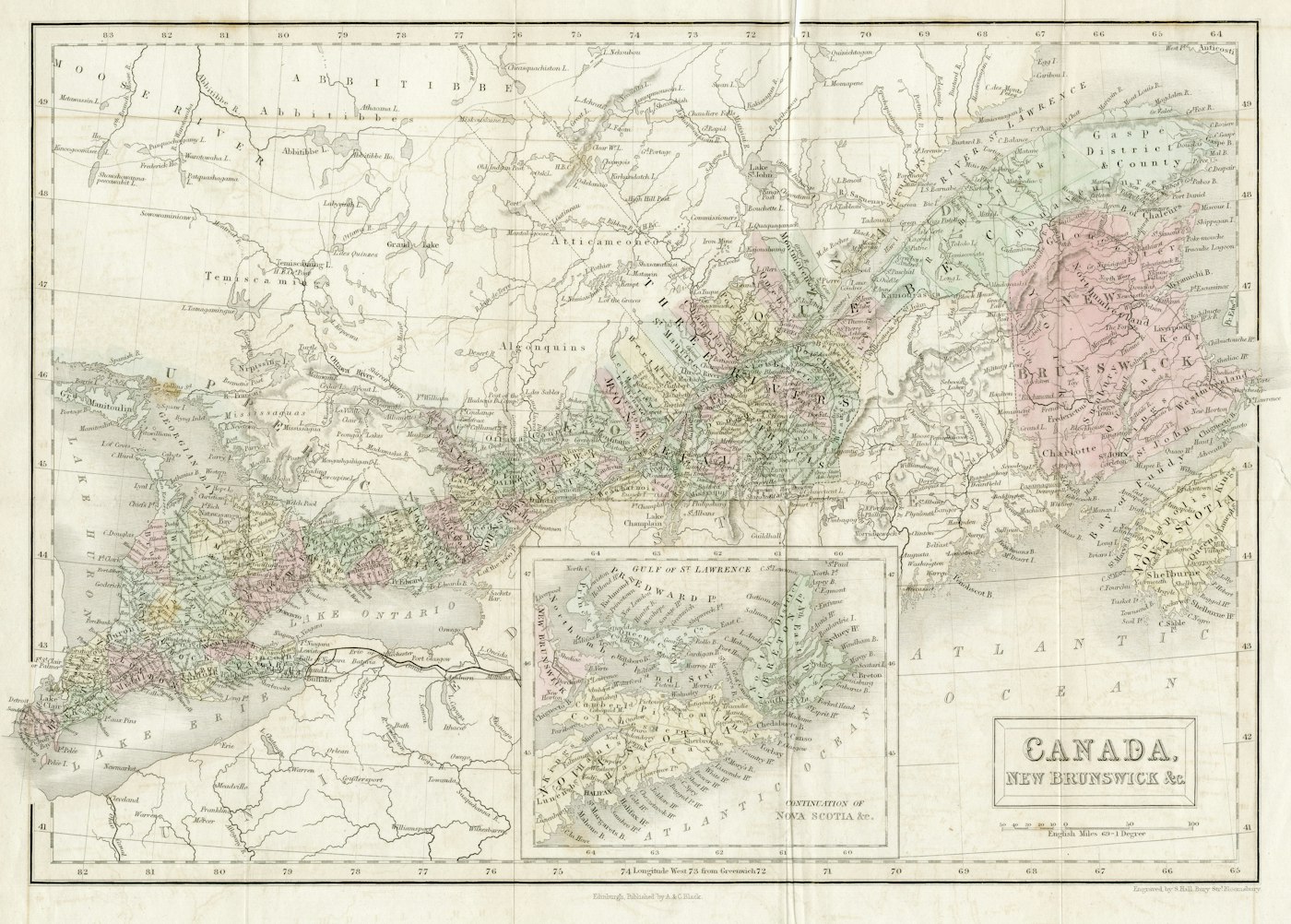
Antique map of Canada showing rivers and mountains

31 Days of Boston — Day 9

The Seven Years’ War stretched from North America to Europe, the Caribbean, Africa, and Asia—and its aftermath pushed Boston toward revolution.

Advertisement

Advertisement

Before Boston fought Britain, Boston fought within Britain’s empire. The Seven Years’ War—whose North American phase is commonly called the French and Indian War—was a global struggle involving European empires, Native nations, colonial troops, fleets, forts, and trade routes. For Bostonians, it was a moment of pride in British victory. It was also the beginning of a chain of decisions, on both sides of the Atlantic, that would turn loyal subjects into revolutionaries within little more than a decade.

A World War Before the World Wars

Fighting in North America began in the mid-1750s over control of the Ohio Country, the rich interior lands claimed by both Britain and France and long home to Native nations with their own interests. War was formally declared between Britain and France in 1756, and the conflict soon spread far beyond the forests of the frontier.

British and French forces, along with their allies, fought in Europe, on the seas, in the Caribbean sugar islands, along the coast of West Africa and in India. Prussia, Austria, Russia, Spain and other powers were drawn in. It was one of the first conflicts that could fairly be called global, and it was fought for markets, colonies and imperial supremacy as much as for territory near home.

Massachusetts Goes to War

Massachusetts contributed men and resources to Britain’s war effort. For the colony, the struggle against France was not abstract. New Englanders had fought the French and their allies repeatedly for generations, and many in Boston saw French Canada as a permanent threat to their trade, their frontier towns and their Protestant faith.

The colony raised provincial regiments, paid soldiers, supplied provisions and taxed its own residents heavily to do so. Boston, as the colony’s capital and largest port, became a center for recruitment, shipping and finance. Merchants supplied the army and navy; some prospered, while others suffered when trade was disrupted.

Advertisement

Colonists and regulars

The war also brought many New Englanders into close contact with British regular soldiers and officers for the first time. That contact was not always happy. Provincial troops often resented the strict discipline, harsh punishments and condescension they experienced. British officers, for their part, frequently dismissed colonial soldiers as poorly trained. Those impressions lingered after the fighting ended.

Victory and Its Price

Victory removed France as Britain’s principal imperial rival in much of eastern North America, but victory came with enormous expense. The fall of Quebec in 1759 and of Montreal in 1760 broke French power in Canada. The Treaty of Paris in 1763 confirmed British control of Canada and the lands east of the Mississippi, while Spain ceded Florida to Britain.

In Boston, there were celebrations. Colonists toasted the king and took pride in their part in a great imperial triumph. Yet Britain’s national debt had soared, and the cost of defending a vastly enlarged territory was only beginning.

The new problems of a larger empire

  • Defense. Britain decided to keep a standing army in North America, and someone had to pay for it.
  • The frontier. Conflict with Native nations, most notably during Pontiac’s War, led to the Proclamation of 1763, which restricted colonial settlement west of the Appalachians and angered many colonists.
  • Revenue. Officials in London concluded that colonies benefiting from British protection should share more of the cost.
  • Enforcement. Smuggling, long tolerated, was now treated as a serious drain on revenue.

From Victory to Resistance

London emerged determined to make the colonies contribute more directly to imperial costs and administration. New taxes and tighter enforcement followed. In Boston, merchants and political leaders increasingly resisted what they saw as unconstitutional interference.

The signs were there even before the war ended. In 1761, Boston lawyer James Otis argued against writs of assistance, broad search warrants that allowed customs officials to enter premises looking for smuggled goods. Otis lost the case, but his argument about the limits of government power resonated widely; John Adams, who watched, later recalled it as a turning point.

Advertisement

After the peace, the pressure increased. The Sugar Act of 1764 sought to collect duties more effectively. The Stamp Act of 1765 imposed a direct tax on printed materials across the colonies, setting off fierce protest, nowhere more dramatically than in Boston. The Townshend duties followed later in the decade, and British troops arrived in Boston in 1768. Each step made sense to officials trying to manage an expensive empire. Each looked, to many Bostonians, like a threat to the rights of English subjects to be taxed only by their own representatives.

The Great Irony

That is the great irony. Britain’s triumph helped create the conditions for Britain’s American crisis. The empire won a global war and then struggled to govern the enlarged world it had acquired. Boston became one of the places where that struggle turned into rebellion.

There is a second irony too. With France gone from Canada, colonists no longer depended on British protection from a powerful neighbor to the north. The threat that had bound New England tightly to the empire had disappeared, and with it some of the reasons to accept London’s terms.

For modern readers, the story is a reminder that victories can carry their own risks. Success changes the scale of a problem, and institutions built for one situation may not fit the next. The men who governed Britain in the 1760s were not fools; they faced real debts and real administrative questions. But they underestimated how colonists would interpret their solutions, and Boston was where that misjudgment first became impossible to ignore.

Seeing the Story in Boston Today

  • The Old State House, where colonial government met and where the writs of assistance case was argued.
  • Faneuil Hall, a marketplace and meeting space where merchants and townspeople debated imperial policy.
  • The Freedom Trail, which ties these sites to the revolutionary events that followed.

Research & Further Reading

For deeper research, consult authoritative collections including the Massachusetts Historical Society, Boston Public Library, National Park Service, Library of Congress, Massachusetts Archives, and relevant museum and university collections. Readers should verify contested details against primary and scholarly sources.

Explore More from Boston Made

Continue with the Latest Boston Made Wires, About Boston Made, The Boston Made Story and the Boston Made Portfolio.

Boston Made is an independent editorial and archival platform. Historical stories are intended to encourage further exploration of primary sources, museums, libraries, and scholarly research.

PupWear (.org) Boston Made family PupWear (.org) Dog apparel and gear inspired by Boston the GoldenDoodle. Visit site →

Advertisement

Continue Reading

Boston History

The Great Fire of 1676: The Night Boston Burned

A devastating seventeenth-century fire exposed just how vulnerable early Boston was to flame, crowding, and wooden construction.

Published

on

The Great Fire of 1676: The Night Boston Burned

31 Days of Boston — Day 4

A devastating seventeenth-century fire exposed just how vulnerable early Boston was to flame, crowding, and wooden construction.

Advertisement

Advertisement

Fire was one of colonial Boston’s most persistent terrors. Timber buildings stood close together. Chimneys, hearths, workshops, candles, and stored goods created countless opportunities for disaster. In 1676, a major fire tore through part of the town and reminded residents how quickly a settlement could be transformed into ash. It was not the last time Boston would burn, but it was one of the moments that taught the young town a lesson it would relearn for two centuries: the same closeness that made Boston thrive also made it fragile.

A Town Built of Wood and Fire

To understand why a fire could do so much damage, picture Boston in the 1670s. The town occupied a small, hilly peninsula connected to the mainland by a narrow neck. Land near the harbor was precious, so houses, shops, warehouses and taverns crowded along crooked lanes that ran down to the wharves. Most buildings were framed in timber, sheathed in wooden clapboards and often roofed with wooden shingles or thatch.

Inside, fire was part of daily life. Every household cooked over an open hearth. Candles and oil lamps lit the evenings. Blacksmiths, bakers, coopers, chandlers and brewers all relied on heat to work. Warehouses near the water held tar, pitch, rope, cloth, grain and other goods that burned readily. In winter, chimneys worked constantly and wind swept across the harbor.

The result was a town where a single spark, an unattended candle or a cracked chimney could threaten an entire neighborhood.

The Night Boston Burned

The fire of 1676 broke out in the crowded northern part of town, the area Bostonians would come to call the North End. Accounts describe flames racing from building to building, consuming dozens of houses along with shops and other structures. Among the losses was the meetinghouse of the Second Church, the congregation associated with the minister Increase Mather. A timely rain is often credited with helping bring the blaze under control.

Advertisement

The fire came at an exhausting time. New England was emerging from King Philip’s War, one of the most destructive conflicts in the region’s colonial history. Boston had sent men and money into that war and absorbed refugees from towns that had been attacked. To lose homes and a house of worship to fire in the same year added a heavy burden to a community already strained.

How fire was fought

There were no modern engines, hydrants, radios, or professional fire departments. Fighting fire meant bells, buckets, hooks, ladders, wells, and organized neighbors. A strong wind could make human effort almost irrelevant.

The basic tools were simple:

  • Bells and cries of alarm to wake the town and call people out.
  • Leather buckets, passed hand to hand in lines from wells, cisterns or the harbor.
  • Ladders to reach roofs and upper windows.
  • Fire hooks, long poles used to pull down burning walls and roofs.
  • Firebreaks, created by deliberately tearing down or even blowing up buildings in the fire’s path to starve it of fuel.

That last method shows how desperate fire-fighting could be. Sometimes the only way to save a street was to destroy part of it first.

What the Fire Taught Boston

The destruction forced Boston to think about building practices, public safety, and collective response. In the years around 1676, and especially after another serious fire in 1679, the town and colony moved toward rules intended to reduce the risk: encouraging or requiring construction in brick or stone, roofs of slate or tile rather than wood or thatch, and expectations that households keep fire-fighting equipment on hand. Enforcement was uneven, and wooden buildings remained common, but the direction was clear.

Boston also began to treat fire as a shared responsibility rather than a private misfortune. Watchmen patrolled at night. Citizens were expected to turn out and help. Over time, organized fire companies and official fire wardens took on the work that had once depended on whoever happened to be nearby.

Advertisement

The city learned early that survival required more than individual grit; it required systems.

A Recurring Boston Lesson

Later generations would confront even larger fires, including the catastrophic blaze of 1872, but the seventeenth-century fires established a recurring Boston lesson: density creates opportunity and danger at the same time.

That tension runs through the city’s history. Boston grew rich because it was crowded: merchants, artisans, sailors and families lived close together, traded constantly and shared ideas quickly. The same crowding meant that disasters spread fast. The Great Fire of 1711 destroyed the town’s center, including the Town House; the building that replaced it in 1713 survives today as the Old State House. Each fire prompted new rules, new institutions and new ways of building.

Every rebuilt street made the town more permanent. Fire destroyed property, but rebuilding also pushed Boston toward stronger civic institutions. Brick replaced timber in many places. Streets were adjusted. Public authority over safety grew. The Boston that exists today, with its brick row houses and masonry commercial blocks, carries traces of those hard lessons.

Seeing the Story Today

Almost nothing from seventeenth-century Boston’s built environment survives, in part because of fires like this one. Visitors can still sense the scale of the early town, however:

  • Walk the narrow, irregular streets of the North End and imagine them lined with timber houses and workshops.
  • Visit the Paul Revere House in North Square, a rare surviving wooden house from the late seventeenth century, built on land that had been part of the area affected by the 1676 fire.
  • Stand at the Old State House and remember that it exists because an earlier building burned.
  • Notice how much of central Boston is brick and stone, the long legacy of a town that learned to fear fire.

Research & Further Reading

For deeper research, consult authoritative collections including the Massachusetts Historical Society, Boston Public Library, National Park Service, Library of Congress, Massachusetts Archives, and relevant museum and university collections. Readers should verify contested details against primary and scholarly sources.

Useful questions to bring to those collections include: What do surviving town records say about the fire’s damage and the response? How did ministers and diarists of the period interpret it? Which building rules followed, and how well were they enforced?

Explore More from Boston Made

Continue with the Latest Boston Made Wires, About Boston Made, The Boston Made Story and the Boston Made Portfolio.

Boston Made is an independent editorial and archival platform. Historical stories are intended to encourage further exploration of primary sources, museums, libraries, and scholarly research.

Boston Made Pets Boston Made family Boston Made Pets Pet apparel and gear inspired by Boston the GoldenDoodle. Visit site →

Advertisement

Continue Reading

Boston History

Before Boston: The World the Massachusett People Knew

Before Boston was a colonial town, this coast was home to Indigenous communities with deep political, economic, and spiritual ties to the land and sea.

Published

on

Before Boston: The World the Massachusett People Knew

31 Days of Boston — Day 1

Before Boston was a colonial town, this coast was home to Indigenous communities with deep political, economic, and spiritual ties to the land and sea.

Advertisement

Advertisement

Long before brick meetinghouses, wharves, steeples, and the crooked lanes that became downtown Boston, the place Europeans would call Boston belonged to an older world. The Shawmut Peninsula sat within a living Indigenous landscape shaped by seasonal movement, diplomacy, fishing, farming, trade, and kinship.

The Massachusett people were not a preface to Boston’s story. They were part of the story itself. Communities around Massachusetts Bay understood the harbor, rivers, islands, marshes, and forests as interconnected places of work and memory. Corn, beans, and squash were cultivated. Fish and shellfish came from productive coastal waters. Networks of exchange linked communities far beyond the peninsula.

European arrival brought trade, but also catastrophe. Epidemics in the early seventeenth century devastated Native populations across coastal New England before large-scale English settlement accelerated. Disease altered the balance of power just as English colonists began claiming land and establishing permanent towns.

Remembering this earlier Boston changes the way the city is seen. The familiar revolutionary landmarks stand on a landscape whose human history did not begin in 1630. Boston’s history is deeper, more complicated, and more interesting when its Indigenous foundations are placed at the beginning rather than pushed to the margins.

Research & Further Reading

For deeper research, consult authoritative collections including the Massachusetts Historical Society, Boston Public Library, National Park Service, Library of Congress, Massachusetts Archives, and relevant museum and university collections. Readers should verify contested details against primary and scholarly sources.

Advertisement

Explore More from Boston Made

Boston Made is an independent editorial and archival platform. Historical stories are intended to encourage further exploration of primary sources, museums, libraries, and scholarly research.

Reading the Land Before the Town

To picture the Shawmut Peninsula as the Massachusett knew it, it helps to forget most of the modern map. The peninsula was far smaller than downtown Boston is today, a knob of hills and coves joined to the mainland by a narrow neck that could be nearly washed over at high tide. Much of what is now the Back Bay, the South End and large stretches of the waterfront was tidal flat and salt marsh. Centuries of filling, which began in the colonial era and accelerated in the nineteenth century, buried that shoreline under streets and buildings.

The older landscape was not empty space waiting for a town. Marshes were rich with birds and fish. Mudflats held clams and other shellfish. Rivers such as the Charles and the Neponset carried fish runs in spring and connected the coast to the interior. Hills offered lookouts and landmarks. The name Massachusett itself is commonly understood to refer to the area of the great hills to the south of the bay, the range now called the Blue Hills.

A fish weir under the city

One of the clearest windows into this older world was found by accident. During construction in the Back Bay in the twentieth century, workers digging deep foundations uncovered thousands of wooden stakes preserved in the old tidal mud. Archaeologists identified them as the remains of fish weirs, fences of stakes and woven brush used to trap fish as the tide went out. The structures were thousands of years old, far older than any European presence in New England. They are a reminder that people were managing and harvesting these waters for a very long time before 1630.

A Year Shaped by the Seasons

Life around Massachusetts Bay followed the calendar of the land and sea rather than a single fixed address. Many communities moved between places through the year, drawing on different resources as each came into season.

Advertisement

  • Spring brought fish runs up the rivers, a time for weirs, nets and gathering.
  • Summer often meant coastal villages, planting fields of corn, beans and squash, and harvesting shellfish along the shore.
  • Autumn was a season of harvest and storage, preparing food to last through the colder months.
  • Winter frequently drew families to sheltered inland sites, where hunting and protection from coastal storms mattered more.

Homes were built to suit this pattern. A common dwelling in southern New England was the wetu, a framework of bent saplings covered with bark or woven mats. It could be well insulated for winter and adapted for the warmer months. Large shell heaps, called middens, left along the coast show how many generations returned to the same productive places.

Leadership and relationships

Political life was organized around sachems, leaders whose authority rested on kinship, consent and the ability to keep alliances in good order. Relationships with neighboring peoples, through marriage, trade, obligation and sometimes rivalry, reached well beyond the bay. When the English arrived, they entered an established political world with its own rules for land use, diplomacy and reciprocity, and many early conflicts grew from the gap between those rules and English ideas of ownership.

After the Epidemics

The epidemics described above struck coastal New England hard in the years around 1616 to 1619, before the Plymouth colonists arrived in 1620. Historians still debate the exact disease, but the outcome is not in doubt: whole villages were lost, and survivors faced a changed balance of power among Native nations as well as with newcomers. When the Massachusetts Bay colonists moved onto the Shawmut Peninsula in 1630, they arrived in a region already reshaped by that loss. A single Englishman, the Reverend William Blaxton, was already living on the peninsula and is remembered for inviting the Puritan settlers to join him there, near a good spring of water.

The Massachusett language, part of the Algonquian family, also left a striking mark on colonial history. In 1663 the missionary John Eliot published a complete Bible translated into Massachusett, the first Bible printed in British North America. It is a complicated artifact: a tool of missionary work and also one of the largest surviving records of the language. Today, descendants of the Massachusett continue to live in the region and to carry their history forward.

Seeing the Older Boston Today

You do not need an archive to begin noticing this earlier world. A few ways to start:

  1. Walk the old shoreline. Many Boston streets follow or cross the edge of land that was once water. Historical maps placed beside a modern one make the change vivid.
  2. Visit the Blue Hills. Standing on the high ground south of the city gives a sense of why the hills mattered as a landmark across the bay.
  3. Look at the harbor islands. The islands were part of the same connected landscape of fishing, travel and seasonal use, and several are reachable today.
  4. Read Native-authored histories. Alongside the institutions listed below, seek out histories and resources produced by Native nations and scholars, whose perspectives are essential to an accurate picture.

Day 1 begins here for a reason. Every later chapter of Boston’s story, from the first meetinghouse to the modern skyline, unfolds on ground that already had a long human history of its own.

Beacon Federal Partners Affiliate Beacon Federal Partners Independent government-contracting firm and Boston Made affiliate. Visit site →

Advertisement

Continue Reading
Advertisement

Advertisement

Ad

Advertisement

Trending

--:--·---·--°