Connect with us

Weather where you are

Choose your location or share it once. We round your coordinates to about 1 km before sending them to our site and MET Norway for your forecast. Your choice stays in this browser tab.

Stay close to Boston

Get new Boston stories and Boston Made company updates, delivered as browser notifications.

Choose Enable notifications, then allow notifications in your browser.

Your browser subscription is stored by Boston Made and delivered through your browser’s push service. You can turn notifications off in your browser’s site settings. Privacy policy

Boston Made Eats

Uchi Is Coming to Fort Point in 2027 as Potbelly Pulls Out of Downtown Crossing

Austin’s Uchi signs a Fort Point lease for a 210-seat sushi house in 2027, while Potbelly exits Downtown Crossing. Here’s what’s confirmed and what isn’t.

Ecosystem Intelligence Desk

Published

on

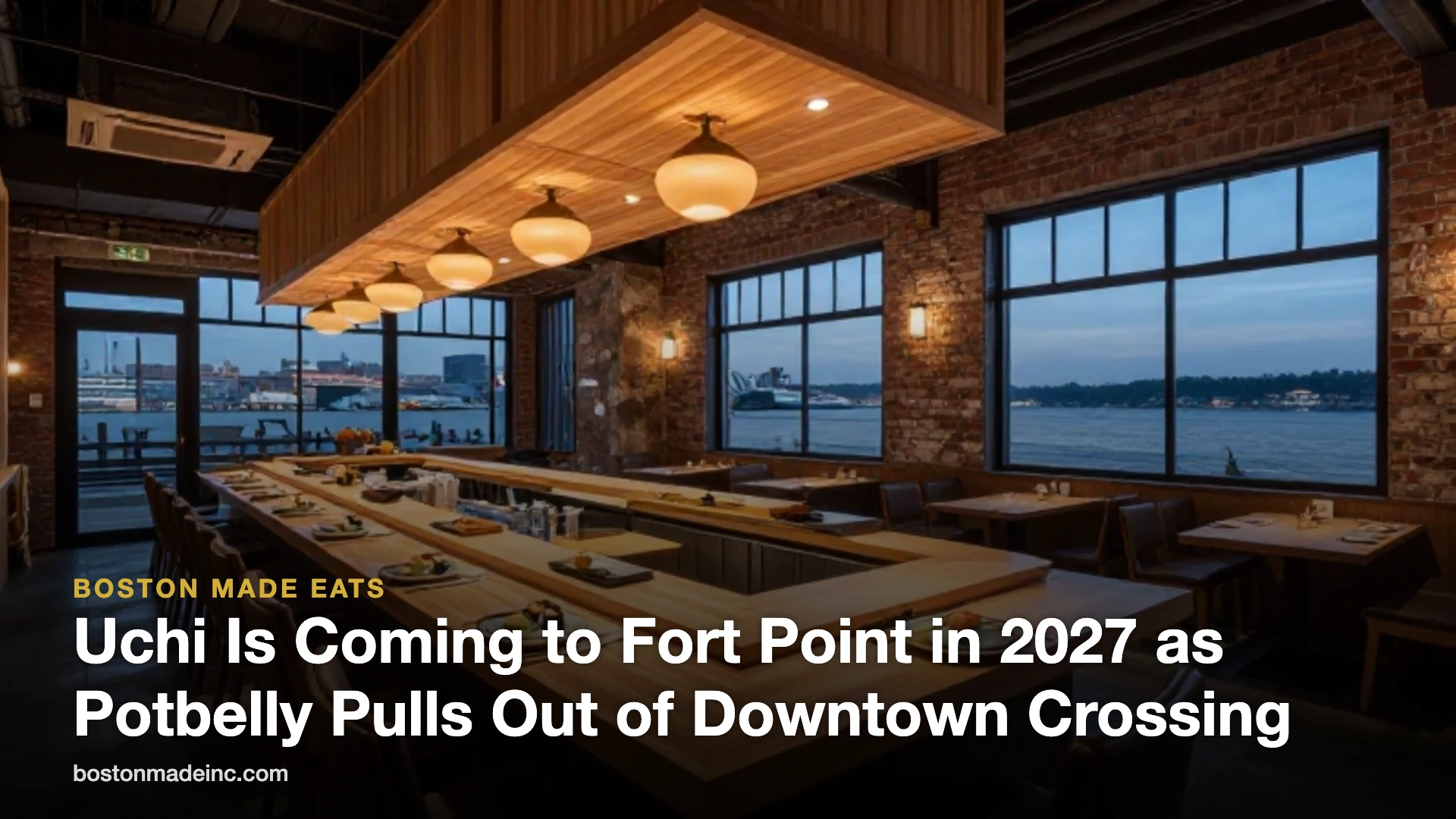
AI-generated illustration of a modern sushi counter in a restored brick warehouse dining room by the harbor at dusk

One of the most decorated Japanese restaurant brands in the country has signed a lease in Fort Point, while a national sandwich chain quietly trims its Boston footprint. This week’s dining news is a snapshot of where restaurant money is going in Greater Boston, and where it is leaving.

Hai Hospitality, the Austin, Texas, company behind the Uchi restaurants, has signed a lease at 374 Congress Street in Boston’s Fort Point neighborhood, according to Nation’s Restaurant News. NBC Boston and Hoodline have since reported the same plan. The restaurant is slated to open in 2027, with NRN putting the target in late 2027. It would be the company’s 11th Uchi and its first in New England.

Advertisement

What is confirmed about Uchi Boston

The Fort Point space covers about 7,100 square feet, according to NRN, and is leased from Eastern Real Estate. The plan calls for 210 seats in total. That includes 11 seats at a sushi counter, 17 at the bar and 26 in a private dining room that can be divided in two.

The design team is familiar to Uchi regulars. Islyn Studio, which designed Uchi in Washington, D.C., and Uchiko in Miami, is handling the interior, and Corgan Associates is the architect of record. NRN describes a concept that blends a seaside antique shop, Colonial architecture and Japanese-inspired craftsmanship, a nod to the neighborhood’s warehouse and waterfront history.

Todd Reppert, Hai Hospitality’s chief development officer, told NRN the company picked the neighborhood deliberately: “We chose Fort Point because we wanted a neighborhood that reflects Boston’s rich history.” Chief executive Tony Montero said the group has been looking to grow in the Northeast.

No menu has been published for Boston yet. NBC Boston described the brand’s cooking as elevated, non-traditional Japanese cuisine, and the company’s existing restaurants are known for nigiri and sashimi, hot and cold small plates and chef’s tasting menus. Prices, hours and a reservation date have not been announced.

The company behind the name

Chef Tyson Cole opened the first Uchi in Austin in 2003 and shared the James Beard Award for Best Chef: Southwest in 2011, according to NBC Boston. Hai Hospitality has since grown into a multi-brand group. Besides Uchi, it runs five live-fire Uchiko restaurants, two cocktail-focused Uchiba locations, the Houston omakase room Oheya and a three-unit Asian smokehouse called Loro, according to NRN.

That matters for Boston diners because national groups like this rarely stop at one door. A successful flagship tends to be followed by a second, more casual concept. Nothing beyond Uchi has been announced for Massachusetts, and the Newsroom is not reporting any further plans.

Elsewhere on the map: closings and a changing of the guard

Potbelly, Downtown Crossing. The Potbelly Sandwich Shop at 263 Washington Street has closed, according to Boston Restaurant Talk, which cited a sign posted at the shop and a social media post showing it. The sign gave Oct. 25 as the closing date. The same blog reports that Potbelly locations in Porter Square and Braintree have also closed. Remaining area locations include Federal Street in the Financial District, Burlington and two at Logan Airport. Potbelly has not publicly commented, and the Newsroom has not independently confirmed the reason for the closures.

Danish Coffee Studio, Medford. The cafe at 330 Boston Avenue near Tufts that was home to Danish Pastry House since 2005 has reopened under new owners as Danish Coffee Studio, according to The Tufts Daily and Boston Restaurant Talk. Founder Ulla Winkler sold the cafe and the Watertown wholesale operation to Benjamin Morales and his family. The new cafe leans into specialty lattes alongside pastries.

Advertisement

Chelsea Station, Chelsea (unconfirmed). Boston Restaurant Talk reports that Chelsea Station Restaurant Bar & Lounge, which opened in 2016 in a converted firehouse at 105 Everett Avenue, appears to be closing, citing an unnamed industry source and a local scanner account’s post. The restaurant has not announced a closing date, and the Newsroom treats this as unconfirmed until the owners or the city say otherwise.

Still on the calendar. Saus, the vegetarian-friendly frites and sauce shop at Bow Market in Somerville, is scheduled to close in December after a 15-year run, according to the same weekly roundup.

The Newsroom Take

The two lead items point in opposite directions, and both are rational. A 210-seat, design-heavy sushi house is a bet on a dinner crowd that will pay for an occasion, in a neighborhood whose office and lab towers bring a steady stream of expense accounts and visitors. A fast-casual sandwich shop on Washington Street is a bet on weekday foot traffic, and that traffic has not fully returned to Downtown Crossing.

The Newsroom notes that this split is showing up across the region: the experience-driven, higher-ticket end of the market keeps attracting outside capital, while chains built on office lunches are consolidating. Independent cafes like the reborn Medford shop sit in the middle, where a small footprint and a loyal neighborhood can still make the numbers work.

A 2027 opening also leaves plenty of room for change. Permits, licensing and construction timelines routinely slip, so the Newsroom will treat any opening date as provisional until the company announces one.

What it means for you

  • If you are excited about Uchi, there is nothing to book yet. Watch for a licensing hearing or a hiring push, which usually come months before opening.
  • Downtown workers who relied on the Washington Street Potbelly can still find the chain on Federal Street, but it may be a good moment to try an independent lunch spot nearby.
  • Medford and Tufts regulars can stop by the renamed cafe; ask whether earlier loyalty cards or gift cards carry over, since ownership has changed.
  • Fans of Saus have until December. Small shops often post exact final dates only a few weeks out.

Test yourself

What is the Fort Point address planned for Uchi Boston?

Answer: 374 Congress Street.

How many seats are planned in total?

Answer: 210, including 11 at the sushi counter and 17 at the bar.

In what city and year did the first Uchi open?

Answer: Austin, Texas, in 2003.

What business occupied the Medford cafe space before Danish Coffee Studio?

Answer: Danish Pastry House, which had been there since 2005.

Discussion

  1. Does Fort Point need a destination restaurant of this size, or would smaller neighborhood places serve it better?
  2. What would bring you back to Downtown Crossing for lunch on a weekday?
  3. Which national restaurant brand would you most like to see open its first New England location?

Boston Made Foundation Boston Made family Boston Made Foundation The philanthropic arm of the Boston Made family. Visit site →

Advertisement

The institutional news desk of the Boston Made network. Reporting is researched from wire services including The Associated Press and local sources, and written by the desk.

Boston Made Eats

London’s Oblix Sets Its Sights on Park Plaza as Needham Prepares to Say Goodbye to Mandarin Cuisine

London’s Oblix plans a 328-seat Park Plaza restaurant for 2027, while Needham’s Mandarin Cuisine closes Oct. 31 after 37 years. What’s confirmed so far.

Ecosystem Intelligence Desk

Published

on

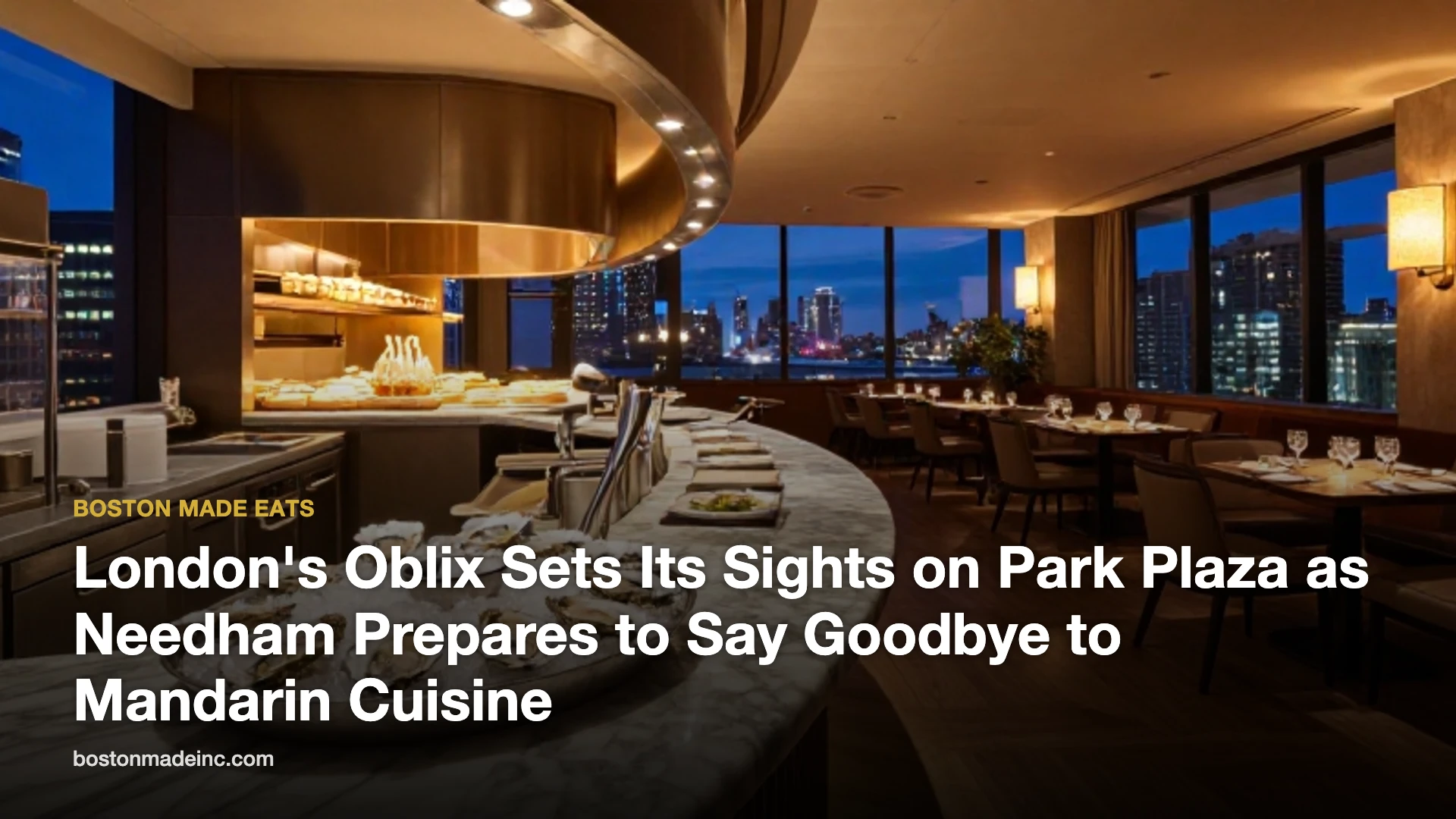
AI-generated illustration of an upscale hotel restaurant with a marble oyster bar at dusk

A restaurant brand born on the 32nd floor of London’s Shard is planning its first location outside the United Kingdom in the Hilton Boston Park Plaza, while a Needham Chinese restaurant that has fed families for 37 years serves its last meals on Halloween. Here is what is confirmed, what is still only reported, and what it says about where Boston dining money is moving.

Oblix plans a 328-seat landing in the old Strega space

Oblix, the grill-and-lounge concept that opened in 2012 high inside The Shard in London, is planning a Boston restaurant at 50 Park Plaza, inside the Hilton Boston Park Plaza, according to reporting first presented to a neighborhood association and covered by The Boston Sun, then picked up by Boston Restaurant Talk and What Now Boston. The space most recently housed Strega Italiano and, before that, Strip by Strega, which itself replaced Whiskey Park in 2015.

Advertisement

The plans described to neighbors call for a total occupancy of up to 328 guests, with a main dining room of about 162 seats, a second smaller dining area, an oyster bar and an open kitchen. Dinner and brunch are expected, and a proposed closing time of 2 a.m. has been floated. If the timeline holds, Boston Restaurant Talk reported, the restaurant could open around the end of July 2027.

Oblix is part of Azumi, the London hospitality group best known for Zuma. What Now Boston reported that state business filings for an Oblix Boston LLC point to Garrett Ronan, who operates Zuma Boston and founded GKR Hospitality. That connection is drawn from filings rather than an announcement from the company, and Oblix had not publicly confirmed the Boston project when those reports were published. Readers should treat the opening date and floor plan as proposals that still need city licensing approvals.

In London, the menu leans on steak and seafood: beef tartare with black truffle, burrata, crispy chicken with honey, lime and chili, and dry-aged sirloin from the grill, alongside an extensive cocktail program. The London site is split between a dining room and grill and a separate bar and lounge with live music, a format that a large Back Bay hotel space could plausibly mirror.

Mandarin Cuisine’s final day is Oct. 31

West of the city, the news runs the other way. Mandarin Cuisine on Highland Avenue in Needham will serve its final meals on Saturday, Oct. 31, after 37 years, according to Boston.com and What Now Boston. Owner Joan Low announced the closing in an Oct. 3 Facebook post, writing that the family had “loved every single moment” of serving customers.

No reason for the closing has been announced, and no replacement restaurant has been named. Boston.com reported that at a Sept. 8 Needham Select Board meeting, officials discussed transferring the restaurant’s all-alcohol license to a new company, Buda X Inc., which suggests the address may stay in food service under new owners. Plans for the space were not available.

For many suburban families, restaurants like Mandarin Cuisine are less about a single dish than about ritual: birthday dinners, takeout on a snow day, the Friday-night order the staff could recite back. Those places are disappearing across Greater Boston as longtime owners retire and rents and labor costs climb.

Also on the board this week

  • Niveaux Pâtisserie heading downtown (reported). The North Quincy French bakery, open since summer 2024, appears to be preparing a second shop at 75 State Street in the Financial District. Boston Restaurant Talk based the report on an unnamed tip, a social media video from co-owner Robert Gonzalez filmed outside the storefront, and an online ordering page listing the State Street address. The bakery has not formally announced a date; the video pointed to early 2027.
  • Saus at Bow Market is closing (reported). The Somerville outpost of the comfort-food spot, its last remaining location, is shutting down, Boston Restaurant Talk reported. No final date was given.
  • Tradesman Coffee Shop at Independence Wharf. The team behind a local group of coffee shops and lounges is planning a downtown café at Independence Wharf, according to Boston Restaurant Talk. Timing has not been announced.

The Newsroom Take

Boston Made, Inc.’s Newsroom reads this week as a clean illustration of a two-speed dining market. International, well-capitalized brands are still willing to commit to very large rooms in hotel and office corridors, betting that business travel, conventions and celebratory dining will keep producing $100-plus checks. Oblix would be the second Azumi-linked concept in Back Bay if the filings prove accurate, a sign that the operator behind Zuma believes the neighborhood has room for another high-energy, late-night restaurant.

At the same time, independent neighborhood restaurants with decades of history continue to change hands or close. Rising costs for labor, food and insurance squeeze them hardest, and owners approaching retirement often find that selling the license and lease is more practical than finding a successor. The Newsroom notes that the license-transfer path in Needham is common: the dining room may live on, but the menu and the relationships behind it usually do not.

The middle of the market is where the creativity is showing up. Bakeries like Niveaux and coffee operators like Tradesman are expanding into downtown storefronts where the lunch and commuter crowd is returning, with smaller footprints and lower risk than a 300-seat room.

What it means for you

  • If Mandarin Cuisine is your place, you have until Oct. 31. Gift cards and loyalty balances are worth using now; call ahead before the final weekend rush.
  • If you are waiting on Oblix, do not book a trip around it yet. The project still needs licensing approvals, and a July 2027 target can slip.
  • Downtown workers may get a new pastry option on State Street in early 2027, but watch for an official announcement before planning on it.
  • Local diners who want neighborhood restaurants to survive have a simple lever: order directly from the restaurant rather than through delivery apps, which charge independents steep commissions.

Test yourself

In which London building did Oblix open in 2012?

Answer: The Shard, on its 32nd floor.

What hotel will house Oblix Boston, according to the plans?

Answer: The Hilton Boston Park Plaza at 50 Park Plaza, in the former Strega Italiano space.

How long has Mandarin Cuisine served Needham?

Answer: 37 years. Its final day is Oct. 31, 2026.

Which street address is linked to Niveaux Pâtisserie’s reported downtown shop?

Answer: 75 State Street in the Financial District.

Discussion

  1. Does Back Bay need another large, late-night luxury restaurant, or is the next opportunity in smaller neighborhood spots?
  2. Which long-running suburban restaurant would you most hate to lose, and what keeps you going back?
  3. Would a downtown bakery change how often you come into the office?

Beacon Federal Partners Affiliate Beacon Federal Partners Independent government-contracting firm and Boston Made affiliate. Visit site →

Advertisement

Continue Reading

Boston Made Eats

How TGI Fridays Shrank From 13 Massachusetts Restaurants to Three

TGI Fridays had 13 Massachusetts restaurants in early 2024. Three remain, in Everett, Methuen and Stoughton. What closed, what replaced them, what is next.

Ecosystem Intelligence Desk

Published

on

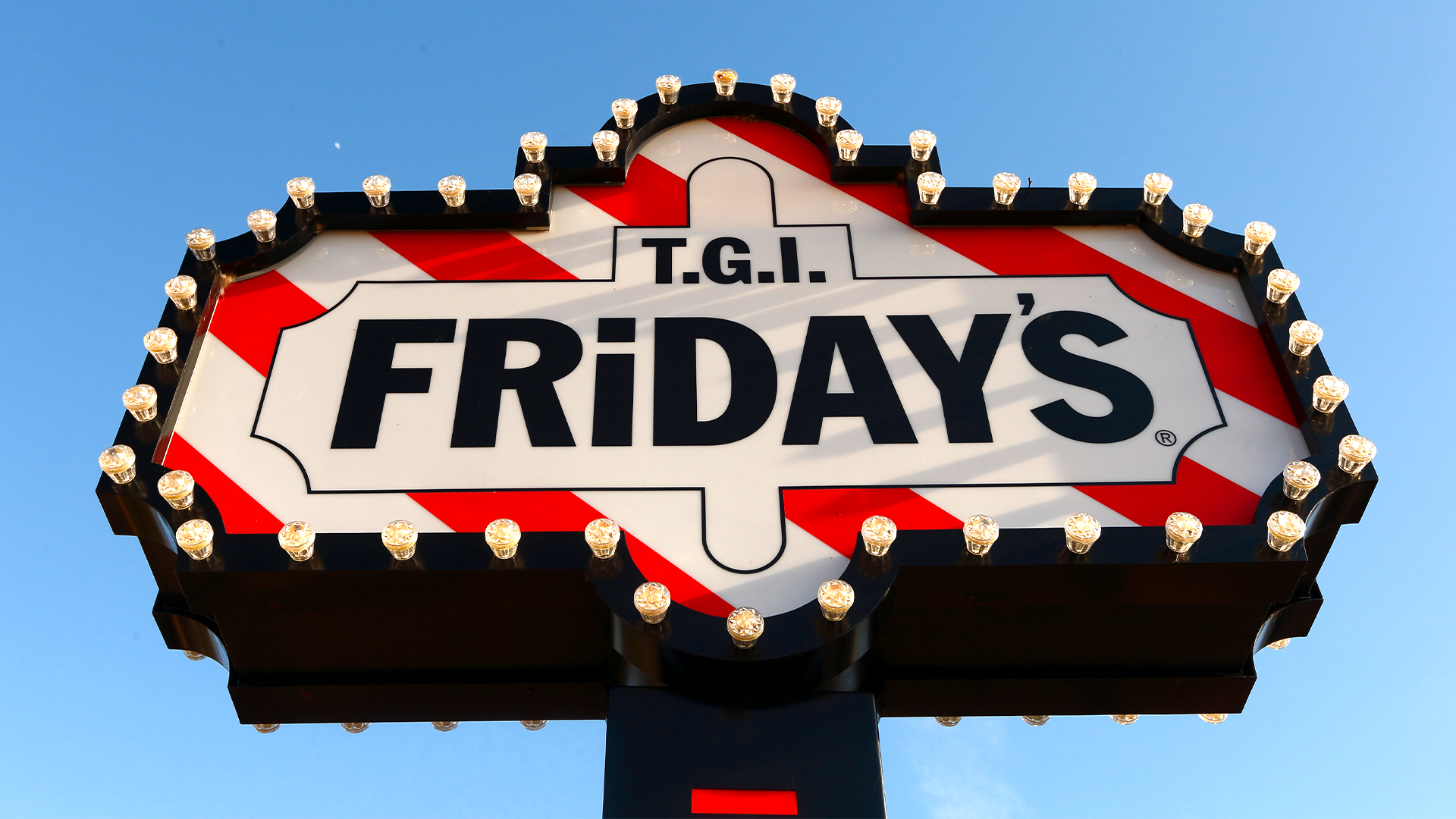
Classic TGI Fridays marquee sign with red-and-white stripes

TGI Fridays began 2024 with 13 restaurants in Massachusetts; since the Millbury location closed in July 2026, the chain’s website lists three, in Everett, Methuen and Stoughton, and the brand carries on as franchised restaurants even as a bankruptcy court winds down its former corporate parent.

Millbury was the latest to go

The TGI Fridays at The Shops at Blackstone Valley in Millbury announced its closing in a Facebook post on Tuesday, July 28, 2026, according to Patch and the Worcester Telegram & Gazette. The restaurant at 70 Worcester-Providence Turnpike was one of the early tenants of the open-air plaza, which opened in 2003, the Telegram reported. A sign in the window pointed diners to the chain’s other Massachusetts restaurants.

Advertisement

Both outlets reported that the company’s website had dropped Millbury and listed only Everett, Methuen and Stoughton in the state. A third-party store tracker, Mogean, counted the same three Massachusetts locations among 69 in the United States as of Oct. 11, 2026. The company has not announced any new restaurant for Massachusetts.

How 13 became three

The contraction came in waves. On Jan. 3, 2024, the Dallas-based company said it was closing 36 corporate restaurants nationwide that it described as “underperforming.” Six were in Massachusetts: Dedham, Danvers, Marlborough, Mansfield, North Attleborough and Seekonk, according to CBS Boston and Boston 25 News. Both outlets listed seven Massachusetts restaurants still open afterward: Boston, Braintree, Everett, Methuen, Millbury, North Dartmouth and Stoughton.

The same day, the company said it was selling eight corporate-owned Northeast restaurants to former chief executive Ray Blanchette, who would run them as a franchisee. Six were in Massachusetts, in Braintree, Boston’s Brigham Circle, Everett, Methuen, Millbury and Stoughton, and two were in Concord and Manchester, New Hampshire, Nation’s Restaurant News reported.

The North Dartmouth restaurant on State Road closed effective immediately on Oct. 24, 2024, the Fall River Reporter wrote, nine days before the corporate parent filed for bankruptcy. Braintree, at 60 Forbes Road, closed in the first week of January 2025, according to Patch and Boston Restaurant Talk. In a report republished by NBC Boston on Feb. 26, 2026, Boston Restaurant Talk said the chain’s only Boston restaurant, at 1626 Tremont St. in Mission Hill, had shut down and been removed from the company’s location list. Millbury followed five months later.

The company’s amended franchise disclosure document, filed in September and summarized by Fast Company, recorded one franchised closure in Massachusetts in 2025 and two so far in 2026. The filing does not name towns, but the timing lines up with Braintree, Boston and Millbury.

What is filling the empty buildings

Several of the former restaurants sit on prominent pads beside shopping centers, and at least two have been re-leased to regional chains. Tavern in the Square took over the Braintree building at 60 Forbes Road, across from South Shore Plaza, Patch and The Patriot Ledger reported; the Ledger said the new restaurant added a 1,200-square-foot patio. In Mansfield, Burtons Grill & Bar leased the former Fridays space at Mansfield Crossing, according to Boston Restaurant Talk and What Now Boston.

At Blackstone Valley, the exit comes while the plaza is adding tenants. Patch reported that nearly 35,000 square feet of new retail space was under development there, with Shake Shack, Sweetgreen and LaserAway among the announced tenants. No replacement tenant for the restaurant had been reported as of late October.

The bankruptcy is ending; the brand is not

None of this amounts to a total shutdown. TGI Friday’s Inc., the corporate entity that owned and ran company restaurants, filed for Chapter 11 on Nov. 2, 2024, in the U.S. Bankruptcy Court for the Northern District of Texas. Franchise-owned restaurants were not part of the case. Judge Stacey G. Jernigan approved a consensual liquidation plan at a hearing on July 23, 2026, Bloomberg Law reported; Nation’s Restaurant News dated the confirmation July 24. The plan distributes the estate’s remaining assets to creditors and winds down the old entity, and court documents show it calls for no further restaurant closures, NRN reported.

Advertisement

The brand now operates under Sugarloaf Hospitality, the investment group led by Blanchette, who returned as chief executive in 2025. Every U.S. restaurant is franchised, according to Fast Company and FSR magazine. Blanchette told NRN that Sugarloaf’s ownership is “independent of, and unaffected by, the parties in bankruptcy.”

The three Massachusetts survivors were all among the restaurants sold to Blanchette in 2024. FSR reported in January that the Methuen restaurant served as the test site for a holiday decor campaign later rolled out across the system.

The national picture

Massachusetts tracks the national decline closely. The chain peaked at 601 U.S. restaurants in 2008, according to Technomic data cited by the Associated Press; FSR also put the peak above 600. Franchise disclosure figures reported by Fast Company show 119 U.S. restaurants at the start of 2025 and 80 at the end of that year. A company spokesperson put the count at 76 in July 2026, the September filing showed 71, and the company’s website listed 69 franchised U.S. restaurants in October, FSR reported. The sources do not reconcile the 71 and 69 figures.

The September filing projected no U.S. openings in 2026. On Sept. 29, the company announced its first domestic development deal in more than a decade, with Bliss Bites LLC, for five restaurants in New York State over three years. Chief operating officer Ashley Kirkley told FSR the company expects about 20 U.S. openings over the next two to three years. None has been announced for Massachusetts.

The Newsroom Take

Going from 13 restaurants to three is a 77 percent drop in under three years, close to the chain’s national slide from 269 U.S. restaurants at the end of 2023 to 69 today. The Massachusetts closures arrived in clusters tied to corporate events: the January 2024 pruning of company stores, the abrupt closings around the 2024 bankruptcy filing, and then franchise closures in Boston and Millbury. The liquidation plan removes one risk, since it calls for no further closures, but it does not remove the ordinary one: a franchise operator deciding that a lease no longer pays. That is how the two most recent Massachusetts closures happened. The quick re-leasing in Braintree and Mansfield also shows that the big boxes remain valuable to landlords, which means a weak Fridays lease can be replaced. For now, Massachusetts is a holdout market, not a growth market, for the brand.

What it means for you

  • Check the chain’s online locator before driving to a TGI Fridays. Everett, Methuen and Stoughton are the only Massachusetts listings, and recent closures were announced on local Facebook pages with little notice.
  • When the corporate parent filed in 2024, the judge allowed the gift card program to continue; court papers showed about $49.7 million in outstanding cards, Fortune reported. Anyone holding an older card is better off using it at an open restaurant than waiting.
  • Workers at the remaining restaurants are employed by franchise operators, not by the liquidating corporate entity. Anyone with a claim against TGI Friday’s Inc. can follow the case, No. 24-80069 in the Northern District of Texas.
  • Shoppers near South Shore Plaza, Mansfield Crossing and Blackstone Valley should expect former Fridays pads to keep turning over to regional restaurant chains.

Test yourself

1. How many TGI Fridays restaurants were operating in Massachusetts at the start of 2024?

Answer: Thirteen; six closed in January 2024, leaving seven, according to CBS Boston and Boston 25 News.

2. Which three Massachusetts locations does the chain still list?

Answer: Everett, Methuen and Stoughton, after Millbury closed in July 2026.

3. What does the liquidation plan confirmed in July 2026 actually do?

Answer: It distributes the remaining assets of the old corporate entity, TGI Friday’s Inc., to creditors and winds it down, while franchised restaurants keep operating under Sugarloaf.

4. What replaced the former TGI Fridays in Braintree?

Answer: Tavern in the Square took over the building at 60 Forbes Road, across from South Shore Plaza.

Discussion

  1. Did the 2024 sale of six Massachusetts restaurants to a former chief executive slow the state’s decline, or only delay it?
  2. Should restaurant chains give the public and employees more notice before closing a location?
  3. What should replace large casual-dining buildings at suburban plazas: new restaurants, or other uses entirely?

From the network

  • Boston Made Reader — every story from the family in one free reading app.
  • BOSSTOX — markets, capital structures and corporate restructurings, explained.
  • Boston Made App — the news wire for Boston politics, business and city life.

Sources

Pupwear Boston Made family Pupwear Dog apparel and gear inspired by Boston the GoldenDoodle. Visit site →

Advertisement

Continue Reading

Boston Made Eats

From 601 Restaurants to 69: How TGI Fridays Unwound in the U.S.

TGI Fridays fell from 601 U.S. restaurants in 2008 to 69 franchised units. How leverage, securitization and bankruptcy unwound it, and the comeback bid.

Ecosystem Intelligence Desk

Published

on

TGI Fridays sign lit against a darkening evening sky

A Texas bankruptcy judge’s approval in July of a plan to liquidate TGI Friday’s Inc. closed the legal chapter of a slide that took the chain from 601 U.S. restaurants in 2008 to 69 franchised locations listed in October 2026, and the brand’s new managers now say they can reach 1,000 restaurants worldwide by 2030.

A New York bar that became a national chain

TGI Fridays opened in 1965 as a bar on Manhattan’s Upper East Side, according to the Associated Press and the company. Carlson owned it from 1975 until 2014. The chain peaked in the United States in 2008 with 601 restaurants and about $2 billion in sales, according to Technomic data cited by the AP; FSR magazine also put the peak above 600 units.

Advertisement

Leverage arrives

In May 2014, Carlson agreed to sell the chain to private equity firms Sentinel Capital Partners and TriArtisan Capital. The Wall Street Journal reported that the deal valued Fridays at more than $800 million including debt, according to CNBC.

In 2017 the company turned to a whole-business securitization, a structure in which a franchisor pledges its royalties, license fees and intellectual property to a special-purpose issuer that sells bonds backed by those cash flows. The issuer, TGIF Funding LLC, sold notes rated BBB by Kroll Bond Rating Agency. Reports of the original size differ: Inside Mortgage Finance put the deal at $450 million, American Banker’s Asset Securitization Report put the original issuance at $425 million, and other outlets cite the $375 million term note that made up most of it.

By 2019, the owners named in a planned $380 million reverse merger with the blank-check company Allegro Merger Corp. were TriArtisan and MFP Partners, according to Restaurant Business and FSR. Allegro walked away in April 2020, citing “extraordinary market conditions” and unmet closing conditions, FSR reported.

The pandemic tightens the screws

The chain had 384 U.S. restaurants at the start of 2020, FSR reported, and Restaurant Dive put the count at 329 a year later. In June 2020, trailing 12-month systemwide sales fell to $1.4 billion, below a $1.5 billion threshold in the securitization documents, triggering rapid amortization, American Banker reported. Under that mechanism, cash that would otherwise flow back to the company is swept to pay down the notes. KBRA said in November 2024 that the deal had remained in rapid amortization since the second quarter of 2020.

U.S. sales were $728 million in 2023, down 15 percent from 2022, according to Technomic figures cited by the AP and Restaurant Business. FSR, using a different breakdown, put 2023 U.S. sales at $672 million out of $1.4 billion systemwide. The chain ended 2023 with 269 U.S. restaurants after a year of repeated leadership changes.

2024: the structure breaks

In January 2024, the company closed 36 restaurants and sold eight Northeast locations to former chief executive Ray Blanchette. That spring it agreed to a $220 million combination with Hostmore, its largest franchisee and the operator of its U.K. restaurants.

On Sept. 3, 2024, the securitization’s control party declared a manager termination event and removed TGI Fridays as manager of the pledged assets, KBRA said. FTI Consulting became successor manager. The stated causes differ: KBRA said the company failed to deliver a required auditor or back-up manager report on time, while S&P cited several factors, including a roughly $2 million overpayment of management fees.

Hostmore abandoned the deal on Sept. 9 and entered administration in Britain on Sept. 18. On Nov. 2, 2024, TGI Friday’s Inc. filed for Chapter 11 in the Northern District of Texas, covering 39 company-run U.S. restaurants. The brand’s intellectual property and the franchised restaurants were outside the case. Executive chairman Rohit Manocha blamed “COVID-19 and our capital structure,” the AP reported.

Advertisement

Selling the stores, keeping the sign

Bankruptcy made the chain fully franchised. In January 2025, the Mexico-based franchisee MERA Corp. bought nine restaurants for $34.5 million, outbidding Blanchette’s Sugarloaf Hospitality, according to FSR and Restaurant Business. In February, Yadav Enterprises agreed to buy 16 more and Sugarloaf three. Of the 39 company-owned restaurants at the start of 2025, 28 were sold to franchisees and 11 closed, according to the company’s franchise disclosure document as summarized by Fast Company.

Blanchette, who had run the chain from 2018 to 2023, was tapped in January 2025 to manage the franchised system and returned as chief executive. In Britain, Sugarloaf bought the 49-restaurant U.K. business late in 2025, then put the operating company through a pre-pack administration on Jan. 13, 2026, keeping 33 restaurants and closing 16, according to the administrator, Interpath, and PA Media.

On July 23, 2026, Judge Stacey G. Jernigan approved a consensual liquidation plan for TGI Friday’s Inc., Bloomberg Law reported; Nation’s Restaurant News dated the confirmation July 24. A post-confirmation trust will distribute what remains to creditors, according to debtors’ counsel Foley & Lardner. Court documents show no further closures under the plan, NRN reported. The corporate shell is being liquidated; the brand and its franchised restaurants are not.

The comeback plan

Sugarloaf’s “1-2-3 Strategic Vision,” announced in January 2026, targets more than 1,000 restaurants and $2 billion in annual revenue by 2030, according to NRN and the Palm Beach Post. The system has nearly 400 restaurants in about 40 countries, the company says; Bloomberg Law, in its July report, cited roughly 460 franchised locations worldwide.

In the United States, the chain listed 69 franchised restaurants in October, FSR reported. On Sept. 29, 2026, the company announced its first domestic development agreement in more than a decade: Bliss Bites LLC, led by Vinod Chand, will open five restaurants in New York State over three years. Chief operating officer Ashley Kirkley told FSR the company expects about 20 U.S. openings over two to three years and said Google review ratings had risen from about 4.0 in April to 4.6. The amended September disclosure filing, however, projected no U.S. openings in 2026 and recorded nine franchise closures so far this year, Fast Company reported.

The Newsroom Take

The unwinding of TGI Fridays was a sequence, not a single failure: a leveraged buyout, a securitization that put royalties ahead of the operator, a sales trigger tripped during the pandemic, and a reporting lapse or fee dispute that handed control to a back-up manager. The comeback plan should be judged on two separate questions. Stabilization looks credible: the company no longer owns restaurants, the bankruptcy is closed, the first U.S. development deal in a decade is signed and review scores are improving. The 2030 target is far harder to accept. Growing from about 400 restaurants to more than 1,000 in roughly four years requires about 150 net openings a year. The U.S. pipeline is about 20 openings over two to three years, and Blanchette himself told FSR in January that the system could more than double in four or five years, a slower path than the headline goal. Reaching 1,000 depends almost entirely on international partners opening restaurants at a pace the brand has not shown in decades. The numbers to watch are net U.S. unit growth in 2027 and whether the company starts disclosing same-store sales.

What it means for you

  • For diners, the brand is not disappearing: about 69 U.S. restaurants remain open under franchise owners.
  • For prospective franchisees, the pitch is a fully franchised brand with no company stores; the risk is a domestic system that was still shrinking as of September.
  • For landlords and plaza owners, more Fridays buildings may return to the market as individual franchisees weigh lease renewals.
  • For anyone tracking private equity in restaurants, TGI Fridays shows how financing built for a growing brand can speed the decline of a shrinking one.

Test yourself

1. How many U.S. restaurants did TGI Fridays have at its 2008 peak?

Answer: 601, according to Technomic data cited by the Associated Press.

2. What let the securitization’s managers take control of the brand’s royalties in September 2024?

Answer: A manager termination event under the 2017 whole-business securitization, which made FTI Consulting the successor manager.

3. What exactly is being liquidated under the plan approved in July 2026?

Answer: The old corporate entity, TGI Friday’s Inc.; the brand continues under Sugarloaf with franchised restaurants.

4. What does the “1-2-3 Strategic Vision” target?

Answer: More than 1,000 restaurants and $2 billion in annual revenue by 2030.

Discussion

  1. Was the 2017 securitization a cause of the chain’s decline, or a symptom of it?
  2. Can a casual-dining brand rebuild in the U.S. mainly through airports, hotels and small multi-unit franchisees?
  3. Should brand assets held in securitization vehicles be treated differently when the operating company files for bankruptcy?

From the network

  • Boston Made Reader — every story from the family in one free reading app.
  • BOSSTOX — markets, capital structures and corporate restructurings, explained.
  • Boston Made — the home of the Boston Made, Inc. brand family.

Sources

Boston Made Reader Boston Made family Boston Made Reader Free e-reader app for long reads, wires and books. Visit site →

Advertisement

Continue Reading
Advertisement

Advertisement

Ad

Advertisement

Trending

--:--·---·--°