Connect with us

Weather where you are

Choose your location or share it once. We round your coordinates to about 1 km before sending them to our site and MET Norway for your forecast. Your choice stays in this browser tab.

Stay close to Boston

Get new Boston stories and Boston Made company updates, delivered as browser notifications.

Choose Enable notifications, then allow notifications in your browser.

Your browser subscription is stored by Boston Made and delivered through your browser’s push service. You can turn notifications off in your browser’s site settings. Privacy policy

Editorial

From 601 Restaurants to 69: How TGI Fridays Unwound in the U.S.

TGI Fridays fell from 601 U.S. restaurants in 2008 to 69 franchised units. How leverage, securitization and bankruptcy unwound it, and the comeback bid.

Ecosystem Intelligence Desk

Published

on

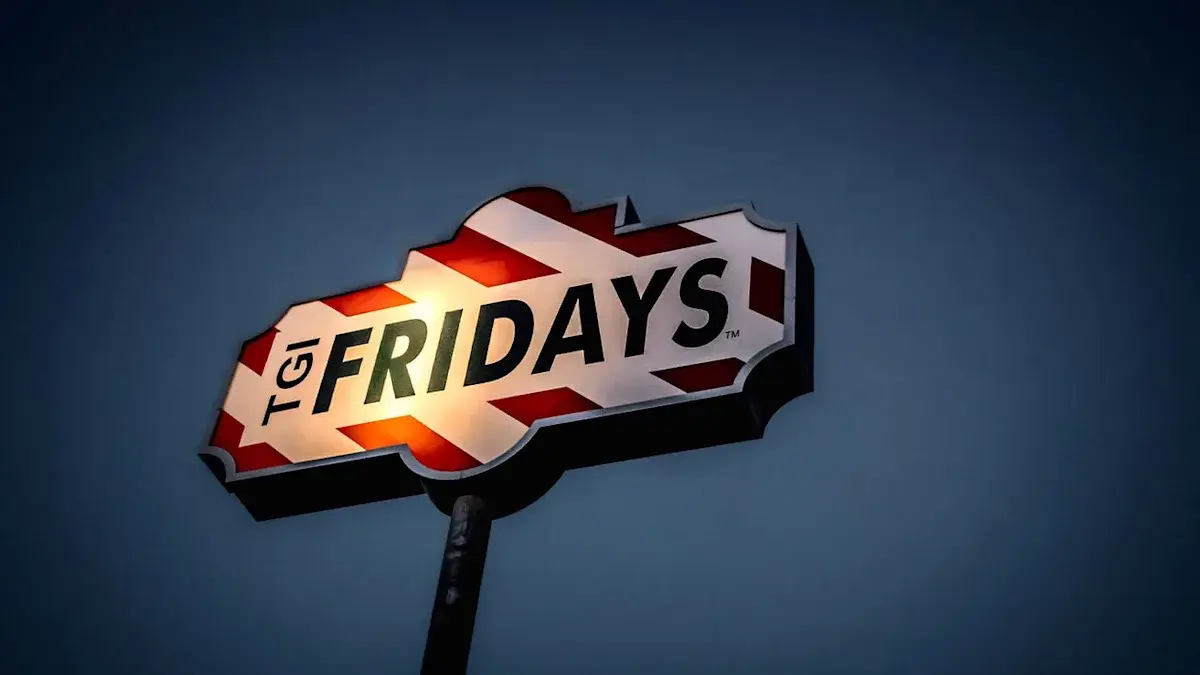
TGI Fridays sign lit against a darkening evening sky

A Texas bankruptcy judge’s approval in July of a plan to liquidate TGI Friday’s Inc. closed the legal chapter of a slide that took the chain from 601 U.S. restaurants in 2008 to 69 franchised locations listed in October 2026, and the brand’s new managers now say they can reach 1,000 restaurants worldwide by 2030.

A New York bar that became a national chain

TGI Fridays opened in 1965 as a bar on Manhattan’s Upper East Side, according to the Associated Press and the company. Carlson owned it from 1975 until 2014. The chain peaked in the United States in 2008 with 601 restaurants and about $2 billion in sales, according to Technomic data cited by the AP; FSR magazine also put the peak above 600 units.

Advertisement

Leverage arrives

In May 2014, Carlson agreed to sell the chain to private equity firms Sentinel Capital Partners and TriArtisan Capital. The Wall Street Journal reported that the deal valued Fridays at more than $800 million including debt, according to CNBC.

In 2017 the company turned to a whole-business securitization, a structure in which a franchisor pledges its royalties, license fees and intellectual property to a special-purpose issuer that sells bonds backed by those cash flows. The issuer, TGIF Funding LLC, sold notes rated BBB by Kroll Bond Rating Agency. Reports of the original size differ: Inside Mortgage Finance put the deal at $450 million, American Banker’s Asset Securitization Report put the original issuance at $425 million, and other outlets cite the $375 million term note that made up most of it.

By 2019, the owners named in a planned $380 million reverse merger with the blank-check company Allegro Merger Corp. were TriArtisan and MFP Partners, according to Restaurant Business and FSR. Allegro walked away in April 2020, citing “extraordinary market conditions” and unmet closing conditions, FSR reported.

The pandemic tightens the screws

The chain had 384 U.S. restaurants at the start of 2020, FSR reported, and Restaurant Dive put the count at 329 a year later. In June 2020, trailing 12-month systemwide sales fell to $1.4 billion, below a $1.5 billion threshold in the securitization documents, triggering rapid amortization, American Banker reported. Under that mechanism, cash that would otherwise flow back to the company is swept to pay down the notes. KBRA said in November 2024 that the deal had remained in rapid amortization since the second quarter of 2020.

U.S. sales were $728 million in 2023, down 15 percent from 2022, according to Technomic figures cited by the AP and Restaurant Business. FSR, using a different breakdown, put 2023 U.S. sales at $672 million out of $1.4 billion systemwide. The chain ended 2023 with 269 U.S. restaurants after a year of repeated leadership changes.

2024: the structure breaks

In January 2024, the company closed 36 restaurants and sold eight Northeast locations to former chief executive Ray Blanchette. That spring it agreed to a $220 million combination with Hostmore, its largest franchisee and the operator of its U.K. restaurants.

On Sept. 3, 2024, the securitization’s control party declared a manager termination event and removed TGI Fridays as manager of the pledged assets, KBRA said. FTI Consulting became successor manager. The stated causes differ: KBRA said the company failed to deliver a required auditor or back-up manager report on time, while S&P cited several factors, including a roughly $2 million overpayment of management fees.

Hostmore abandoned the deal on Sept. 9 and entered administration in Britain on Sept. 18. On Nov. 2, 2024, TGI Friday’s Inc. filed for Chapter 11 in the Northern District of Texas, covering 39 company-run U.S. restaurants. The brand’s intellectual property and the franchised restaurants were outside the case. Executive chairman Rohit Manocha blamed “COVID-19 and our capital structure,” the AP reported.

Advertisement

Selling the stores, keeping the sign

Bankruptcy made the chain fully franchised. In January 2025, the Mexico-based franchisee MERA Corp. bought nine restaurants for $34.5 million, outbidding Blanchette’s Sugarloaf Hospitality, according to FSR and Restaurant Business. In February, Yadav Enterprises agreed to buy 16 more and Sugarloaf three. Of the 39 company-owned restaurants at the start of 2025, 28 were sold to franchisees and 11 closed, according to the company’s franchise disclosure document as summarized by Fast Company.

Blanchette, who had run the chain from 2018 to 2023, was tapped in January 2025 to manage the franchised system and returned as chief executive. In Britain, Sugarloaf bought the 49-restaurant U.K. business late in 2025, then put the operating company through a pre-pack administration on Jan. 13, 2026, keeping 33 restaurants and closing 16, according to the administrator, Interpath, and PA Media.

On July 23, 2026, Judge Stacey G. Jernigan approved a consensual liquidation plan for TGI Friday’s Inc., Bloomberg Law reported; Nation’s Restaurant News dated the confirmation July 24. A post-confirmation trust will distribute what remains to creditors, according to debtors’ counsel Foley & Lardner. Court documents show no further closures under the plan, NRN reported. The corporate shell is being liquidated; the brand and its franchised restaurants are not.

The comeback plan

Sugarloaf’s “1-2-3 Strategic Vision,” announced in January 2026, targets more than 1,000 restaurants and $2 billion in annual revenue by 2030, according to NRN and the Palm Beach Post. The system has nearly 400 restaurants in about 40 countries, the company says; Bloomberg Law, in its July report, cited roughly 460 franchised locations worldwide.

In the United States, the chain listed 69 franchised restaurants in October, FSR reported. On Sept. 29, 2026, the company announced its first domestic development agreement in more than a decade: Bliss Bites LLC, led by Vinod Chand, will open five restaurants in New York State over three years. Chief operating officer Ashley Kirkley told FSR the company expects about 20 U.S. openings over two to three years and said Google review ratings had risen from about 4.0 in April to 4.6. The amended September disclosure filing, however, projected no U.S. openings in 2026 and recorded nine franchise closures so far this year, Fast Company reported.

The Newsroom Take

The unwinding of TGI Fridays was a sequence, not a single failure: a leveraged buyout, a securitization that put royalties ahead of the operator, a sales trigger tripped during the pandemic, and a reporting lapse or fee dispute that handed control to a back-up manager. The comeback plan should be judged on two separate questions. Stabilization looks credible: the company no longer owns restaurants, the bankruptcy is closed, the first U.S. development deal in a decade is signed and review scores are improving. The 2030 target is far harder to accept. Growing from about 400 restaurants to more than 1,000 in roughly four years requires about 150 net openings a year. The U.S. pipeline is about 20 openings over two to three years, and Blanchette himself told FSR in January that the system could more than double in four or five years, a slower path than the headline goal. Reaching 1,000 depends almost entirely on international partners opening restaurants at a pace the brand has not shown in decades. The numbers to watch are net U.S. unit growth in 2027 and whether the company starts disclosing same-store sales.

What it means for you

  • For diners, the brand is not disappearing: about 69 U.S. restaurants remain open under franchise owners.
  • For prospective franchisees, the pitch is a fully franchised brand with no company stores; the risk is a domestic system that was still shrinking as of September.
  • For landlords and plaza owners, more Fridays buildings may return to the market as individual franchisees weigh lease renewals.
  • For anyone tracking private equity in restaurants, TGI Fridays shows how financing built for a growing brand can speed the decline of a shrinking one.

Test yourself

1. How many U.S. restaurants did TGI Fridays have at its 2008 peak?

Answer: 601, according to Technomic data cited by the Associated Press.

2. What let the securitization’s managers take control of the brand’s royalties in September 2024?

Answer: A manager termination event under the 2017 whole-business securitization, which made FTI Consulting the successor manager.

3. What exactly is being liquidated under the plan approved in July 2026?

Answer: The old corporate entity, TGI Friday’s Inc.; the brand continues under Sugarloaf with franchised restaurants.

4. What does the “1-2-3 Strategic Vision” target?

Answer: More than 1,000 restaurants and $2 billion in annual revenue by 2030.

Discussion

  1. Was the 2017 securitization a cause of the chain’s decline, or a symptom of it?
  2. Can a casual-dining brand rebuild in the U.S. mainly through airports, hotels and small multi-unit franchisees?
  3. Should brand assets held in securitization vehicles be treated differently when the operating company files for bankruptcy?

From the network

  • Boston Made Reader — every story from the family in one free reading app.
  • BOSSTOX — markets, capital structures and corporate restructurings, explained.
  • Boston Made — the home of the Boston Made, Inc. brand family.

Sources

Boston Made Foundation Boston Made family Boston Made Foundation The philanthropic arm of the Boston Made family. Visit site →

Advertisement

The institutional news desk of the Boston Made network. Reporting is researched from wire services including The Associated Press and local sources, and written by the desk.

Editorial

GOP Ticket Loses Running Mate as House Kills Gas Tax Holiday Before Nov. 3

Shawn Oliver’s exit, a 30-121 House vote against a gas tax holiday and a 22-point Healey lead reshape the final days of the Massachusetts governor’s race.

Ecosystem Intelligence Desk

Published

on

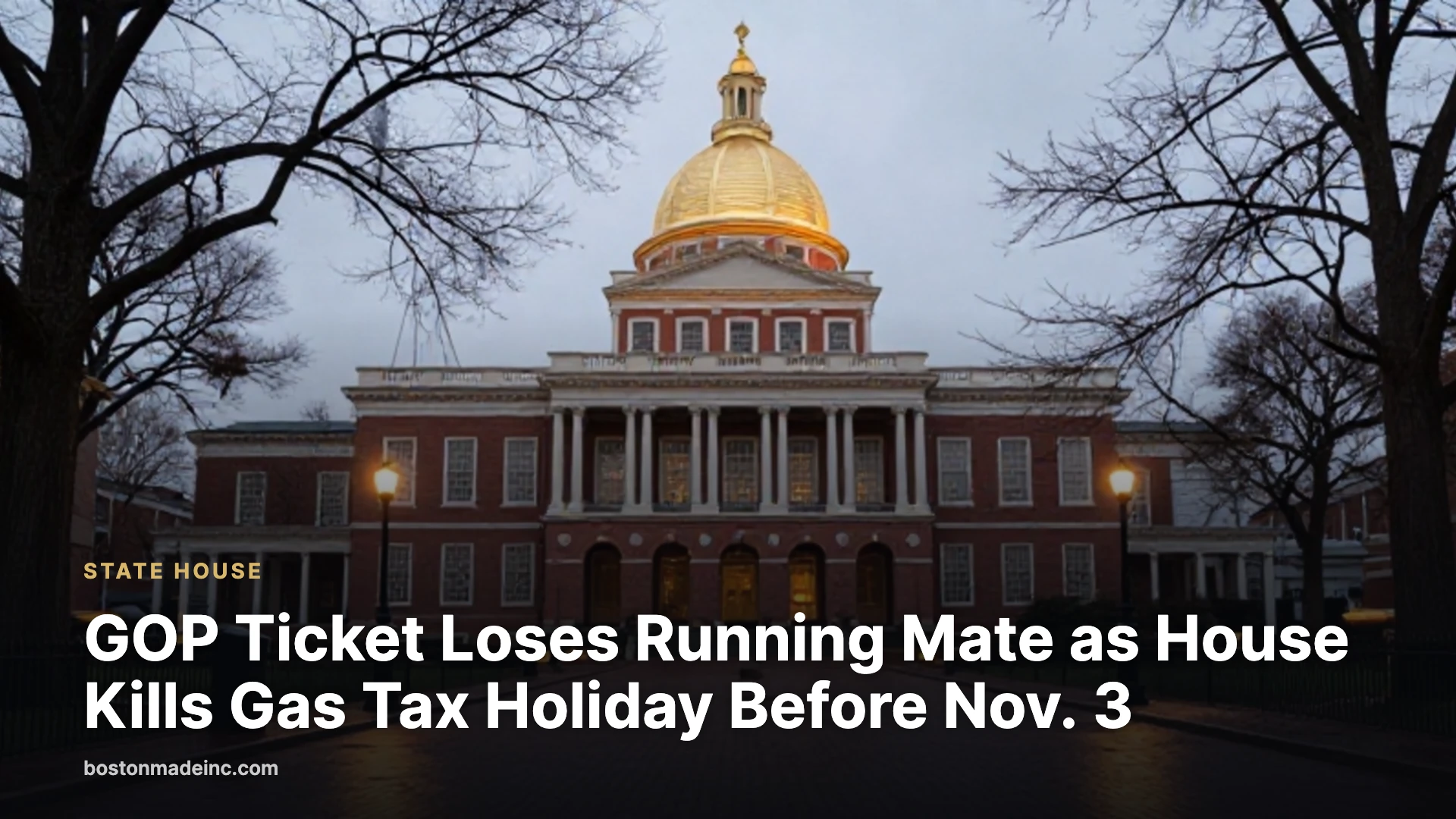
The Massachusetts State House dome at dusk with wet brick sidewalks in the foreground.

With Election Day on Nov. 3, 2026, less than two weeks away, the Massachusetts governor’s race absorbed three jolts in one week: the Republican ticket lost its lieutenant governor candidate to a drunken-driving arrest, the House killed a gas tax holiday that both major candidates had endorsed, and a new poll put Gov. Maura Healey ahead by 22 points.

A running mate exits after a New Bedford crash

Shawn Oliver, the Republican nominee for lieutenant governor, suspended his campaign on Sunday, Oct. 18, a day after a late-night crash in New Bedford. Police said Oliver’s vehicle struck multiple parked vehicles before overturning on Dartmouth Street, and he was taken to a hospital with injuries, according to the Associated Press. Boston 25 News reported that officers arrived around 11:40 p.m. on Saturday, Oct. 17, and found five vehicles involved.

Advertisement

Oliver, 42, a New Bedford city councilor first elected in 2023 and a state corrections officer, was charged with operating under the influence of liquor, negligent operation of a motor vehicle, a marked lanes violation and speeding. The New Bedford Light first reported the arrest. He pleaded not guilty on Monday, Oct. 19, was released on personal recognizance and was barred from driving, with a next court date in November, Boston 25 reported.

In a post on X announcing his exit, Oliver wrote that “the election is too important to be overshadowed by personal matters,” the AP reported. The state Department of Correction placed him on restricted duty at the Massachusetts Treatment Center while it reviews the case, spokesperson Lindsay Corcoran told the AP. New Bedford Mayor Jon Mitchell, a Democrat, called the allegations deeply concerning and said the public deserved to hear from Oliver directly.

Minogue’s ballot problem

Republican gubernatorial nominee Mike Minogue, a businessman and military veteran, said he had asked Oliver to step aside and would formally request his resignation if elected. Because ballots were already printed, Oliver’s name remains on them. At a Monday press conference, Minogue asked supporters to vote the ticket as printed, warning that crossing out Oliver’s name or writing in another candidate could void the vote, according to Boston 25 News.

Minogue said he would leave the lieutenant governor’s post vacant if he wins, relying on the state’s existing succession order, and his campaign estimated that would save more than $300,000 in salary and security costs. Healey, speaking the same day, described the Minogue campaign as showing “chaos,” noting that Oliver was the second running mate the campaign has lost, Boston 25 reported. The lieutenant governor’s duties are largely ceremonial, but the officeholder is first in line if a governor resigns or dies. Healey’s running mate is incumbent Lt. Gov. Kim Driscoll.

Where the polls stand

A Suffolk University/Boston Globe poll released Tuesday, Oct. 20, found Healey with more than 58 percent support to Minogue’s 36 percent among 500 registered voters surveyed Oct. 14-17, with a margin of error of 4.4 percentage points, according to State House News Service reporting carried by WGBH. A UMass Amherst/WCVB poll released a day earlier put the race at 56-31.

The same Suffolk survey found a more complicated mood beneath the horse race. More than 42 percent of respondents said Massachusetts has gotten worse over the past four years, roughly 40 percent said it has stayed the same, and just over 52 percent said the state is headed in the right direction. About 21 percent said they had never heard of Minogue. Asked what strains their finances most, respondents most often named utility and heating bills (almost 23 percent) and gas prices (11 percent).

Down the ballot, the poll showed U.S. Sen. Ed Markey leading Republican John Deaton 60 percent to about 31 percent, and Attorney General Andrea Campbell leading Michael Walsh 54 percent to roughly 28 percent. Among the nine statewide ballot questions, Question 1, which would extend the public records law to the governor’s office and Legislature, drew the strongest support at more than 62 percent, while Question 8, which would repeal the recreational marijuana laws, drew about 21 percent.

Advertisement

The gas tax holiday dies in the House

The one policy both candidates agreed on did not survive the week. Healey had proposed a two-month suspension of the state’s 24-cent-per-gallon gas tax, a measure estimated to cost about $120 million, as part of a supplemental budget to close the books on fiscal 2026. The House Ways and Means Committee, chaired by Rep. Aaron Michlewitz, left the holiday out of its $2.35 billion redraft, WBUR reported, with Michlewitz citing the loss of transportation revenue and doubts that savings would reach drivers.

On the House floor on Wednesday, Oct. 21, Rep. Todd Smola of Warren offered an amendment to restore the suspension with the backing of the full Republican caucus. It failed 30-121, and the underlying bill passed 152-0, the Daily Hampshire Gazette reported. House Speaker Ron Mariano dismissed the idea as gimmickry, and Rep. James Arciero, co-chair of the Transportation Committee, estimated the average driver would save about $25.

Healey’s office pushed back. “There is nothing gimmicky about a proposal to give gas tax relief to people,” a spokesperson said, according to the Gazette. Minogue, who has pledged to suspend the tax whenever prices reach $4 a gallon, called the House vote “a political stunt, pure and simple,” NBC Boston reported. The statewide average stood at about $4.28 a gallon, according to AAA figures cited by NBC Boston.

What else is in the $2.35 billion bill

The House package directs roughly $1.8 billion in gross spending to MassHealth, about $160 million to snow and ice removal paid from surtax revenue, $79 million toward unemployment insurance interest repayments, and $10 million to the Massachusetts Life Sciences Center, according to NBC Boston. It also adds disclosure requirements for AI-generated political ads and bars constitutional officers from using public money for ads featuring their own name, voice or likeness. The Senate, which did not hold a formal session this week, will write its own version; Michlewitz told WBUR he hopes to send a compromise to the governor by Nov. 15.

The Newsroom Take

Each of this week’s developments cuts against the Republican ticket, but the poll numbers suggest the race was not close before Oliver’s arrest and the gas tax fight. What the week did change is the shape of the closing argument. Minogue’s message of affordability now has to compete with questions about his own vetting, and his gas tax pledge collides with a Democratic House that just voted it down 121-30. Healey, meanwhile, finds herself on the same side of the gas tax question as her opponent and opposed by her party’s legislative leadership, a split that will matter more for the Senate negotiation in November than for the election itself. The number worth watching is not the 22-point margin but the 42 percent who say the state has gotten worse: that is the electorate the next governor, almost certainly Healey, will have to answer to on heating bills and housing in January.

What it means for you

  • Early voting and mail ballots are already in circulation; a vote for the Minogue ticket counts as printed, and voters should not alter the lieutenant governor line.
  • Do not expect pump prices to drop from a state tax holiday before Election Day. The House has rejected it, and the Senate is not in formal session this week.
  • Nine ballot questions appear on the Nov. 3 ballot, including measures on public records, same-day registration, an all-party primary and the 2024 gun law. Read them before you vote.
  • Business owners should watch the Senate’s version of the supplemental budget, which could still change the unemployment insurance and political advertising provisions.

Test yourself

1. When did Shawn Oliver suspend his campaign, and does his name stay on the ballot?

Answer: He suspended on Sunday, Oct. 18; his name remains on the ballot because ballots were already printed.

2. What was the House vote on the gas tax holiday amendment?

Answer: It failed 30-121 on Wednesday, Oct. 21, while the underlying $2.35 billion bill passed 152-0.

3. What did the Suffolk/Globe poll show in the governor’s race?

Answer: Healey led Minogue by more than 58 percent to 36 percent, with a 4.4-point margin of error.

4. How much is the state gas tax Healey wanted to suspend?

Answer: 24 cents per gallon, for two months, at an estimated cost of about $120 million.

Discussion

  1. Should a candidate whose name must stay on the ballot be allowed to formally withdraw after ballots are printed?
  2. Is a 60-day gas tax holiday meaningful relief or a gimmick, given the estimated $25 average savings?
  3. What explains a governor leading by 22 points while 42 percent of voters say the state has gotten worse?

From the network

  • Boston Made Reader — every story from the family in one free reading app.
  • Boston Made — the home of the Boston Made, Inc. brand family.
  • Boston Made App — the news wire for Boston politics, business and city life.

PupWear (.org) Boston Made family PupWear (.org) Dog apparel and gear inspired by Boston the GoldenDoodle. Visit site →

Advertisement

Continue Reading

Boston Made Stories

Twenty Years of “Tim McGraw”: Taylor Swift’s Debut Album Turns 20

On October 24, 2006, a 16-year-old songwriter released her debut album. Twenty years later, here is how Taylor Swift’s first record was made, how it climbed the charts, and why it still matters, plus a 10-question trivia game.
Ecosystem Intelligence Desk

Published

on

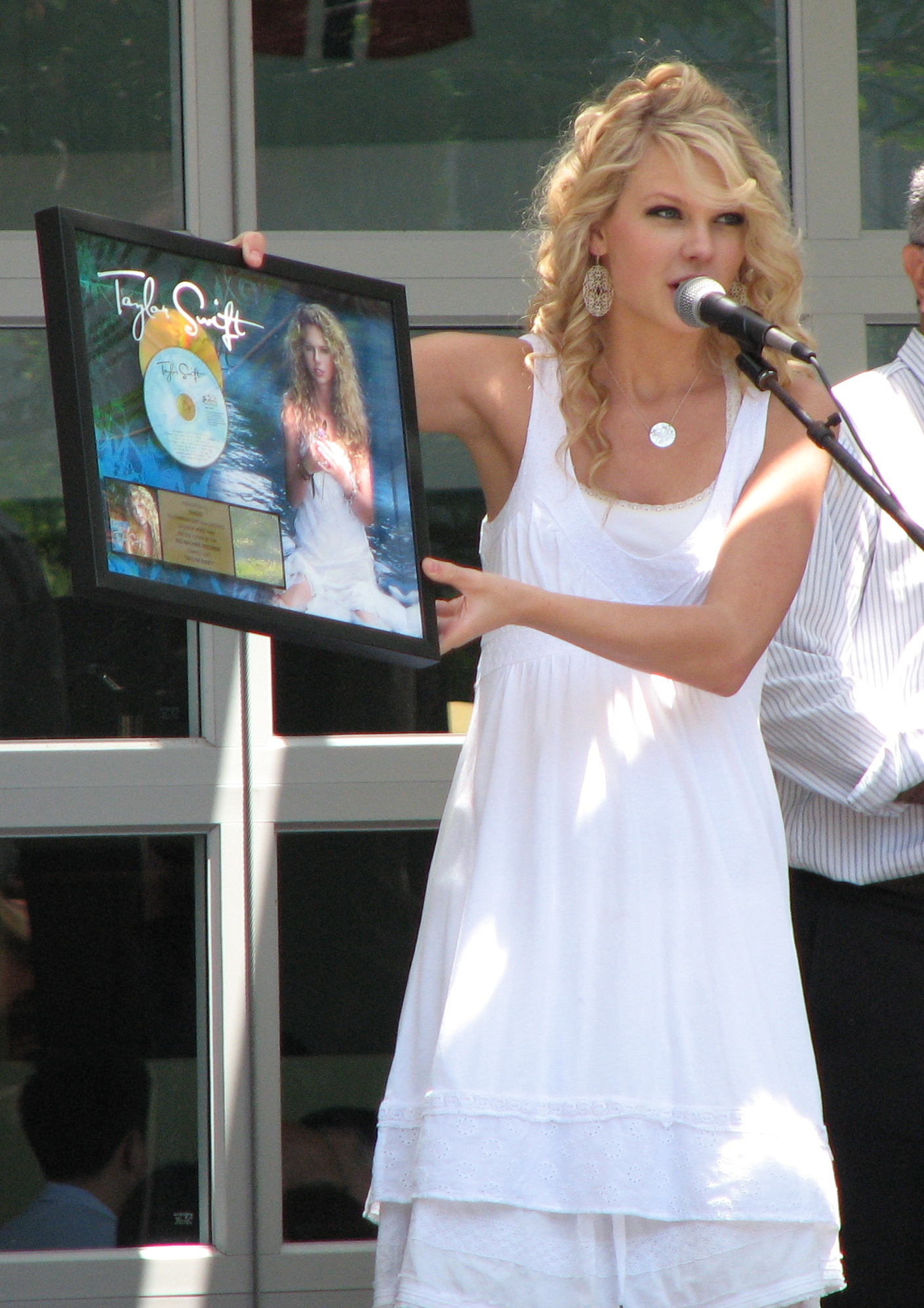
Taylor Swift performs during a 2007 concert promoting her debut album.

BOSTON — Twenty years ago today, a 16-year-old from Pennsylvania who had moved to Nashville to write songs released an album with her own name on the cover. It came out on October 24, 2006, on a brand-new independent label called Big Machine Records. It opened with a song named after somebody else’s husband.

It did not sound like the start of the most successful songwriting career of a generation. It sounded like a kid with a guitar who had a lot to say about high school, pickup trucks and the boy who never noticed her. That turned out to be exactly the point.

Advertisement
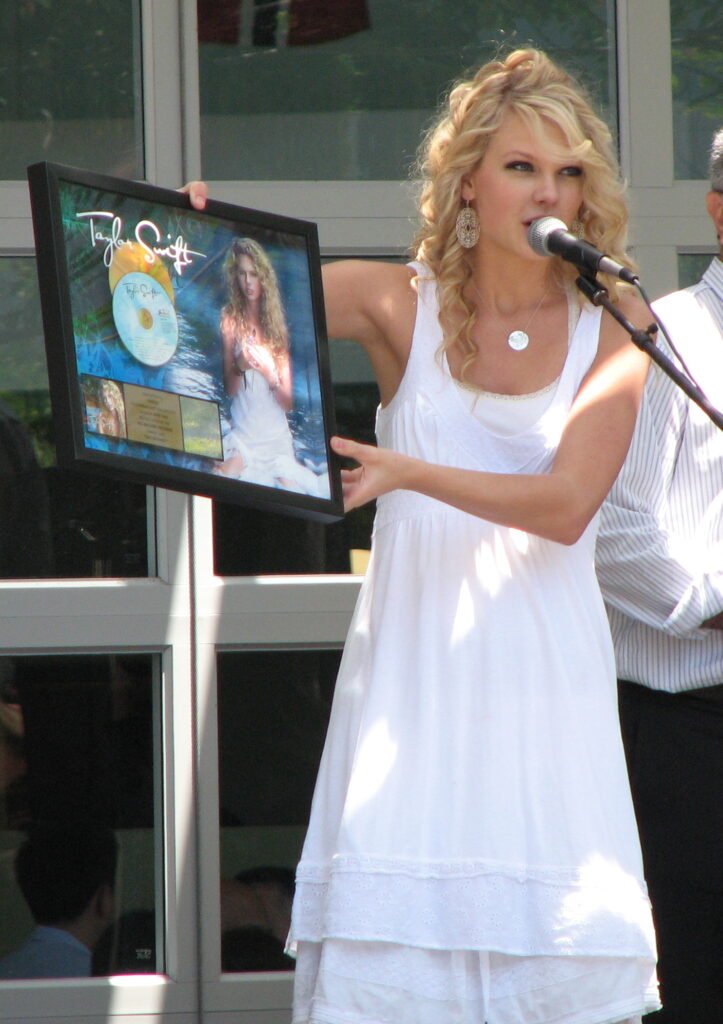
Taylor Swift performs during a 2007 concert promoting her debut album.
Taylor Swift promoting her debut album at a 2007 concert. Photo: Brian Cantoni, CC BY 2.0, via Wikimedia Commons.

A songwriter first

The detail that matters most about the debut is in the credits. Taylor has a writing credit on every song. She co-wrote seven of them with Nashville songwriter Liz Rose, and she wrote three entirely on her own: “The Outside,” “Should’ve Said No” and “Our Song.” Producer Nathan Chapman, then a little-known demo producer, handled every track except “The Outside.”

That was rare for a teenage artist in 2006, and it set the template for everything that followed. Twenty years and twelve studio albums later, the songs are still hers in every sense of the word.

The singles that built a fan base

  • “Tim McGraw” (June 2006) reached No. 6 on Hot Country Songs and No. 40 on the Hot 100, and introduced a voice that wrote in specific, cinematic details.
  • “Teardrops on My Guitar” (2007) crossed over to pop radio and became the album’s biggest Hot 100 hit at No. 13.
  • “Our Song” (2007) went to No. 1 on Hot Country Songs. Taylor wrote it alone for a ninth-grade talent show.
  • “Picture to Burn” (2008) reached the country Top 10.
  • “Should’ve Said No” (2008) became her second country No. 1, again written by Taylor alone.

The slow-burn chart run

The album debuted modestly, at No. 19 on the Billboard 200 with about 40,000 copies. Then it just kept going. It reached its peak, No. 5, in January 2008, more than a year after release. It spent 24 weeks at No. 1 on Top Country Albums, and by October 2009 it had logged 157 weeks on the Billboard 200, the longest chart run of any album released in the 2000s. In September 2025, the RIAA certified it 8× Platinum.

The era brought a CMA Horizon Award in 2007 and a Grammy nomination for Best New Artist in 2008. In 2022, Rolling Stone ranked it among the 100 best debut albums of all time.

  1. June 19, 2006“Tim McGraw” is released as the first single.
  2. October 24, 2006Taylor Swift is released on Big Machine Records. It debuts at No. 19 on the Billboard 200 with about 40,000 copies.
  3. 2007“Teardrops on My Guitar” crosses over to pop and reaches No. 13 on the Hot 100. Taylor wins the CMA Horizon Award.
  4. Late 2007 and 2008“Our Song” and “Should’ve Said No,” both written by Taylor alone, hit No. 1 on Hot Country Songs. She’s nominated for Best New Artist at the Grammys.
  5. January 2008More than a year after release, the album reaches its Billboard 200 peak at No. 5.
  6. October 2009157 weeks on the Billboard 200, the longest-charting album of the 2000s.
  7. May 30, 2025Taylor buys back the masters of her first six albums, including this one, and says her debut re-recording is finished.
  8. September 2025The RIAA certifies the album 8× Platinum.
  9. October 24, 2026Twenty years.

Owning the beginning

For years, the debut was part of the catalog Taylor did not own. When Big Machine was sold in 2019, her masters went with it, and she spent the following years re-recording her albums as “Taylor’s Versions.” On May 30, 2025, she announced she had bought back the master recordings of her first six albums, including this one. In the same letter she said her debut re-recording was finished and that it could still “re-emerge when the time is right.”

Fans have circled this anniversary as a likely moment. As of our deadline, no release date for Taylor Swift (Taylor’s Version) had been announced. If that changes, this story will be updated.

Taylor Swift performs in Joliet, Illinois, in February 2008.
Joliet, Illinois, February 2008, at the height of the debut era. Photo: Adam Bielawski, CC BY-SA 3.0, via Wikimedia Commons.

From a debut to a dynasty

It is a long road from a debut at No. 19 to The Life of a Showgirl, which opened in October 2025 with more than 4 million album-equivalent units in its first week in the US, the biggest debut week on record. A deluxe edition, The Encore, followed in late September 2026. The craft that runs through all of it was already there on the first record: honest lyrics, sharp details and a writer who refused to let anybody else tell her story.

Boston Made Newsroom · Trivia

The Debut Quiz: 10 questions for the class of 2006

How well do you know the album that started it all? Every answer is in this story.

Question 1 of 10Score: 0

01 / 10

When was Taylor Swift’s debut album released in North America?

02 / 10

How old was Taylor when the album came out?

03 / 10

Which song was the album’s first single?

04 / 10

Who produced almost the entire album?

05 / 10

Which songwriter co-wrote seven of the album’s songs with Taylor?

06 / 10

Advertisement

Which single climbed highest on the Billboard Hot 100?

07 / 10

Which two singles reached No. 1 on Hot Country Songs?

08 / 10

How long did the album spend on the Billboard 200 by October 2009?

09 / 10

What did the RIAA certify the album in September 2025?

10 / 10

What Grammy nomination did the album era bring Taylor in 2008?

0/10

Keep celebrating

Catch up on every chapter in our field guide to the Eras of Taylor Swift, and follow the newsroom’s ongoing coverage in the Boston Made Reader.

Sources

Boston Made is not affiliated with or endorsed by Taylor Swift or her record labels. Photos are freely licensed from Wikimedia Commons and credited under each image.

Keep Up With Nate Boston Made family Keep Up With Nate The personal site of Boston Made founder Nathan Strickland. Visit site →

Advertisement

Continue Reading

Boston Made Stories

The Debut Bracket: Pick the Greatest Song on Taylor Swift’s First Album

Eleven songs from the 2006 debut, head-to-head, until one is left standing. Plus where things stand on a debut Taylor’s Version. Part five of our Countdown to 20.

Ecosystem Intelligence Desk

Published

on

Taylor Swift in concert in Hamburg, New York, August 2008

BOSTON — Two days to go. We have told the story of how the debut was made, walked through every song and followed the radio tour. Now it is your turn. Eleven songs, head-to-head, until only one is left.

The Debut Bracket

Advertisement

Eleven songs. One champion.

Tap your favorite in each matchup. Songs are seeded in random order every time you play.

VS

Your debut champion

Twenty years later, still undefeated.

How to play

Every matchup is between two songs from the standard edition of Taylor Swift. Pick the one you would rather hear right now. Winners move on, and if a round has an odd number of songs, one gets a bye. The order is shuffled every time, so play twice and see if your champion holds up.

Taylor Swift performs in Hamburg, New York, in August 2008.
Taylor Swift in concert in Hamburg, New York, in August 2008. Photo: Meliss402, CC BY-SA 3.0, via Wikimedia Commons.

Taylor’s Version watch

The other question fans are asking this week is whether a re-recorded debut is on the way. Here is what is on the record:

  • 2019: Big Machine Records was sold, and the master recordings of her first six albums, including the debut, went with it.
  • 2020 onward: Taylor began re-recording those albums as “Taylor’s Versions,” releasing four of them.
  • May 30, 2025: She announced she had bought back the masters of all six albums. In the same letter she said the debut re-recording was finished, and that it could still re-emerge when the time is right.

As of our deadline, no release date for Taylor Swift (Taylor’s Version) had been announced. We will be watching on October 24, and so will everyone else.

Sources

Boston Made is not affiliated with or endorsed by Taylor Swift or her record labels. Photos are freely licensed from Wikimedia Commons and credited under each image.


Boston Made Pets Boston Made family Boston Made Pets Pet apparel and gear inspired by Boston the GoldenDoodle. Visit site →

Advertisement

Continue Reading
Advertisement

Advertisement

Ad

Advertisement

Trending

--:--·---·--°