Connect with us

Weather where you are

Choose your location or share it once. We round your coordinates to about 1 km before sending them to our site and MET Norway for your forecast. Your choice stays in this browser tab.

Stay close to Boston

Get new Boston stories and Boston Made company updates, delivered as browser notifications.

Choose Enable notifications, then allow notifications in your browser.

Your browser subscription is stored by Boston Made and delivered through your browser’s push service. You can turn notifications off in your browser’s site settings. Privacy policy

Technology

BOSSTOX Maps the Power, Cooling and Capital Behind AI Across Six Intelligence Lanes

BOSSTOX expands its AI infrastructure coverage — power and grid, cooling, custom silicon, optical networking, data-center capacity and capital — plus a free data center energy cost estimator.

Nathan Strickland

Published

on

BOSSTOX Maps the Power, Cooling and Capital Behind AI Across Six Intelligence Lanes

WORCESTER, Mass. — October 9, 2026 — BOSSTOX, the AI infrastructure intelligence product from Boston Made, Inc., today announced its expanded coverage of the physical and financial systems behind the AI economy, organized into six intelligence lanes at BOSSTOX.com with educational explainers at info.bosstox.com.

The conversation about AI usually starts with chips. BOSSTOX starts with what the chips need: electricity, cooling, fiber, buildings and capital. Its “Latest signals” feed tracks developments across six lanes:

  1. Power & grid access — interconnection queues, generation, transmission and the utilities serving large loads.
  2. Cooling — the shift from air to liquid cooling as rack densities climb.
  3. Custom silicon — accelerators designed in-house by the largest buyers of compute.
  4. Optical networking — the transceivers and fiber that connect clusters.
  5. Data-center capacity — sites, campuses and the timelines to bring them online.
  6. Capital & backlog — spending plans, contracts and order books.

Built on clear rules

BOSSTOX publishes under a simple set of principles: claims keep their publication and event dates; announced, contracted, funded and deployed stages are kept separate; every item gets human review; and unknowns stay unknown until they are supported. A “Network watch” section and a research desk round out the product.

Try the math yourself

A single large AI campus can draw as much electricity as a mid-sized city. The estimator below shows how IT load, cooling efficiency (PUE) and power prices turn into an annual energy bill.

Data Center Power & Energy Cost Estimator

The AI economy runs on electricity. Estimate how much power a facility draws and what it costs to run for a year.

Educational estimate only — not investment advice. Real costs vary with tariffs, demand charges and contracts.

Reading the numbers

  • PUE is total facility power divided by the power that reaches the computers. A PUE of 1.3 means 30% more power goes to cooling and conversion.
  • Utilization matters: facilities rarely run at nameplate capacity around the clock.
  • Price per kWh varies widely by region and contract — which is exactly why grid access has become a competitive advantage.

BOSSTOX content is educational and is not investment advice. Readers should do their own research and consult a licensed professional before making financial decisions.

About BOSSTOX

BOSSTOX is a Boston Made, Inc. product that tracks the power, cooling, silicon, networking, capacity and capital behind artificial intelligence. Visit BOSSTOX.com.

Media contact: Boston Made, Inc., 8 Grafton Street, Suite 210, Worcester, MA 01608 · sales@bostonmade.com

Founder & CEO of Boston Made, Inc., a Boston-based media and business portfolio company. I lead Boston Made's independent, hyperlocal coverage of Boston's economy, businesses, and neighborhoods, alongside a growing portfolio of Boston-rooted brands — including Boston Made Pets, where my passion for dog wearables and canine wellness lives on. I’m an avid reader and journaler who believes in reporting that's closer to home.

Continue Reading
1 Comment

1 Comment

  1. Pingback: Boston Made Newsroom Becomes the Official News Desk for the Entire Boston Made Network - Boston Made, Inc. | Boston, Massachusetts, USA

Leave a Reply

Your email address will not be published. Required fields are marked *

Corporate News

Parking, Tides and 18 Million Visitors: The Research Behind Boston Made’s Grand Strand Launches

Tourism data, seasonal parking rules, and the economics of searching for a space explain why Boston Made launched Grand Strand App and Spot Check App together, and what they still have to prove.

Nathan Strickland

Published

on

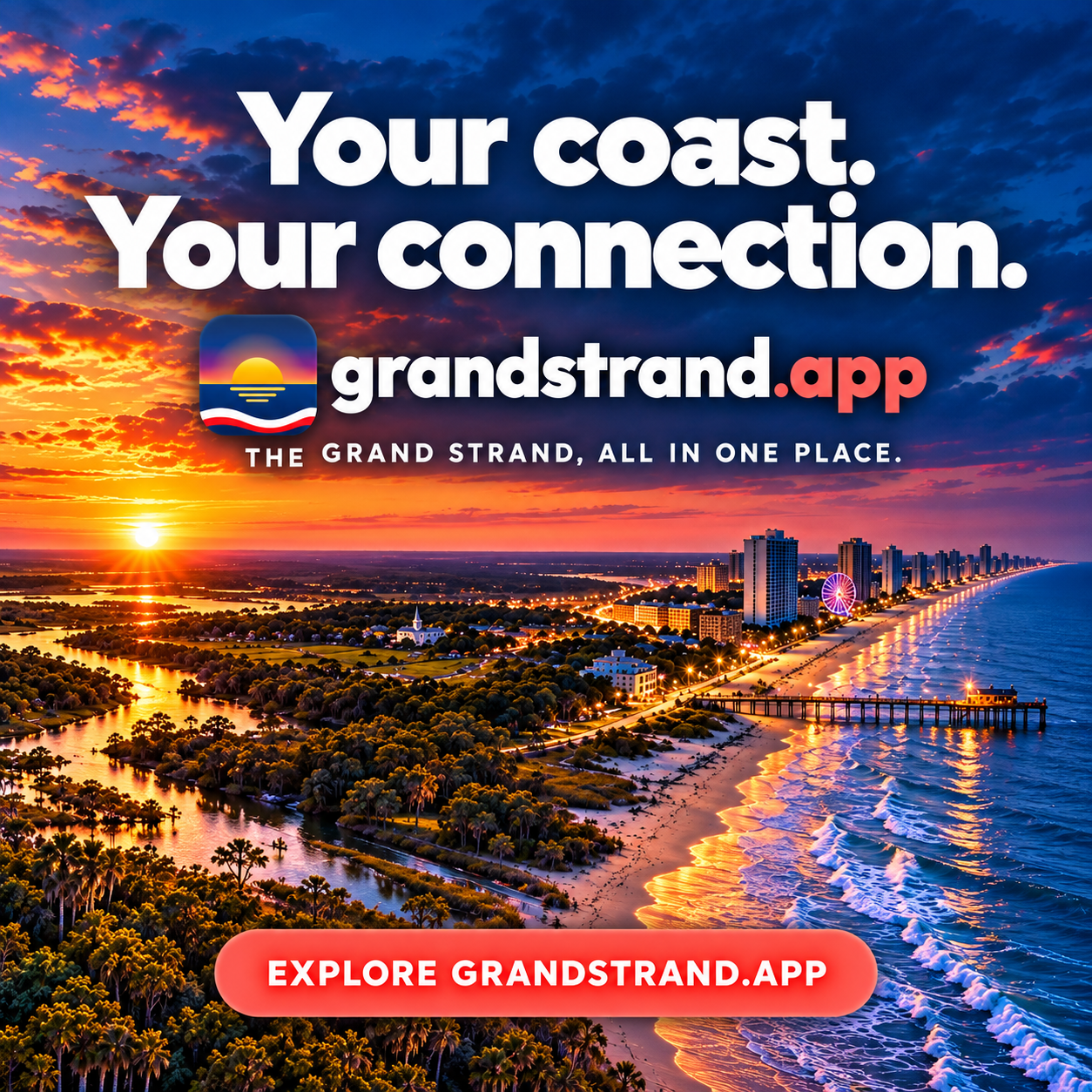
Grand Strand app promo: the Myrtle Beach coastline at sunset with “Explore grandstrand.app”
Boston Made, Inc.Office of the Founder & CEO
From the desk of Nathan StricklandBoston, Massachusetts ·

Dear Sir or Madam,

BOSTON — Boston Made, Inc. has added two consumer platforms to its portfolio, both aimed at the same 60-mile stretch of South Carolina coastline: Grand Strand App, a live local guide and trip concierge, and Spot Check App, a peer-to-peer parking marketplace. A look at the tourism and parking data behind the region shows why the company chose to launch them together, and what the two products will have to prove.

A large market that had a softer year

The Grand Strand is one of the biggest leisure-travel markets on the East Coast. According to Visit Myrtle Beach, the area drew about 18.2 million visitors in 2024, who spent roughly $13.2 billion, up 5.3% from the year before. The organization puts the total economic impact at more than $26 billion and credits tourism with more than 82,000 direct and indirect jobs across the region.

The trend did not hold into 2025. Data released by Visit Myrtle Beach and the Myrtle Beach Area Chamber of Commerce showed tourism down 3% for the year, WMBF News reported in February. Explanations varied, including severe-weather worries, negative social-media attention, and household budgets that kept some travelers home. Local tourism leaders said the recovery would depend on the experiences the destination offers, such as live music, theater, the beach, and food.

Why it matters: In a softer year, the destinations that win are the ones that are easiest to plan and enjoy. That is the gap Grand Strand App is built for. Rather than a static directory, it opens on live conditions: surf, the next tide from the NOAA gauge at Springmaid Pier, beach-safety notes, and weather. Its concierge then suggests three stops with drive times based on the weather, the tide, and the time of day.

Parking is a seasonal policy question

Parking on the Grand Strand changes with the calendar. In Myrtle Beach’s downtown district, which runs from Sixth Avenue South to 21st Avenue North, paid parking returned on March 1, 2026, and runs through September 30, with enforcement from 9 a.m. to midnight, seven days a week, and tickets starting at $30, according to WMBF News. From October 1 through the end of February, city-metered spaces downtown are free under a City Council decision to restore off-season free parking.

The result is a market where demand peaks in exactly the months when public parking costs the most and is hardest to find, while private driveways and garages a few blocks from the beach often sit empty.

The cost of searching is not trivial anywhere. A widely cited 2017 INRIX study estimated that the average U.S. driver spent about 17 hours a year looking for parking, at a cost of about $345 per driver in wasted time, fuel, and emissions, or $72.7 billion nationally. The figures are national and several years old, but the pattern they describe is sharper in a crowded beach town during peak season.

How the two products fit together

Spot Check’s model is simple. Drivers search a live map of driveway, garage, lot, street, covered, and EV-charging spaces, each showing status and an hourly price. They message a host or send a booking request, park, and leave a review. Hosts list a space in about two minutes by dropping a pin, choosing a type, and setting an hourly price and size or clearance.

Grand Strand App acts as the demand funnel. Its navigation includes a “reserve a driveway” link to Spot Check and a “list a parking space” link for owners, and its Grand Strand Season series covers parking topics directly, including free downtown parking, North Myrtle Beach parking, and whether rental guests should use valet service. Spot Check, in turn, publishes a daily Parking Briefing that is syndicated into Boston Made Reader.

The pairing reflects a strategy Boston Made has used across its portfolio: a content product that earns daily attention, linked to a transactional product that serves the need that content keeps surfacing.

What the platforms will have to prove

  • Supply before demand. Any two-sided marketplace has to recruit hosts before drivers will trust the map. Spot Check’s early inventory is small, and growth will depend on reaching homeowners and rental owners near high-traffic areas.
  • Local rules. Renting a driveway can be affected by municipal ordinances, HOA covenants, and rental-property agreements. Hosts will need clear guidance, and the platform will need to keep pace with local policy.
  • Trust and accountability. Reviews are Spot Check’s main trust mechanism today. Clear booking terms, dispute handling, and verified listings will matter as volume grows.
  • Seasonality. With free downtown parking for five months of the year, Spot Check’s value is highest in spring and summer and around events. Grand Strand App’s off-season content, from fall calendars to shoulder-season itineraries, has to keep users engaged in the quieter months.
  • Data quality. A live guide is only as good as its feeds. Grand Strand App’s reliance on marine forecasts and NOAA tide data is a strength, as long as those inputs stay current and clearly labeled.

The bottom line

Grand Strand App and Spot Check App are small, early products in a large regional market. Their bet is that a guide people check every morning can create steady demand for a parking marketplace, and that a parking marketplace gives the guide a practical reason to exist beyond inspiration. Both brands are now profiled on the Boston Made Brands page, and the founding story is on bostonmade.com.

Sources

  • Visit Myrtle Beach, destination statistics: context.visitmyrtlebeach.com
  • WMBF News, “Myrtle Beach tourism down 3% in 2025, local businesses hope for better 2026” (Feb. 5, 2026): wmbfnews.com
  • WMBF News, “Paid parking returning to Myrtle Beach downtown district this weekend” (Feb. 27, 2026): wmbfnews.com
  • INRIX via Parking.net, “Searching for Parking Costs Americans $73 Billion a Year” (2017): parking.net
  • Product details from grandstrand.app and spotcheckapp.com, reviewed October 8, 2026.

Continue Reading

Boston Made Stories

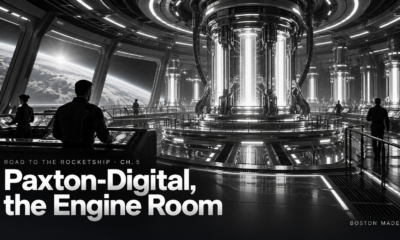
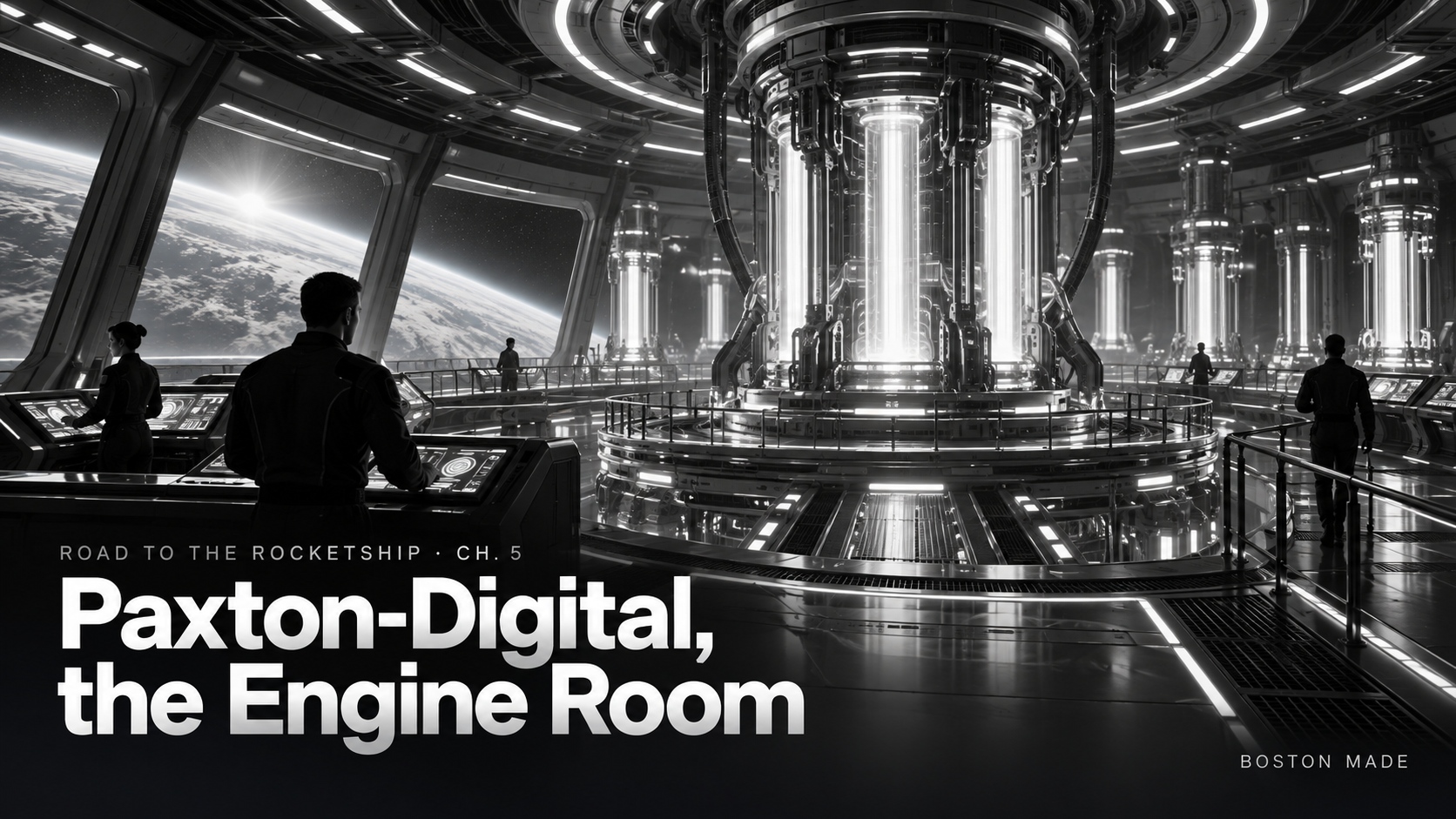
Road to the Rocketship, Ch. 5: Paxton-Digital, the Engine Room

Paxton-Digital built the Boston Made ecosystem and developed the BOSSTOX platform. Its newest focus is healthcare — starting with Scout, a healthcare-intelligence search.

Nathan Strickland

Published

on

Road to the Rocketship, Ch. 5: Paxton-Digital, the Engine Room
Boston Made, Inc.Office of the Founder & CEO
From the desk of Nathan StricklandBoston, Massachusetts ·

Dear Sir or Madam,

ROAD TO THE ROCKETSHIP · Chapter 5

Every rocketship has an engine room nobody photographs.

Behind the Reader, the app and the brand sites sits Paxton-Digital, the technology company that built the Boston Made ecosystem and developed the BOSSTOX platform.

BOSSTOX: intelligence, not hype

BOSSTOX tracks markets and companies with dated, sourced records. That covers the AI-infrastructure watch behind the Picks & Shovels storyline: the compute, cooling, power and networking companies doing the physical work of the AI buildout. Its learning hub, info.bosstox.com, teaches the basics in plain English.

Scout: healthcare intelligence

Paxton-Digital’s newest focus is healthcare. Scout is a healthcare-intelligence search that helps people and organizations find and make sense of healthcare information quickly, using the same source-first approach as BOSSTOX.

Combining the technology

The thread connecting the brands is reuse. The same pieces (sourced data, AI search, publishing, membership) are assembled differently for each audience: investors on BOSSTOX, patients and providers on Scout, readers on the Reader, small businesses on Fenway Web.


ROAD TO THE ROCKETSHIP is the Boston Made Newsroom’s running story of how Boston Made, Inc. is building its ecosystem, told one chapter at a time. Previous: Ch. 4. Next: Ch. 6, Kingswell.

📚 Read every chapter on the Boston Made Reader → Storylines · Join free at app.bostonmade.com/membership.

Forward-looking descriptions reflect current plans and may change. Nothing here is an offer to sell or a solicitation to buy securities.

Continue Reading

Editorial

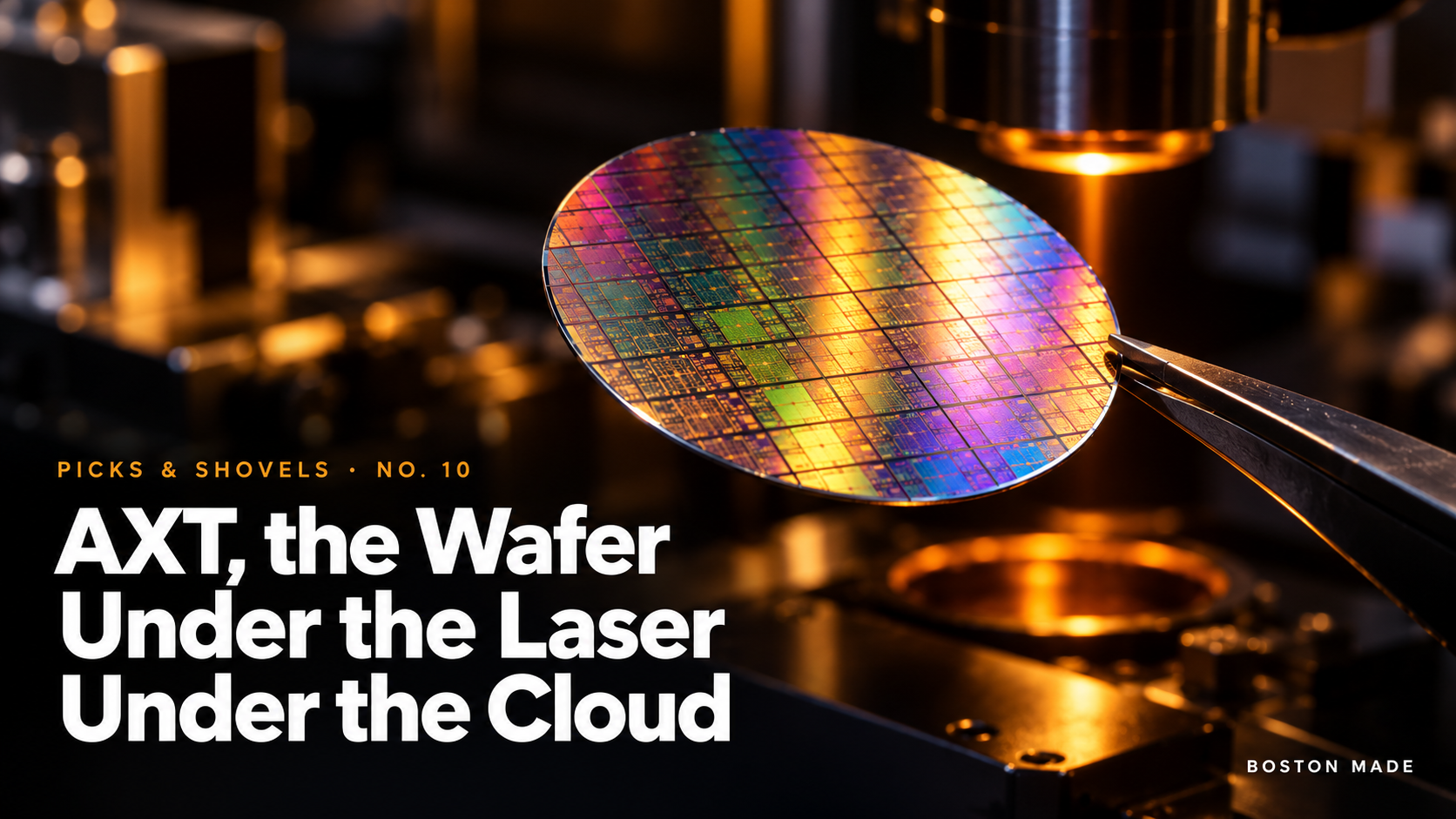
Picks & Shovels No. 10: AXT, the Wafer Under the Laser Under the Cloud

The lasers in AI optics start as indium-phosphide wafers. AXT makes them, and its InP revenue jumped from $3.6 million to $30.7 million in a year. Lumentum and Coherent have paid deposits to secure supply.

Nathan Strickland

Published

on

Picks & Shovels No. 10: AXT, the Wafer Under the Laser Under the Cloud
Boston Made, Inc.Office of the Founder & CEO
From the desk of Nathan StricklandBoston, Massachusetts ·

Dear Sir or Madam,

PICKS & SHOVELS · No. 10 · Specialty materials

Follow the supply chain far enough down and you reach a wafer of indium phosphide. Almost nobody makes it.

What it does

AXT Inc (NASDAQ: AXTI) makes compound-semiconductor substrates, mainly indium phosphide (InP) and gallium arsenide wafers. Most of the production happens at its China-based subsidiary, Tongmei.

The shovel it sells

The raw InP wafers that laser makers like Lumentum and Coherent need to build the lasers inside AI transceivers. This is the bottom layer of the optical stack.

What the numbers say

  • Q2 2026: revenue was $47.6 million, up 164% year over year. InP revenue was $30.7 million, up from $3.6 million a year earlier.
  • Q3 2026 outlook: about $66 million in “realizable revenue,” with upside that depends on more Chinese export permits.
  • Capacity plan: quarterly InP capacity rising from about $20 million to $60 million by year-end and more than $130 million by the end of 2027.
  • Customers: supply agreements with prepayments or deposits from Lumentum ($43.5 million), Coherent ($25.4 million) and Casella ($22.3 million).

Sources: Semiconductor Today, Aug 4, 2026; SEC 8-K.

What could go wrong

  • It depends on Chinese export permits for InP.
  • Manufacturing based in China brings geopolitical and tariff exposure.
  • Small scale and concentrated customers.

Season one, wrapped

Ten companies, one chain: turbines and fuel cells make the power, switchgear routes it, chillers remove the heat, packaging and burn-in turn silicon into reliable chips, lasers and cables connect them, and a wafer company in the basement makes the lasers possible. Season two looks at Coherent, Fabrinet, Ciena, Astera Labs, Eaton, nVent and Amphenol. Start again at No. 00.


PICKS & SHOVELS is a Boston Made Newsroom storyline from the BOSSTOX intelligence desk: one under-covered AI-infrastructure company at a time, explained in plain English with sources. Previous: No. 09.

📚 Follow the whole storyline on the Boston Made Reader → Storylines · Track the companies in BOSSTOX Learn.

Not investment advice. Boston Made, Inc. and its writers are not licensed financial advisors. Figures come from the company filings and reports linked above, for the periods stated; check the primary filings before making any decision.

Continue Reading
Advertisement

Advertisement

Ad

Advertisement

Trending

--:--·---·--°