
Editorial
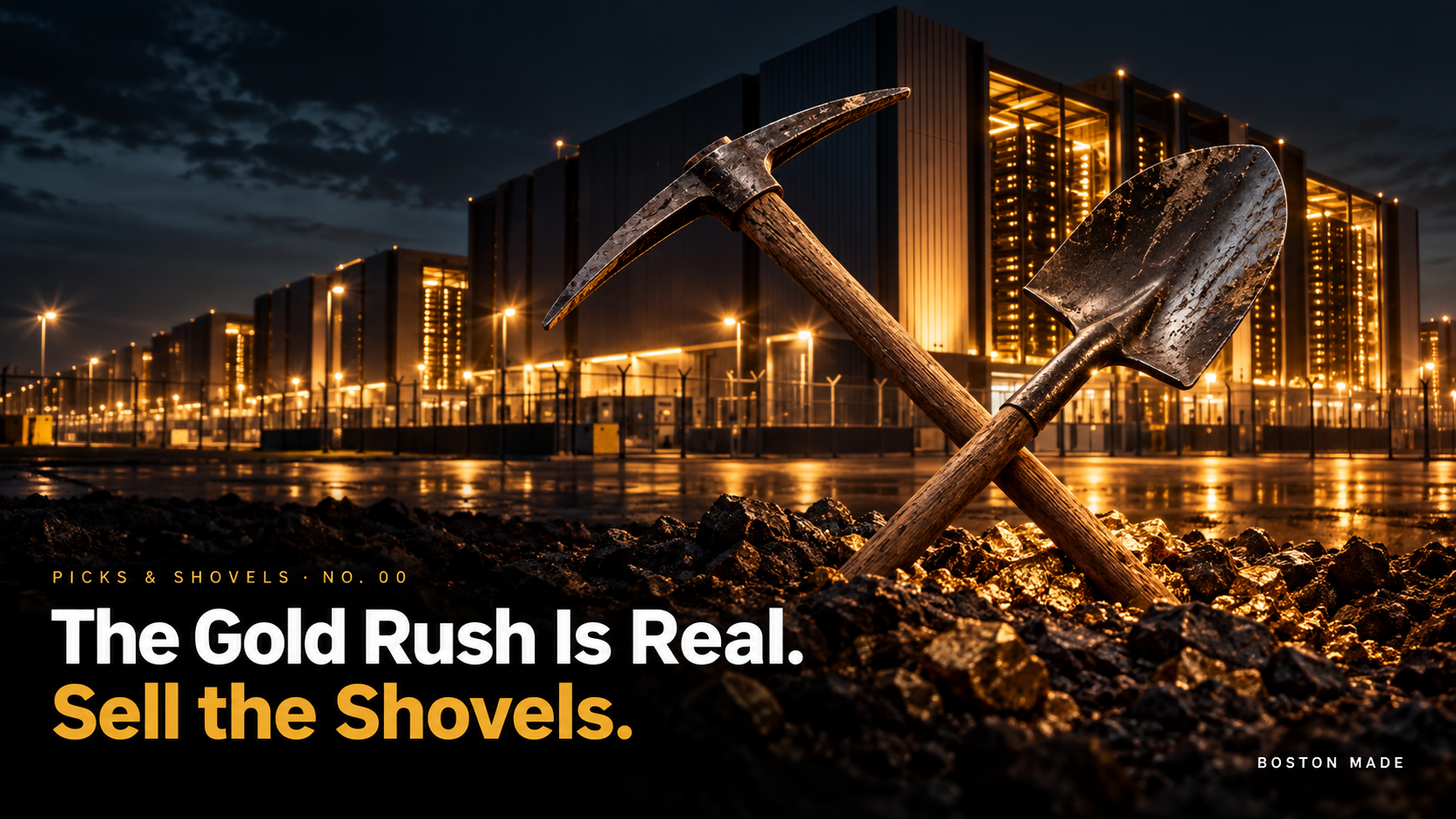
Picks & Shovels No. 00: The Gold Rush Is Real. Sell the Shovels.
Hyperscalers are on track to spend roughly $725 billion or more on capital projects in 2026. Most of that money doesn’t go to chatbots — it goes to turbines, switchgear, chillers, lasers and cables. A new Boston Made storyline follows the shovel sellers.












Boston Made Stories
Radio Stations, Myspace and Opening Slots: How Taylor Swift’s Debut Found Its Audience
A six-month radio tour, a Myspace page and opening slots for Rascal Flatts, George Strait, Brad Paisley and Tim McGraw and Faith Hill. How the debut was built, one fan at a time. Part four of our Countdown to 20.
Dear Sir or Madam,
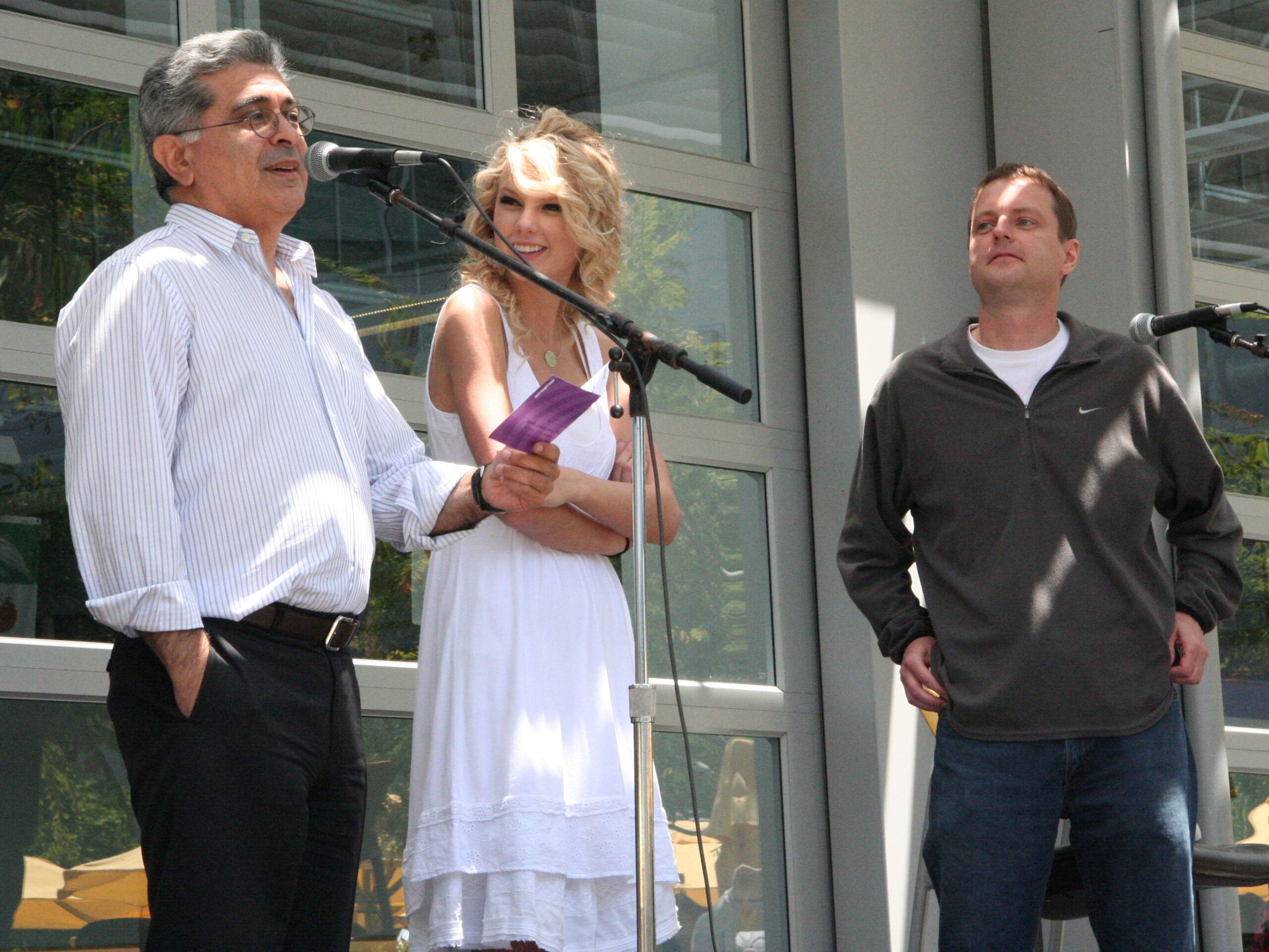
BOSTON — In 2006, there was no playbook for a teenage country artist on a brand-new independent label. So Taylor Swift and Big Machine wrote one. The debut album found its audience the old-fashioned way and the brand-new way at the same time.
Station by station
“Tim McGraw” went to country radio in June 2006, four months before the album came out. Then Taylor went on the road, visiting radio stations across the country on a radio tour that lasted about six months, through the end of the year. It was slow, unglamorous work: introducing herself, playing the song live and thanking programmers one station at a time. It worked. The single reached No. 6 on Hot Country Songs.
The Myspace generation
At the same time, Taylor was doing something few country artists did: talking to fans online. She used Myspace to post blogs and share song information, and it drew in teenagers and young adults who did not necessarily listen to country radio. That direct line to fans became a hallmark of her career.
Opening for the biggest names in country
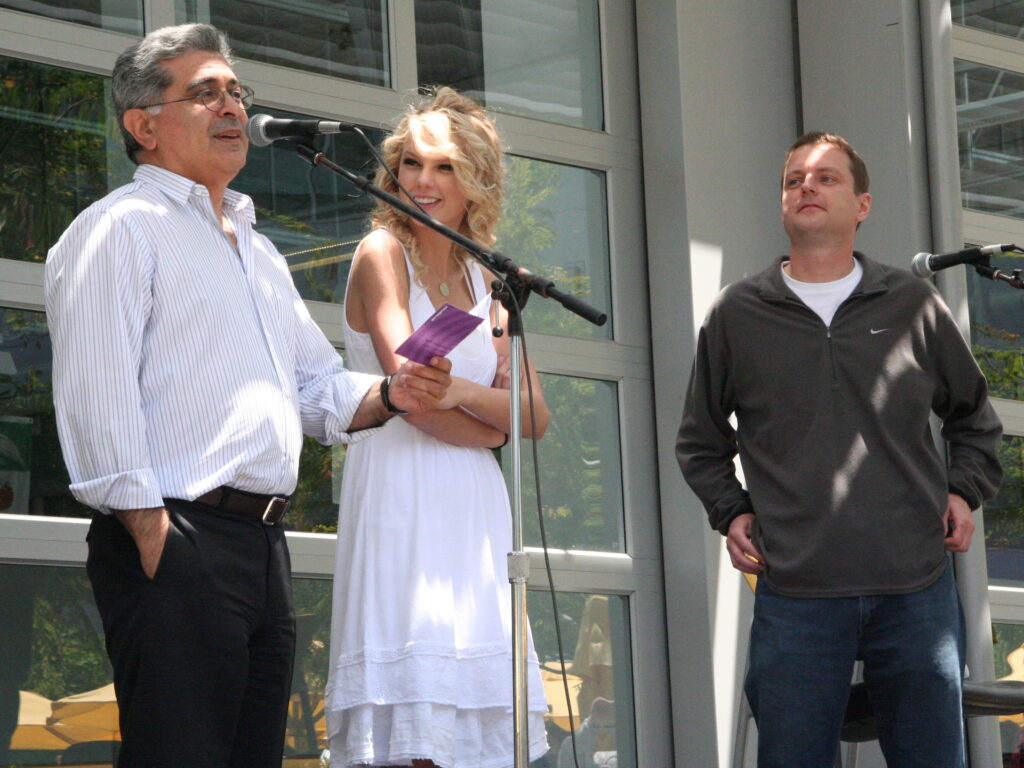
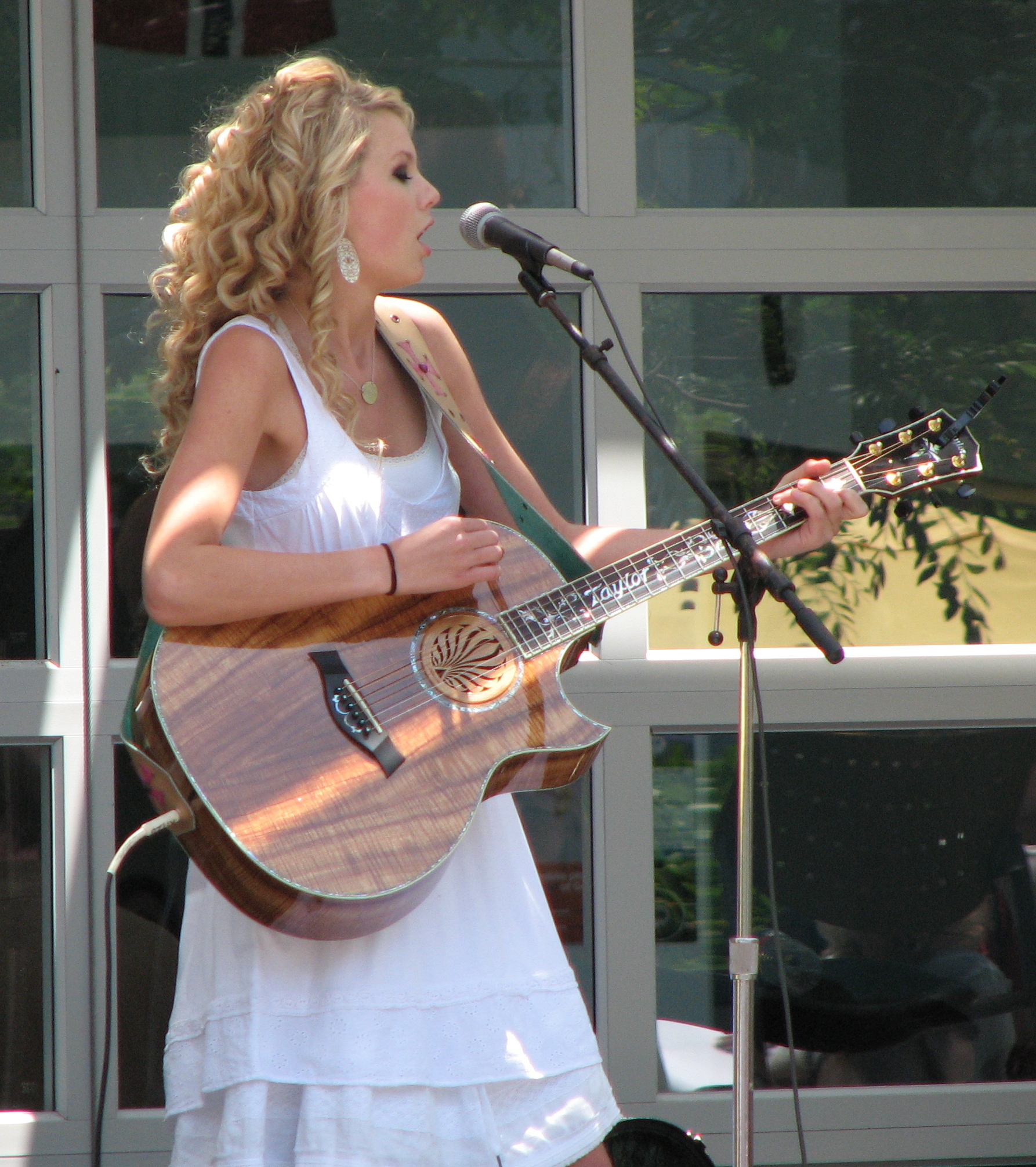
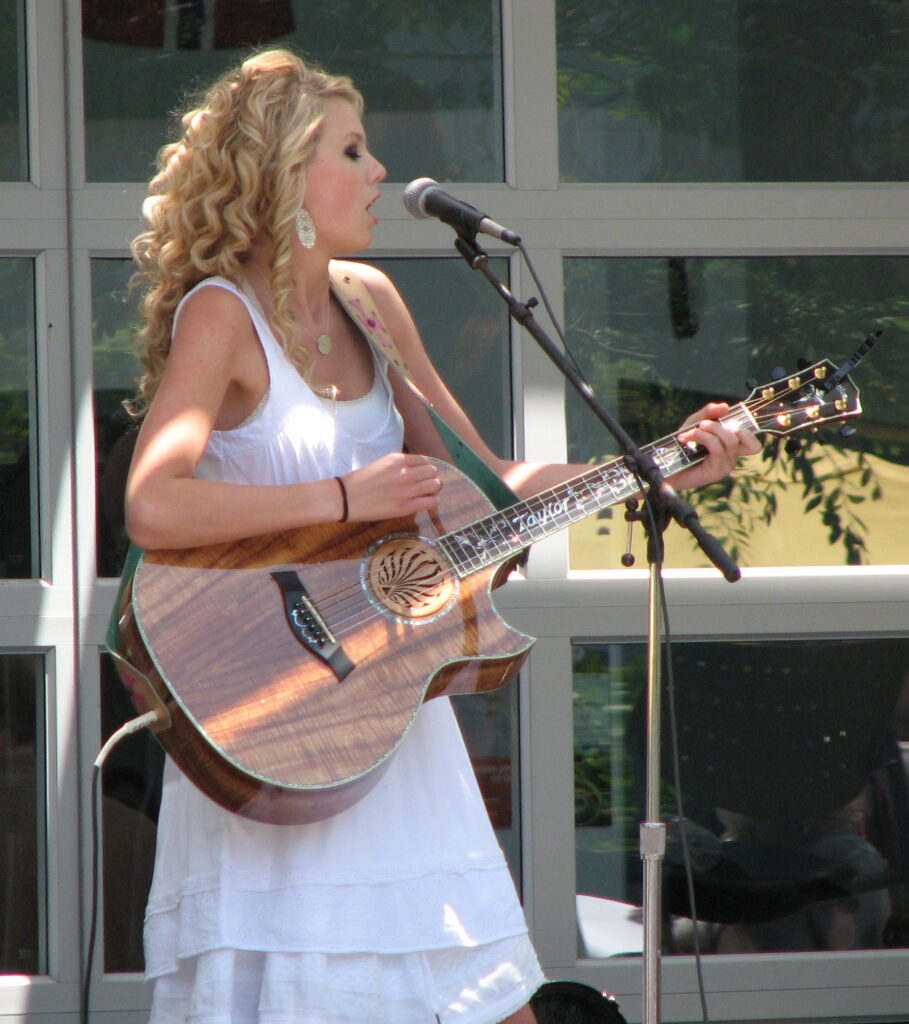
The live shows came next. Taylor opened for Rascal Flatts in late 2006, then for George Strait in early 2007, toured with Brad Paisley through 2007, and in July 2007 opened for Tim McGraw and Faith Hill, the couple whose name was on her first single.
Crossing over
By 2007, “Teardrops on My Guitar” had crossed from country into pop radio, reaching No. 13 on the Hot 100 and the Top 10 on several pop and adult formats. More than a year after release, the album kept climbing, peaking at No. 5 on the Billboard 200 in January 2008.
The lesson
Show up, play the song, talk to your fans yourself. Twenty years later, it is still a pretty good marketing plan.
Trivia · 5 questions
On the road with the debut
Test your knowledge of how the album found its fans.
01 / 05
When did “Tim McGraw” go to country radio?
June 2006, four months before the album.
02 / 05
How long was the radio tour that followed?
About six months, through the end of 2006.
03 / 05
Which social network did Taylor use to share blogs and songs?
Myspace, where she connected directly with teenage and young-adult fans.
04 / 05
Whose tour did she open in late 2006?
Rascal Flatts, after another act was dropped from the bill.
05 / 05
Which couple did she open for in July 2007?
Tim McGraw and Faith Hill, the subjects of her first single’s title.
Sources
Boston Made is not affiliated with or endorsed by Taylor Swift or her record labels. Photos are freely licensed from Wikimedia Commons and credited under each image.
Boston Made Stories
Track by Track: Inside the 11 Songs of Taylor Swift’s Debut Album
All 11 songs on the original 2006 album: who wrote them, how long they run and what each one is about, plus a name-that-track game. Part three of our Countdown to 20.
Dear Sir or Madam,
BOSTON — Forty minutes and 28 seconds. That is the entire running time of the standard edition of Taylor Swift, 11 songs that introduced one of the defining songwriters of her generation. Every song carries her name in the credits. Here is the whole album, one track at a time.
1. “Tim McGraw”
Written by Taylor Swift, Liz Rose · 3:54
Nostalgia for a relationship with an older boyfriend, built around the songs that remind you of someone. It became the first single.
2. “Picture to Burn”
Written by Taylor Swift, Liz Rose · 2:55
A sharp, funny kiss-off to an ex who did her wrong. It reached the country Top 10.
3. “Teardrops on My Guitar”
Written by Taylor Swift, Liz Rose · 3:35
Unrequited love for a boy who likes someone else. Her first big crossover hit, reaching No. 13 on the Hot 100.
4. “A Place in This World”
Written by Taylor Swift, Robert Ellis Orrall, Angelo Petraglia · 3:22
A teenager’s uncertainty about where she belongs and what comes next.
5. “Cold as You”
Written by Taylor Swift, Liz Rose · 4:01
A relationship with someone who never appreciated her.
6. “The Outside”
Written by Taylor Swift · 3:29
Loneliness after her love of country music set her apart at school. One of three songs she wrote alone.
7. “Tied Together with a Smile”
Written by Taylor Swift, Liz Rose · 4:11
Written about a friend struggling with an eating disorder, and about how people hide pain behind a smile.
8. “Stay Beautiful”
Written by Taylor Swift, Liz Rose · 3:58
Admiring someone from afar, without him ever knowing.
9. “Should’ve Said No”
Written by Taylor Swift · 4:04
Confronting a cheating ex. Written alone, it became her second country No. 1.
10. “Mary’s Song (Oh My My My)”
Written by Taylor Swift, Liz Rose, Brian Maher · 3:35
A love story that lasts from childhood to marriage.
11. “Our Song”
Written by Taylor Swift · 3:24
A couple who make a song out of their everyday moments. Written alone, it went to No. 1 on Hot Country Songs.
The writers’ room
Seven of the 11 songs were co-written with Liz Rose, who met Taylor through her publishing deal and became her most important early collaborator. Robert Ellis Orrall and Angelo Petraglia co-wrote “A Place in This World,” and Brian Maher joined Taylor and Rose on “Mary’s Song.” Three songs, “The Outside,” “Should’ve Said No” and “Our Song,” are Taylor’s alone.
A note on “Tied Together with a Smile”
One of the album’s quietest songs carries one of its heaviest subjects. If you or someone you love is struggling with an eating disorder, support is available from the National Alliance for Eating Disorders.
Match game · 6 questions
Name that track
We describe the theme. You pick the song.
01 / 06
The theme: feeling left out because of your love of country music.
“The Outside,” track 6, written by Taylor alone.
02 / 06
The theme: a love that lasts from childhood all the way to marriage.
“Mary’s Song (Oh My My My),” track 10.
03 / 06
Which track is the shortest on the album?
“Picture to Burn” runs just 2:55.
04 / 06
Which song closes the album?
“Our Song,” track 11.
05 / 06
How many songs did Taylor write entirely on her own?
Three: “The Outside,” “Should’ve Said No” and “Our Song.”
06 / 06
Which track has three credited writers?
“A Place in This World” (with Robert Ellis Orrall and Angelo Petraglia). “Mary’s Song” also has three.
Sources
Boston Made is not affiliated with or endorsed by Taylor Swift or her record labels. Photos are freely licensed from Wikimedia Commons and credited under each image.
Boston Made Stories
The Bluebird Night: How a Teenage Songwriter Talked Her Way Into Nashville
She turned down a development deal at 13, signed as a songwriter at 14 and landed a record contract after one night at the Bluebird Café. Part two of our Countdown to 20.
Dear Sir or Madam,
BOSTON — Before there was a debut album, there was a teenager who refused to wait. The story of how Taylor Swift came to exist is a story about saying no to the wrong deal and yes to the right room.
Walking away at 13
When Taylor was 13, RCA Records offered her an artist development deal. On paper it was a dream. In practice, the label wanted to keep her in development until she turned 18. She did not want to wait five years to make an album, so she left.
A songwriter at 14
At 14, she signed a songwriting deal with Sony/ATV in Nashville, becoming the youngest songwriter the publisher had ever signed. The family relocated to the Nashville area so she could write with professionals after school. That is how she met Liz Rose, the songwriter who would go on to co-write seven of the debut’s 11 songs.
The Bluebird Café, November 2004
The Bluebird Café is a small room with a huge reputation. It is where Nashville’s songwriters play their songs in the round, and where industry people go to listen. In November 2004, Taylor played a showcase there. In the audience was Scott Borchetta, a music executive who was starting his own label, Big Machine Records.
Borchetta offered her a recording contract. About two weeks later, she said yes, choosing an independent label that did not yet exist over the safety of a major. Big Machine partnered with Universal Music Group for distribution, and the contract was finalized by July 2005.
Finding the sound
The label tried several producers before settling on Nathan Chapman, a little-known producer Taylor had been making demos with. It was the right call. Chapman produced every song on the album except “The Outside,” and recording took about four months, wrapping up near the end of Taylor’s freshman year of high school.
Why it still matters
Every decision in this story points in the same direction: songwriting first, control over her own work, and betting on herself. Twenty years later, those are still the throughlines of her career.
Trivia · 6 questions
The road to Nashville
How much do you know about the years before the debut?
01 / 06
How old was Taylor when she signed her songwriting deal with Sony/ATV?
She was 14, the youngest songwriter the publisher had ever signed.
02 / 06
Which label offered her an artist development deal at 13?
RCA. The label wanted to keep her in development until 18, so she walked away.
03 / 06
Where was the 2004 showcase that changed everything?
The Bluebird Café, Nashville’s famous songwriters’ room.
04 / 06
Who was in the audience starting a new label?
Scott Borchetta, who was launching Big Machine Records.
05 / 06
Who ended up producing the album?
Nathan Chapman, after the label had tried other producers.
06 / 06
Roughly how long did recording take?
About four months, wrapping up near the end of her freshman year of high school.
Sources
Boston Made is not affiliated with or endorsed by Taylor Swift or her record labels. Photos are freely licensed from Wikimedia Commons and credited under each image.


Five Signals Your Website Needs an Operating System, Not Another Redesign

AI Stocks Rebound, but the Infrastructure Bill Is Still Coming Due

PHP Security Warning: What Website Operators Need to Know After Emergency Fixes

Boston Made Introduces Music Videos

Building Something Bigger: The Future of Boston Made Pets Is Under Construction

Boston Made Expands Creative Content with New “Bands” Music Video Series
-
 Videos10 months ago
Boston Made Introduces Music Videos
-
 E-Commerce10 months ago
Building Something Bigger: The Future of Boston Made Pets Is Under Construction
-
 Videos10 months ago
Boston Made Expands Creative Content with New “Bands” Music Video Series
-
 Corporate News4 weeks ago
Boston Made Games Opens: Free Games, Real Shop Rewards and Collectible Art
-

 E-Commerce10 months ago
The Future of Pet Care: Exploring Smart Dog Wearables and Innovative Pet Tech
-
 Boston Made Stories3 weeks ago
Road to the Rocketship, Ch. 9: What’s Next — Trackers, a Training Academy and the Grand Strand
-
 Fiction1 month ago
The Paxton-Digital Chronicles: A Boston Made Fiction Saga
-

 Pet Industry9 months ago
Designed for Pets and Their People