
Boston Made Stories
Spring in the Public Garden: Tulips, Swan Boats and a Very Famous Family of Ducks
America’s first public botanical garden comes alive in April. A guide to the Public Garden’s history, its spring highlights and how to enjoy a visit.



Latest stories
View all





Boston Made Stories
Track by Track: Inside the 11 Songs of Taylor Swift’s Debut Album
All 11 songs on the original 2006 album: who wrote them, how long they run and what each one is about, plus a name-that-track game. Part three of our Countdown to 20.
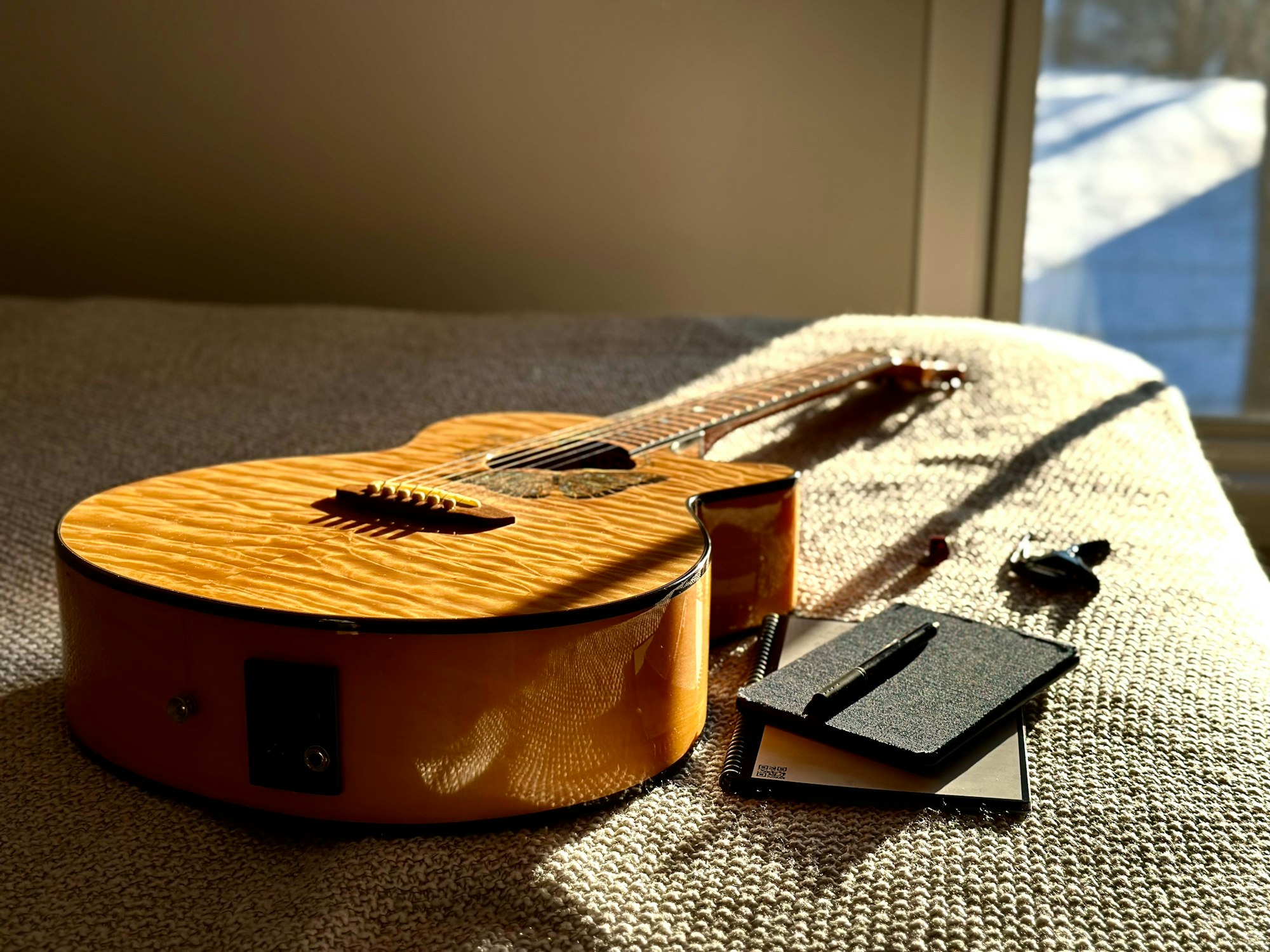
BOSTON — Forty minutes and 28 seconds. That is the entire running time of the standard edition of Taylor Swift, 11 songs that introduced one of the defining songwriters of her generation. Every song carries her name in the credits. Here is the whole album, one track at a time.
1. “Tim McGraw”
Written by Taylor Swift, Liz Rose · 3:54
Advertisement
Nostalgia for a relationship with an older boyfriend, built around the songs that remind you of someone. It became the first single.
2. “Picture to Burn”
Written by Taylor Swift, Liz Rose · 2:55
A sharp, funny kiss-off to an ex who did her wrong. It reached the country Top 10.
3. “Teardrops on My Guitar”
Written by Taylor Swift, Liz Rose · 3:35
Unrequited love for a boy who likes someone else. Her first big crossover hit, reaching No. 13 on the Hot 100.
4. “A Place in This World”
Written by Taylor Swift, Robert Ellis Orrall, Angelo Petraglia · 3:22
A teenager’s uncertainty about where she belongs and what comes next.
5. “Cold as You”
Written by Taylor Swift, Liz Rose · 4:01
A relationship with someone who never appreciated her.
6. “The Outside”
Written by Taylor Swift · 3:29
Loneliness after her love of country music set her apart at school. One of three songs she wrote alone.
7. “Tied Together with a Smile”
Written by Taylor Swift, Liz Rose · 4:11
Written about a friend struggling with an eating disorder, and about how people hide pain behind a smile.
8. “Stay Beautiful”
Written by Taylor Swift, Liz Rose · 3:58
Admiring someone from afar, without him ever knowing.
9. “Should’ve Said No”
Written by Taylor Swift · 4:04
Confronting a cheating ex. Written alone, it became her second country No. 1.
10. “Mary’s Song (Oh My My My)”
Written by Taylor Swift, Liz Rose, Brian Maher · 3:35
A love story that lasts from childhood to marriage.
11. “Our Song”
Written by Taylor Swift · 3:24
A couple who make a song out of their everyday moments. Written alone, it went to No. 1 on Hot Country Songs.
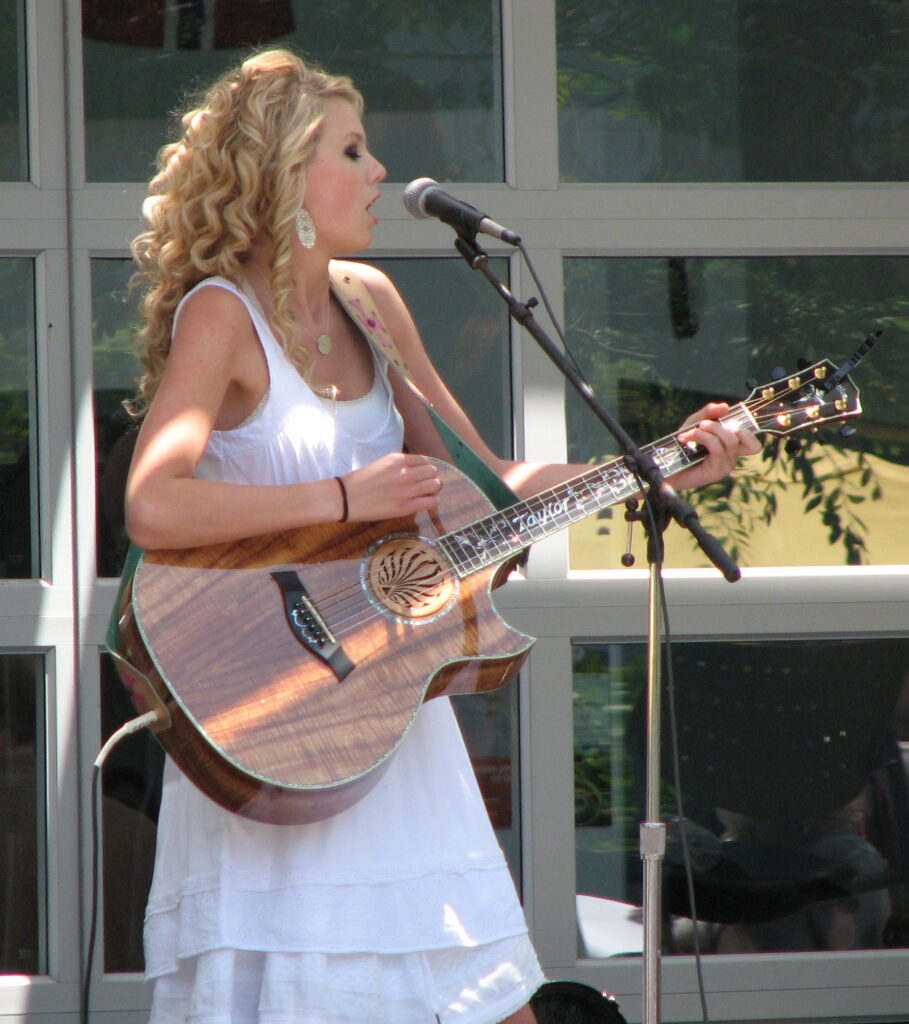
The writers’ room
Seven of the 11 songs were co-written with Liz Rose, who met Taylor through her publishing deal and became her most important early collaborator. Robert Ellis Orrall and Angelo Petraglia co-wrote “A Place in This World,” and Brian Maher joined Taylor and Rose on “Mary’s Song.” Three songs, “The Outside,” “Should’ve Said No” and “Our Song,” are Taylor’s alone.
A note on “Tied Together with a Smile”
One of the album’s quietest songs carries one of its heaviest subjects. If you or someone you love is struggling with an eating disorder, support is available from the National Alliance for Eating Disorders.
Match game · 6 questions
Name that track
We describe the theme. You pick the song.
01 / 06
The theme: feeling left out because of your love of country music.
“The Outside,” track 6, written by Taylor alone.
Advertisement
02 / 06
The theme: a love that lasts from childhood all the way to marriage.
“Mary’s Song (Oh My My My),” track 10.
03 / 06
Which track is the shortest on the album?
“Picture to Burn” runs just 2:55.
04 / 06
Which song closes the album?
“Our Song,” track 11.
05 / 06
How many songs did Taylor write entirely on her own?
Three: “The Outside,” “Should’ve Said No” and “Our Song.”
06 / 06
Which track has three credited writers?
“A Place in This World” (with Robert Ellis Orrall and Angelo Petraglia). “Mary’s Song” also has three.
Sources
Boston Made is not affiliated with or endorsed by Taylor Swift or her record labels. Photos are freely licensed from Wikimedia Commons and credited under each image.
Boston Made Stories
The Bluebird Night: How a Teenage Songwriter Talked Her Way Into Nashville
She turned down a development deal at 13, signed as a songwriter at 14 and landed a record contract after one night at the Bluebird Café. Part two of our Countdown to 20.
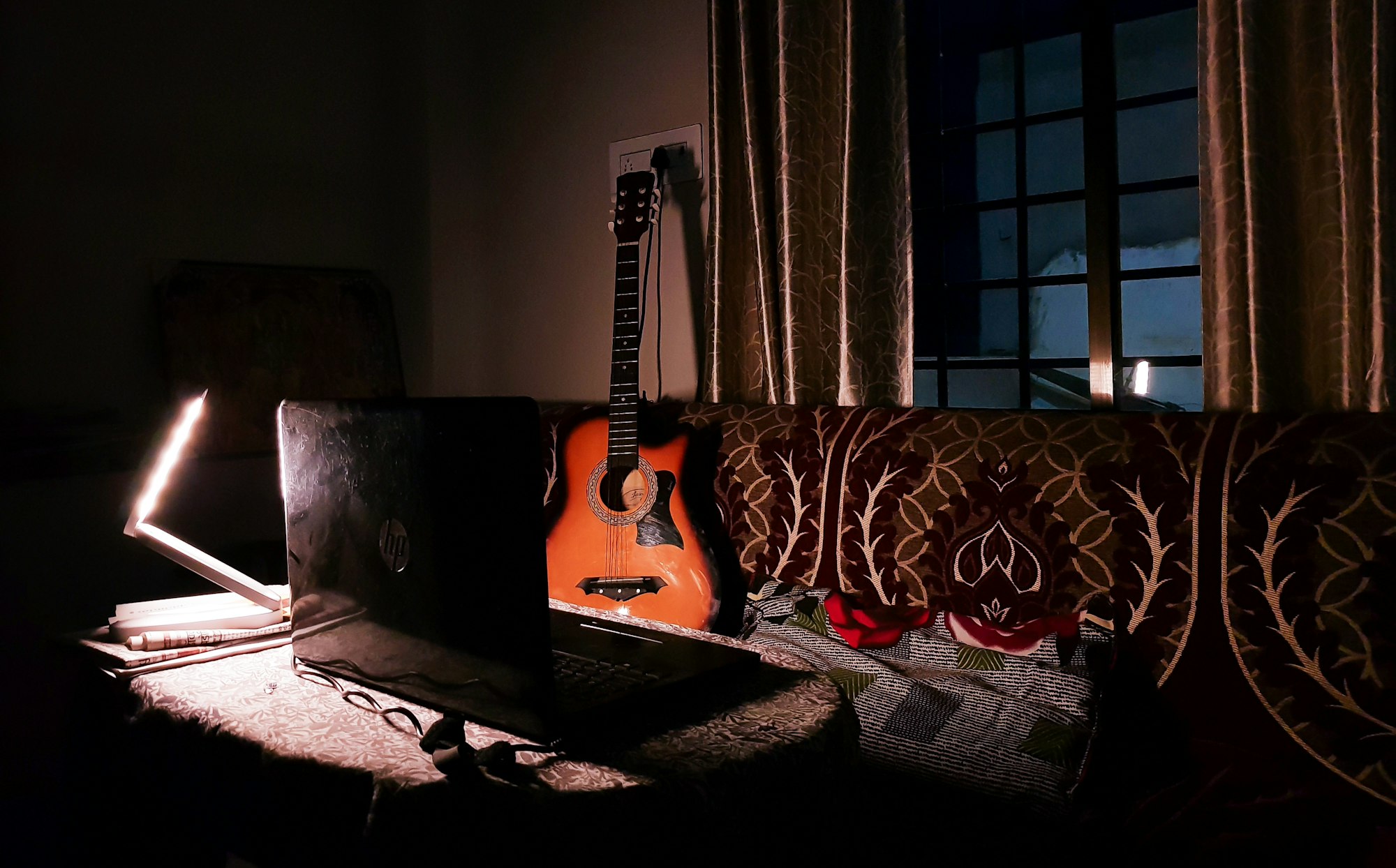
BOSTON — Before there was a debut album, there was a teenager who refused to wait. The story of how Taylor Swift came to exist is a story about saying no to the wrong deal and yes to the right room.
Walking away at 13
When Taylor was 13, RCA Records offered her an artist development deal. On paper it was a dream. In practice, the label wanted to keep her in development until she turned 18. She did not want to wait five years to make an album, so she left.
Advertisement
A songwriter at 14
At 14, she signed a songwriting deal with Sony/ATV in Nashville, becoming the youngest songwriter the publisher had ever signed. The family relocated to the Nashville area so she could write with professionals after school. That is how she met Liz Rose, the songwriter who would go on to co-write seven of the debut’s 11 songs.
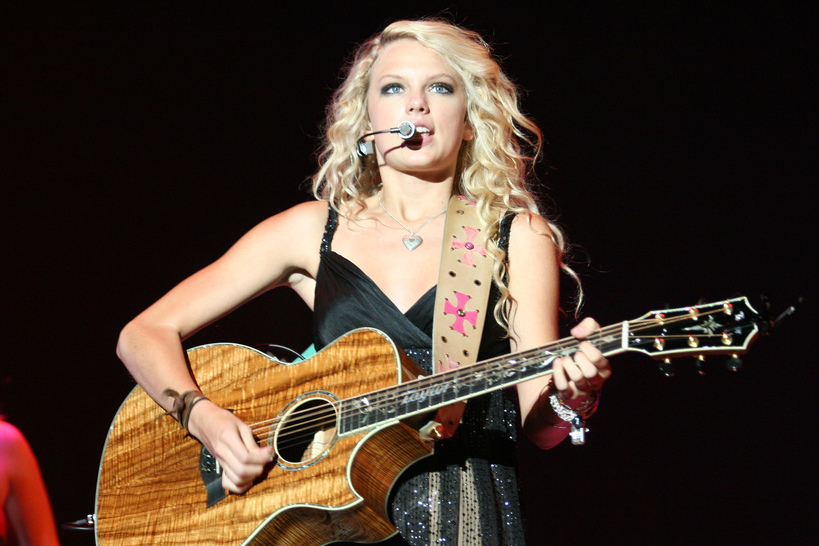
The Bluebird Café, November 2004
The Bluebird Café is a small room with a huge reputation. It is where Nashville’s songwriters play their songs in the round, and where industry people go to listen. In November 2004, Taylor played a showcase there. In the audience was Scott Borchetta, a music executive who was starting his own label, Big Machine Records.
Borchetta offered her a recording contract. About two weeks later, she said yes, choosing an independent label that did not yet exist over the safety of a major. Big Machine partnered with Universal Music Group for distribution, and the contract was finalized by July 2005.
Finding the sound
The label tried several producers before settling on Nathan Chapman, a little-known producer Taylor had been making demos with. It was the right call. Chapman produced every song on the album except “The Outside,” and recording took about four months, wrapping up near the end of Taylor’s freshman year of high school.
Why it still matters
Every decision in this story points in the same direction: songwriting first, control over her own work, and betting on herself. Twenty years later, those are still the throughlines of her career.
What Happens in a Songwriters’ Room
To understand why a showcase at the Bluebird could change a career, it helps to know how that kind of room works. Nashville’s songwriting culture places unusual value on the song itself. Writers often perform their own material in an “in the round” format, seated together and taking turns playing one song each, sometimes adding harmonies or stories between them. There is no big production to hide behind, and the audience knows it is listening to the bones of a song.
That intimacy is exactly what makes such rooms valuable to people in the industry. A publisher, producer or label executive in the audience is not judging stage lighting or choreography. They are listening for whether the writing holds up with nothing but a voice and an instrument. For a young songwriter, a good set in that setting is evidence that the songs can carry themselves.
Three Kinds of Deals, Explained
The early part of this story involves three different agreements, and they are easy to confuse. Each one covers a different part of a music career.
Artist development deal
A label invests time and resources in an artist it believes in, but without committing to release an album on a set schedule. The artist may record demos and work on material while the label decides when, or whether, to move forward. For an artist eager to release music, the uncertainty is the catch.
Songwriting or publishing deal
A music publisher works with the song itself, the composition and lyrics, rather than a particular recording. Publishers typically help writers find collaborators, pitch songs and collect income when those songs are recorded, played or performed. A publishing deal can exist entirely apart from a recording contract.
Recording contract
A record label funds, releases and promotes recordings. Smaller independent labels often partner with a larger company for distribution, getting records into stores and onto platforms while keeping their own identity and decision-making.
The difference between a song and a recording of that song becomes important later in this story. The anniversary piece on October 24 returns to it.
Lessons for Anyone Starting Out
Strip away the fame and this is a story many founders and creative people will recognize. A few lessons stand out:
- A good offer can still be the wrong offer. Saying no to a major label at 13 was a judgment about timing and fit, not a rejection of opportunity.
- Put yourself in the right room. The family’s move and the after-school writing sessions created the conditions for the right people to hear the work.
- Bet on the work, then on the partner. Choosing a label that did not yet exist was a risk, but it was a risk built on songs that had already proven themselves to an audience.
- Trust collaborators who know the material. Settling on a producer who already understood the songs turned out to matter more than a famous name.
Questions Readers Ask
Is the Bluebird Café still open?
The Bluebird remains one of Nashville’s best-known listening rooms for songwriters. Check its own schedule before planning a visit.
What comes next in the series?
On October 18, the series goes track by track through all 11 songs on the original album.
Trivia · 6 questions
The road to Nashville
How much do you know about the years before the debut?
01 / 06
How old was Taylor when she signed her songwriting deal with Sony/ATV?
She was 14, the youngest songwriter the publisher had ever signed.
02 / 06
Which label offered her an artist development deal at 13?
RCA. The label wanted to keep her in development until 18, so she walked away.
Advertisement
03 / 06
Where was the 2004 showcase that changed everything?
The Bluebird Café, Nashville’s famous songwriters’ room.
04 / 06
Who was in the audience starting a new label?
Scott Borchetta, who was launching Big Machine Records.
05 / 06
Who ended up producing the album?
Nathan Chapman, after the label had tried other producers.
06 / 06
Roughly how long did recording take?
About four months, wrapping up near the end of her freshman year of high school.
Sources
Boston Made is not affiliated with or endorsed by Taylor Swift or her record labels. Photos are freely licensed from Wikimedia Commons and credited under each image.

Boston Made Stories
Countdown to 20: The Newsroom’s Ten-Day Celebration of Taylor Swift’s Debut Album
Taylor Swift’s debut album turns 20 on October 24. Starting today, the Boston Made Newsroom publishes a new story every other day, each with something to play. Here is the schedule, a live countdown and a quick quiz.

BOSTON — In ten days, one of the most important debut albums of the century turns 20. On October 24, 2006, a 16-year-old songwriter released Taylor Swift on a brand-new Nashville label, and nothing about popular music was quite the same afterward.
The Boston Made Newsroom is marking the occasion the only way we know how: thoroughly. Starting today, we are publishing a new story every other day, each with something to play, leading up to the anniversary itself on October 24.
Advertisement
Until Taylor Swift’s debut turns 20
October 24, 2006 → October 24, 2026
What’s coming
- Oct 16 — The Bluebird night. How a teenager with a guitar went from a Pennsylvania Christmas tree farm to a Nashville publishing deal and a record contract.
- Oct 18 — Track by track. All 11 songs on the original album: who wrote them, how long they run, and what each one is about.
- Oct 20 — Radio, Myspace and opening slots. How the album found its audience one radio station, one blog post and one arena opening set at a time.
- Oct 22 — The Debut Bracket. Eleven songs, head-to-head, until you crown your favorite.
- Oct 24 — Twenty years. The full anniversary story, with the stats, the masters saga and a 10-question trivia game.
The album in 60 seconds
Taylor Swift was released by Big Machine Records on October 24, 2006. It has 11 songs on the standard edition, every one of them with Taylor’s name in the writing credits; she wrote three on her own. It produced five singles, including country No. 1s “Our Song” and “Should’ve Said No,” and its 157 weeks on the Billboard 200 made it the longest-charting album released in the 2000s. The RIAA certified it 8× Platinum in September 2025.
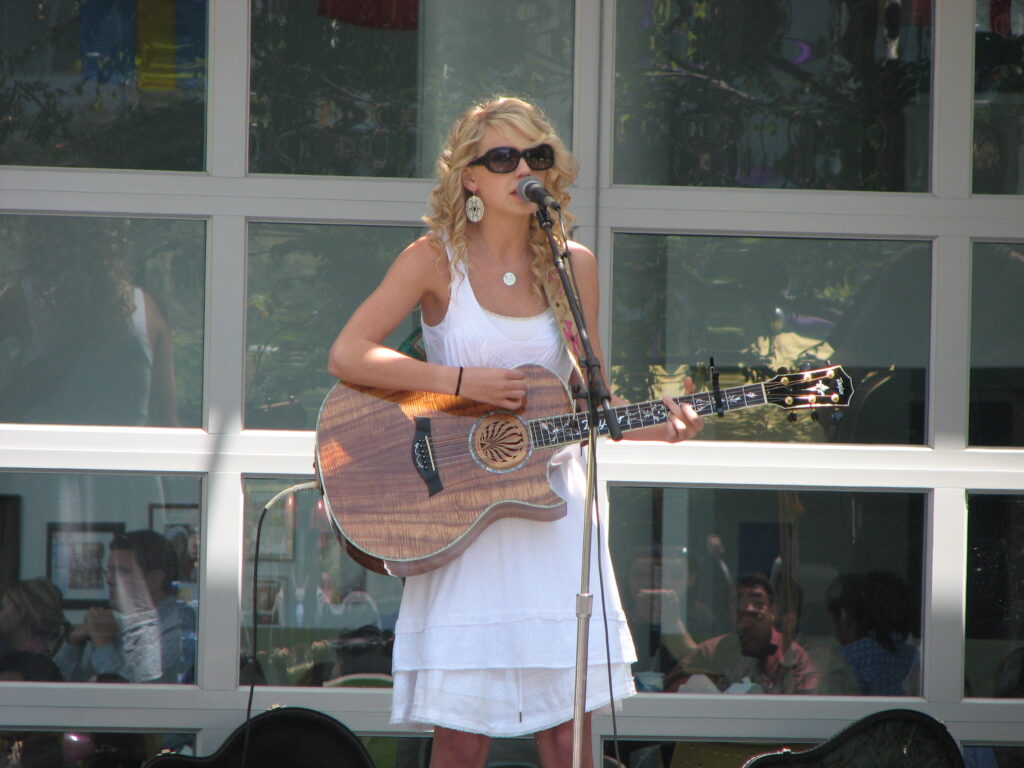
Quick quiz · 4 questions
Which debut-album song are you today?
Four questions, one song from 2006. No wrong answers, only track numbers.
Pick a Friday night.
Someone wronged you. You…
Your ideal soundtrack is…
Your motto:
Sources
Boston Made is not affiliated with or endorsed by Taylor Swift or her record labels. Photos are freely licensed from Wikimedia Commons and credited under each image.
How to Follow Along
The series is built to be enjoyed in order, but each story also stands on its own. If you are joining partway through, start with whatever date interests you most and work back from there. A few suggestions for getting the most out of the ten days:
- Listen as you read. Every story comes with something to play. The debut is short enough to hear in a single sitting, and hearing a song right after reading about it changes how it lands.
- Keep your quiz result. The song you get today makes a fun starting point for the Debut Bracket on October 22. See whether your favorite survives.
- Bring a friend. Trivia and brackets are better with an argument. Send the series to the person who still knows every word.
- Come back on the 24th. The anniversary story pulls the threads together, with the trivia game waiting at the end.
What the Numbers Actually Mean
The album’s statistics are impressive on their own, but they are even more striking once you know what they measure.
Advertisement
8× Platinum
A Platinum certification from the RIAA marks one million units in the United States. Eight times Platinum means eight million. Since the RIAA began counting streams toward album certifications, a unit can come from a purchase or from an equivalent amount of streaming. A certification reached nearly two decades after release shows that new listeners are still finding the record, not just the fans who bought it in 2006.
157 weeks on the Billboard 200
The Billboard 200 ranks the most popular albums in the country each week. Staying on it for 157 weeks means the record was among those albums for roughly three years. Most albums appear for a short burst around release and then fall away, so a run that long reflects steady demand rather than a single big week.
Every song co-written by the artist
Writing credits matter in the music business because they determine who shares in a song’s publishing income and, just as importantly, whose voice the song carries. For a debut artist, a writing credit on every track is a notable statement, and it set the pattern for everything that followed.
Why a Debut Is Worth Revisiting
First albums are often treated as rough drafts, the record an artist made before figuring things out. Sometimes that is true. But a debut also captures something that can never be repeated: the moment before anyone knew what would happen next. The songs were written without the weight of expectations, and listening to them now is a reminder that every long career starts with someone taking a chance on a small, specific idea.
That is what this series is really about. Twenty years on, the story of a teenager, a guitar and an unproven label is also a story about what it takes to start anything.
Questions Readers Ask
Do I need to know the album to enjoy the series?
Not at all. Each story explains its context, and every one includes something to listen to.
Is this series connected to the artist or her labels?
No. Boston Made is not affiliated with or endorsed by Taylor Swift or her record labels.
When does the countdown end?
On October 24, 2026, twenty years to the day after the album’s release.


BOSSTOX Advances Financial Innovation

Boston Made publishes its 2026 ecosystem audit and editorial review

Fenway Web Drives Digital Growth

Making a Music Video as an Independent Artist: Concept, Budget and Shoot Day

Building Something Bigger: The Future of Boston Made Pets Is Under Construction

Boston Made Expands Creative Content with New “Bands” Music Video Series
-
 Videos3 days ago
Boston Made Expands Creative Content with New “Bands” Music Video Series
-

 Education2 days ago
Keep Up With Nate Launches on Boston Made Newsroom
-
 Financial Technology2 hours ago
BOSSTOX Advances Financial Innovation
-

 Service4 weeks ago
Five Signals Your Website Needs an Operating System, Not Another Redesign
-
 Web Development1 day ago
Fenway Web Drives Digital Growth
-
 Boston Made Eats4 weeks ago
How TGI Fridays Shrank From 13 Massachusetts Restaurants to Three
-

 Technology3 weeks ago
Flying Cars Are Getting Real: Where Air Taxis Stand in October 2026, and the Math That Lifts Them
-
 Editorial4 weeks ago
GOP Ticket Loses Running Mate as House Kills Gas Tax Holiday Before Nov. 3