Connect with us

Weather where you are

Choose your location or share it once. We round your coordinates to about 1 km before sending them to our site and MET Norway for your forecast. Your choice stays in this browser tab.

Stay close to Boston

Get new Boston stories and Boston Made company updates, delivered as browser notifications.

Choose Enable notifications, then allow notifications in your browser.

Your browser subscription is stored by Boston Made and delivered through your browser’s push service. You can turn notifications off in your browser’s site settings. Privacy policy

Economy

Massachusetts Housing Awards Include New Homes and Preservation Projects in Boston

A $278 million statewide financing round supports housing development, including construction and preservation projects across Boston.

Ecosystem Intelligence Desk

Published

on

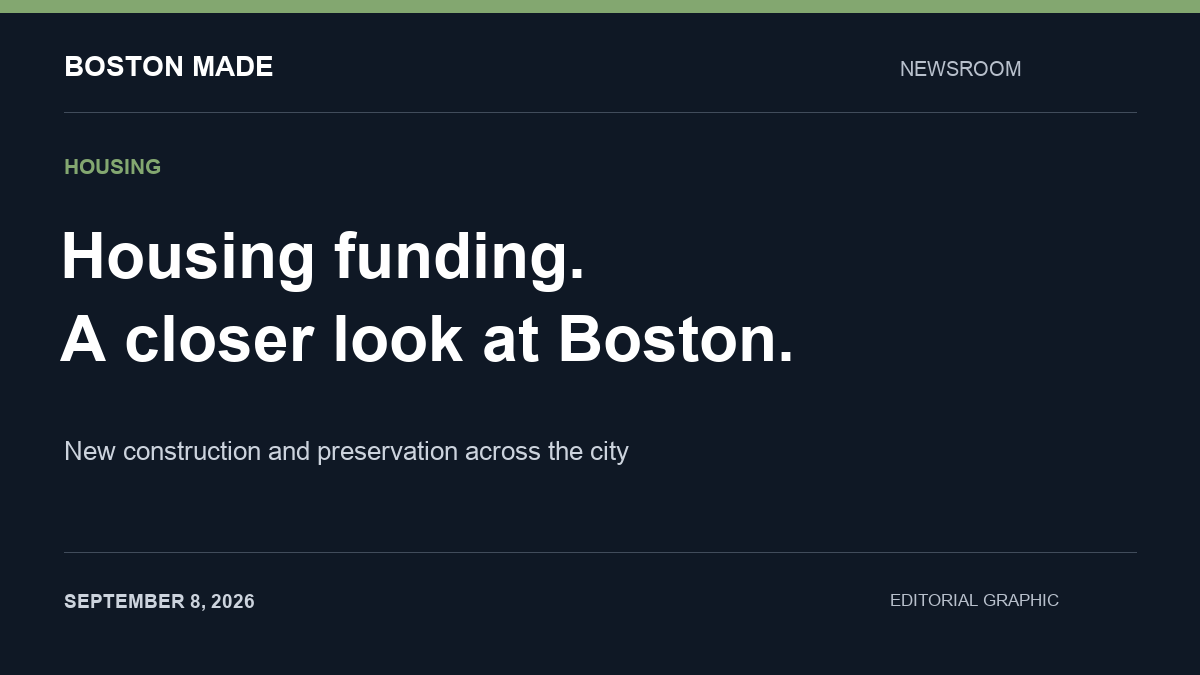
Editorial graphic: Housing funding, with new construction and preservation across Boston.

Massachusetts announced $278 million in state and federal financing and tax credits on September 3 for housing developments across 20 communities. The package includes both new construction and preservation work.

Boston projects in the round

The state’s award list includes 65 senior homes at Fox Hall in South Boston, 35 family homes at 80 Shawsheen Road in East Boston, and 78 senior homes at 1198 Centre in Roslindale.

Advertisement

Other Boston awards support preservation of 331 homes at Orchard Gardens, rehabilitation of seven homes on St. Alphonsus Street, and construction of 72 family homes at 150 Centre Street.

Funding is one step toward delivery

These are development awards, rather than an announcement that the homes are ready for occupancy. Readers seeking housing should follow individual project announcements for construction progress and application information.

Source: Massachusetts Executive Office of Housing and Livable Communities announcement, September 3, 2026; reviewed September 8.

Paxton-Digital Boston Made family Paxton-Digital Enterprise technology for IP protection and portfolio management · a Kingswell company. Visit site →

Advertisement

The institutional news desk of the Boston Made network. Reporting is researched from wire services including The Associated Press and local sources, and written by the desk.

Continue Reading

Economy

How TGI Fridays Shrank From 13 Massachusetts Restaurants to Three

TGI Fridays had 13 Massachusetts restaurants in early 2024. Three remain, in Everett, Methuen and Stoughton. What closed, what replaced them, what is next.

Ecosystem Intelligence Desk

Published

on

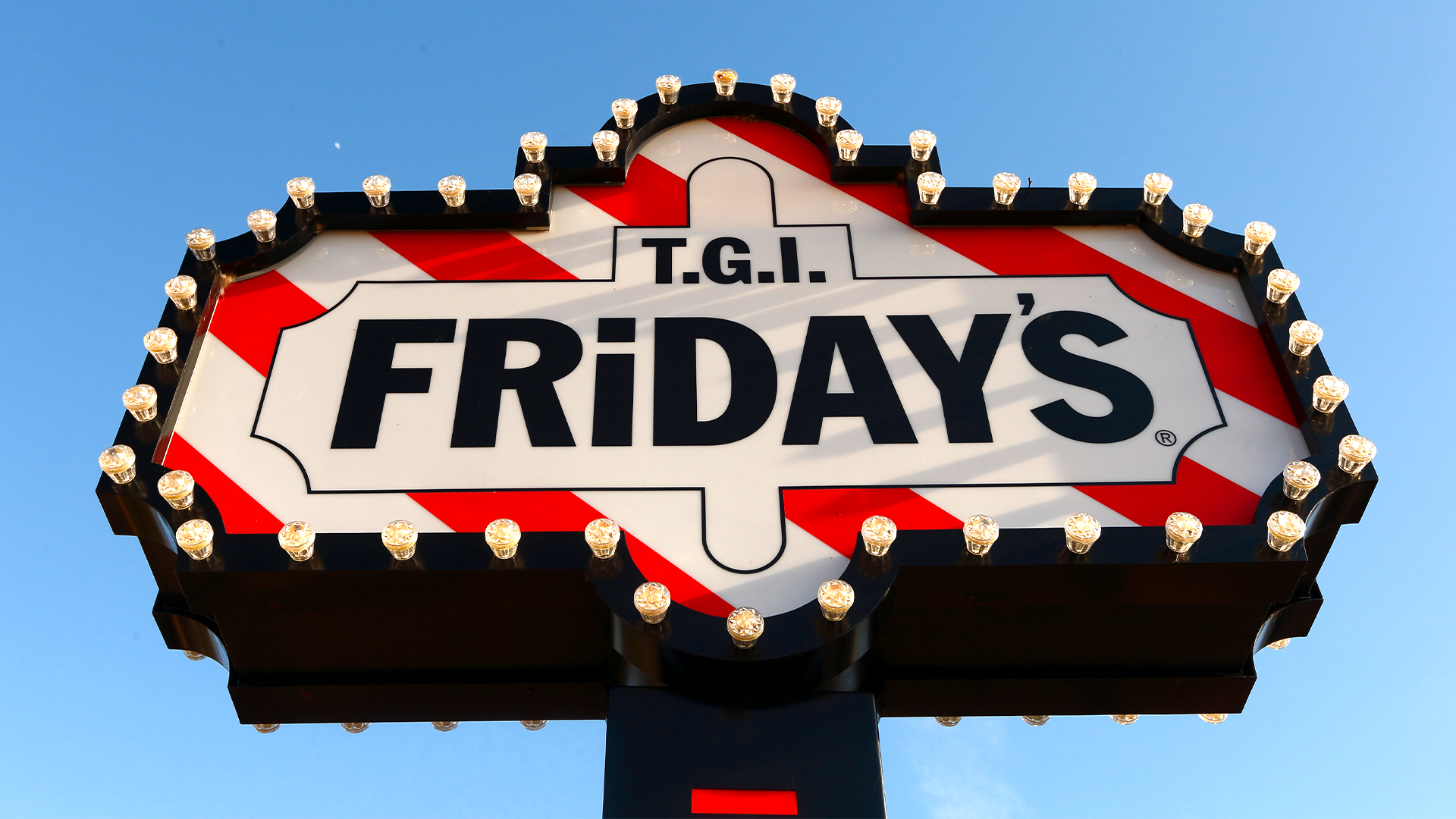
Classic TGI Fridays marquee sign with red-and-white stripes

TGI Fridays began 2024 with 13 restaurants in Massachusetts; since the Millbury location closed in July 2026, the chain’s website lists three, in Everett, Methuen and Stoughton, and the brand carries on as franchised restaurants even as a bankruptcy court winds down its former corporate parent.

Millbury was the latest to go

The TGI Fridays at The Shops at Blackstone Valley in Millbury announced its closing in a Facebook post on Tuesday, July 28, 2026, according to Patch and the Worcester Telegram & Gazette. The restaurant at 70 Worcester-Providence Turnpike was one of the early tenants of the open-air plaza, which opened in 2003, the Telegram reported. A sign in the window pointed diners to the chain’s other Massachusetts restaurants.

Advertisement

Both outlets reported that the company’s website had dropped Millbury and listed only Everett, Methuen and Stoughton in the state. A third-party store tracker, Mogean, counted the same three Massachusetts locations among 69 in the United States as of Oct. 11, 2026. The company has not announced any new restaurant for Massachusetts.

How 13 became three

The contraction came in waves. On Jan. 3, 2024, the Dallas-based company said it was closing 36 corporate restaurants nationwide that it described as “underperforming.” Six were in Massachusetts: Dedham, Danvers, Marlborough, Mansfield, North Attleborough and Seekonk, according to CBS Boston and Boston 25 News. Both outlets listed seven Massachusetts restaurants still open afterward: Boston, Braintree, Everett, Methuen, Millbury, North Dartmouth and Stoughton.

The same day, the company said it was selling eight corporate-owned Northeast restaurants to former chief executive Ray Blanchette, who would run them as a franchisee. Six were in Massachusetts, in Braintree, Boston’s Brigham Circle, Everett, Methuen, Millbury and Stoughton, and two were in Concord and Manchester, New Hampshire, Nation’s Restaurant News reported.

The North Dartmouth restaurant on State Road closed effective immediately on Oct. 24, 2024, the Fall River Reporter wrote, nine days before the corporate parent filed for bankruptcy. Braintree, at 60 Forbes Road, closed in the first week of January 2025, according to Patch and Boston Restaurant Talk. In a report republished by NBC Boston on Feb. 26, 2026, Boston Restaurant Talk said the chain’s only Boston restaurant, at 1626 Tremont St. in Mission Hill, had shut down and been removed from the company’s location list. Millbury followed five months later.

The company’s amended franchise disclosure document, filed in September and summarized by Fast Company, recorded one franchised closure in Massachusetts in 2025 and two so far in 2026. The filing does not name towns, but the timing lines up with Braintree, Boston and Millbury.

What is filling the empty buildings

Several of the former restaurants sit on prominent pads beside shopping centers, and at least two have been re-leased to regional chains. Tavern in the Square took over the Braintree building at 60 Forbes Road, across from South Shore Plaza, Patch and The Patriot Ledger reported; the Ledger said the new restaurant added a 1,200-square-foot patio. In Mansfield, Burtons Grill & Bar leased the former Fridays space at Mansfield Crossing, according to Boston Restaurant Talk and What Now Boston.

At Blackstone Valley, the exit comes while the plaza is adding tenants. Patch reported that nearly 35,000 square feet of new retail space was under development there, with Shake Shack, Sweetgreen and LaserAway among the announced tenants. No replacement tenant for the restaurant had been reported as of late October.

The bankruptcy is ending; the brand is not

None of this amounts to a total shutdown. TGI Friday’s Inc., the corporate entity that owned and ran company restaurants, filed for Chapter 11 on Nov. 2, 2024, in the U.S. Bankruptcy Court for the Northern District of Texas. Franchise-owned restaurants were not part of the case. Judge Stacey G. Jernigan approved a consensual liquidation plan at a hearing on July 23, 2026, Bloomberg Law reported; Nation’s Restaurant News dated the confirmation July 24. The plan distributes the estate’s remaining assets to creditors and winds down the old entity, and court documents show it calls for no further restaurant closures, NRN reported.

Advertisement

The brand now operates under Sugarloaf Hospitality, the investment group led by Blanchette, who returned as chief executive in 2025. Every U.S. restaurant is franchised, according to Fast Company and FSR magazine. Blanchette told NRN that Sugarloaf’s ownership is “independent of, and unaffected by, the parties in bankruptcy.”

The three Massachusetts survivors were all among the restaurants sold to Blanchette in 2024. FSR reported in January that the Methuen restaurant served as the test site for a holiday decor campaign later rolled out across the system.

The national picture

Massachusetts tracks the national decline closely. The chain peaked at 601 U.S. restaurants in 2008, according to Technomic data cited by the Associated Press; FSR also put the peak above 600. Franchise disclosure figures reported by Fast Company show 119 U.S. restaurants at the start of 2025 and 80 at the end of that year. A company spokesperson put the count at 76 in July 2026, the September filing showed 71, and the company’s website listed 69 franchised U.S. restaurants in October, FSR reported. The sources do not reconcile the 71 and 69 figures.

The September filing projected no U.S. openings in 2026. On Sept. 29, the company announced its first domestic development deal in more than a decade, with Bliss Bites LLC, for five restaurants in New York State over three years. Chief operating officer Ashley Kirkley told FSR the company expects about 20 U.S. openings over the next two to three years. None has been announced for Massachusetts.

The Newsroom Take

Going from 13 restaurants to three is a 77 percent drop in under three years, close to the chain’s national slide from 269 U.S. restaurants at the end of 2023 to 69 today. The Massachusetts closures arrived in clusters tied to corporate events: the January 2024 pruning of company stores, the abrupt closings around the 2024 bankruptcy filing, and then franchise closures in Boston and Millbury. The liquidation plan removes one risk, since it calls for no further closures, but it does not remove the ordinary one: a franchise operator deciding that a lease no longer pays. That is how the two most recent Massachusetts closures happened. The quick re-leasing in Braintree and Mansfield also shows that the big boxes remain valuable to landlords, which means a weak Fridays lease can be replaced. For now, Massachusetts is a holdout market, not a growth market, for the brand.

What it means for you

  • Check the chain’s online locator before driving to a TGI Fridays. Everett, Methuen and Stoughton are the only Massachusetts listings, and recent closures were announced on local Facebook pages with little notice.
  • When the corporate parent filed in 2024, the judge allowed the gift card program to continue; court papers showed about $49.7 million in outstanding cards, Fortune reported. Anyone holding an older card is better off using it at an open restaurant than waiting.
  • Workers at the remaining restaurants are employed by franchise operators, not by the liquidating corporate entity. Anyone with a claim against TGI Friday’s Inc. can follow the case, No. 24-80069 in the Northern District of Texas.
  • Shoppers near South Shore Plaza, Mansfield Crossing and Blackstone Valley should expect former Fridays pads to keep turning over to regional restaurant chains.

Test yourself

1. How many TGI Fridays restaurants were operating in Massachusetts at the start of 2024?

Answer: Thirteen; six closed in January 2024, leaving seven, according to CBS Boston and Boston 25 News.

2. Which three Massachusetts locations does the chain still list?

Answer: Everett, Methuen and Stoughton, after Millbury closed in July 2026.

3. What does the liquidation plan confirmed in July 2026 actually do?

Answer: It distributes the remaining assets of the old corporate entity, TGI Friday’s Inc., to creditors and winds it down, while franchised restaurants keep operating under Sugarloaf.

4. What replaced the former TGI Fridays in Braintree?

Answer: Tavern in the Square took over the building at 60 Forbes Road, across from South Shore Plaza.

Discussion

  1. Did the 2024 sale of six Massachusetts restaurants to a former chief executive slow the state’s decline, or only delay it?
  2. Should restaurant chains give the public and employees more notice before closing a location?
  3. What should replace large casual-dining buildings at suburban plazas: new restaurants, or other uses entirely?

From the network

  • Boston Made Reader — every story from the family in one free reading app.
  • BOSSTOX — markets, capital structures and corporate restructurings, explained.
  • Boston Made App — the news wire for Boston politics, business and city life.

Sources

Keep Up With Nate Boston Made family Keep Up With Nate The personal site of Boston Made founder Nathan Strickland. Visit site →

Advertisement

Continue Reading

Economy

Dow Sinks 650 Points as AI Capex Jitters and $100 Oil Cap a Volatile Week

Wall Street ended a whipsaw week lower Friday: the AI-spending worry flipped from too much to too little, crude pushed past $100, and the 10-year yield touched 5%. What it means for BOSSTOX, Lumo and Main Street.

Ecosystem Intelligence Desk

Published

on

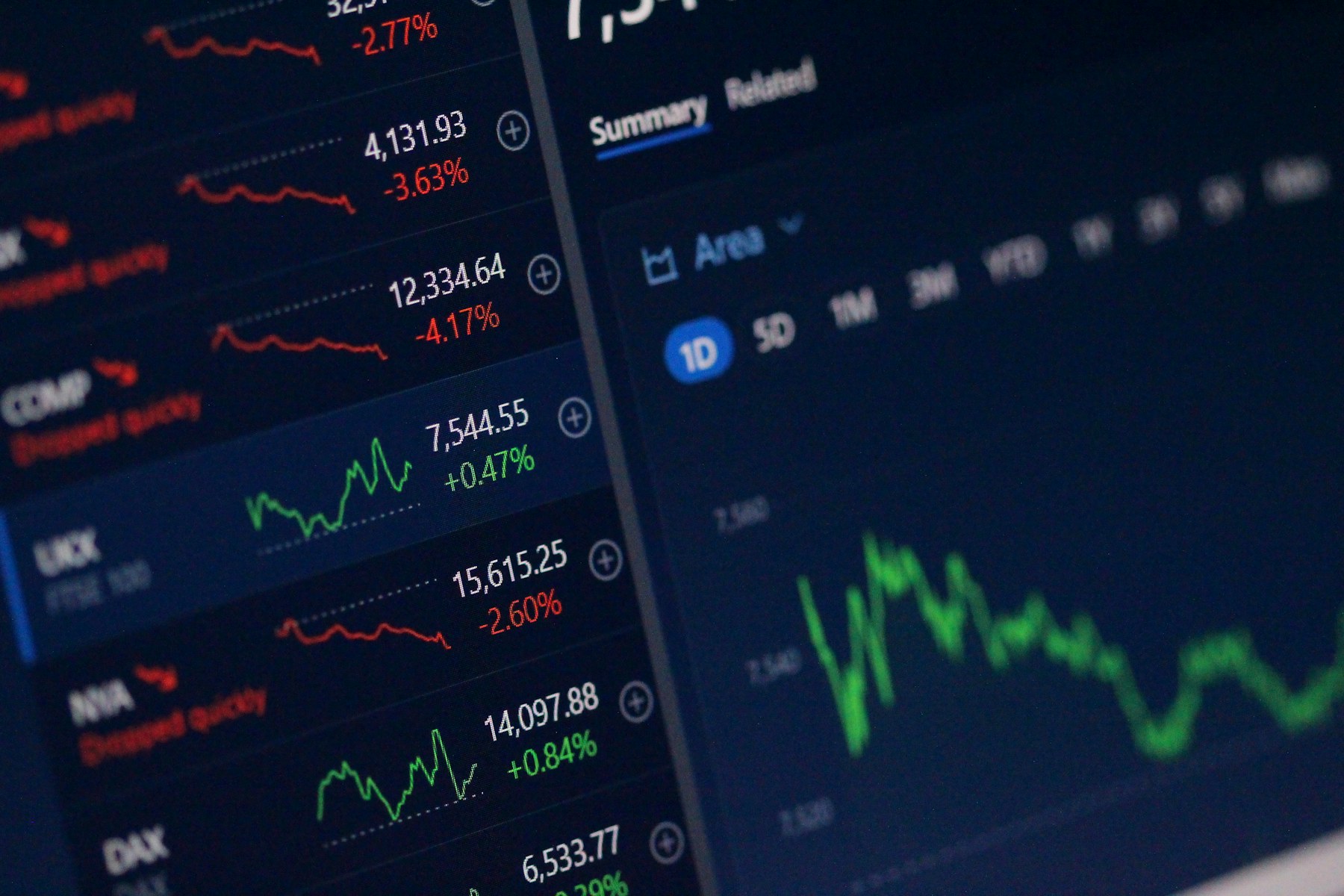
markets screen

BOSTON — Wall Street closed out a volatile week on a sour note Friday, with the Dow Jones Industrial Average sliding more than 650 points as investors wrestled with two problems at once: fresh doubts about how much the biggest technology companies will keep spending on artificial intelligence, and crude oil pushing past $100 a barrel on rising tension in the Middle East.

The numbers at Friday’s close

  • Dow Jones Industrial Average: 52,215.16, down 652.82 points (−1.23%)
  • S&P 500: 7,623.68, down 39.75 (−0.52%)
  • Nasdaq Composite: 25,955.34, down 53.52 (−0.21%)
  • Russell 2000: 2,775.90, down 8.13 (−0.29%)
  • 10-year Treasury yield: 4.99%, up about 3.5 basis points
  • WTI crude (December): $103.44, up 3.99% — the highest since April; Brent topped $116
  • Gold: $4,010, down 1.24%
  • VIX: 19.45, up 2.21%

What moved the market

The AI spending question flipped. For most of 2026 the worry was that Big Tech was spending too much on data centers, chips and power. This week the worry inverted. Meta left its capital-expenditure guidance unchanged in its third-quarter report, and Tesla cut its full-year capex outlook by roughly 20%. “Tech stocks got slammed amid fresh concerns about the outlook for artificial intelligence,” Capital.com analyst Kyle Rodda said, noting the concern has shifted from spending being too high to spending possibly being too low. For the picks-and-shovels names that benefit from every new data center — power, cooling, networking — a slower build-out is a direct hit to the growth story, and it showed: Bloom Energy fell about 11% and Comfort Systems USA about 10.7% intraday.

Advertisement

Oil at $100-plus. WTI and Brent both reached their highest levels since April after reports that the United States and Israel are weighing further strikes on Iran following the November midterms, and after Iran warned it would target Gulf energy infrastructure if attacked. Higher oil feeds straight into inflation expectations, which is why the bond market sold off alongside stocks: the 10-year yield finished just under 5%.

The consumer is in a dark mood. The University of Michigan’s consumer-sentiment index fell to 48.0, near record lows, with one-year inflation expectations at 4.7%. That reading landed the same day American Express said it plans to trim about 5% of its workforce; its shares fell roughly 2.9%.

Hedge funds had a rough day. Reuters reported that several major hedge-fund strategies posted their worst single-day performance since the COVID-era rout of 2020, a sign of how crowded the AI-infrastructure trade had become.

Notable movers

  • Crown Castle jumped about 11.7% and SBA Communications about 7.8% on reports that SpaceX is in talks to lease cell sites. SpaceX itself closed at $147.49 (+1.9%) after Phillip Securities upgraded the stock from Sell to Buy and lifted its price target to $250 from $75.
  • Robert Half rose about 13% after earnings; RingCentral added about 6.6%.
  • Deckers Outdoor slid about 6.2%; Kering, owner of Gucci and Saint Laurent, fell 12.4% after weak third-quarter results; Volvo Cars plunged about 24% on a plan to cut 2,500 jobs.
  • Bitcoin hovered near $81,300, little changed on the day.

The Boston Made read

Three of the week’s threads run straight through the businesses in the Boston Made family.

AI infrastructure is now a two-sided bet. BOSSTOX has spent the fall tracking the companies that sell the compute, cooling, power and networking behind the AI build-out. This week is the first time the market priced in the possibility that the build-out slows. That doesn’t end the thesis — Meta’s guidance was unchanged, not cut — but it means the next leg is about which suppliers have contracted backlogs and which were riding sentiment. Expect BOSSTOX’s coverage to lean harder into backlog and order-book data from here.

$4,000 gold is a Main Street story, not just a trading story. Gold gave back about 1.2% Friday but remains above $4,000 an ounce. At these levels the “cash for gold” market — the local-dealer trade that Kingswell’s Lumo.gold is built to organize, with a live gold price and melt calculator for households deciding whether to sell jewelry or coins — matters to far more people than it did at $2,000 an ounce. A one-day pullback does not change that.

Small business feels the sentiment number first. A consumer-confidence reading of 48 is the kind of figure that shows up in restaurant bookings, home-improvement quotes and event calendars before it shows up in an index. Fenway Web’s clients — remodelers, realtors, churches, musicians — are the businesses that number describes. The desk’s read for them this quarter is unchanged: a clear website and a working lead form matter more in a cautious economy, not less.

What to watch next week

Earnings from Verizon on Monday and Coca-Cola, UPS, SoFi and Robinhood on Tuesday will test whether the consumer caution in the survey data is showing up in actual sales. The midterm elections follow the week after, and the oil market is already trading on what comes after them.

Sources

The Boston Made Newsroom publishes market coverage for general information only. Nothing here is investment advice; consult a licensed professional before making investment decisions.

Boston Made UK Boston Made family Boston Made UK Boston Made across the Atlantic. Visit site →

Advertisement

Continue Reading

Corporate News

Parking, Tides and 18 Million Visitors: The Research Behind Boston Made’s Grand Strand Launches

Tourism data, seasonal parking rules, and the economics of searching for a space explain why Boston Made launched Grand Strand App and Spot Check App together, and what they still have to prove.

Ecosystem Intelligence Desk

Published

on

Grand Strand app promo: the Myrtle Beach coastline at sunset with “Explore grandstrand.app”

BOSTON — Boston Made, Inc. has added two consumer platforms to its portfolio, both aimed at the same 60-mile stretch of South Carolina coastline: Grand Strand App, a live local guide and trip concierge, and Spot Check App, a peer-to-peer parking marketplace. A look at the tourism and parking data behind the region shows why the company chose to launch them together, and what the two products will have to prove.

A large market that had a softer year

The Grand Strand is one of the biggest leisure-travel markets on the East Coast. According to Visit Myrtle Beach, the area drew about 18.2 million visitors in 2024, who spent roughly $13.2 billion, up 5.3% from the year before. The organization puts the total economic impact at more than $26 billion and credits tourism with more than 82,000 direct and indirect jobs across the region.

Advertisement

The trend did not hold into 2025. Data released by Visit Myrtle Beach and the Myrtle Beach Area Chamber of Commerce showed tourism down 3% for the year, WMBF News reported in February. Explanations varied, including severe-weather worries, negative social-media attention, and household budgets that kept some travelers home. Local tourism leaders said the recovery would depend on the experiences the destination offers, such as live music, theater, the beach, and food.

Why it matters: In a softer year, the destinations that win are the ones that are easiest to plan and enjoy. That is the gap Grand Strand App is built for. Rather than a static directory, it opens on live conditions: surf, the next tide from the NOAA gauge at Springmaid Pier, beach-safety notes, and weather. Its concierge then suggests three stops with drive times based on the weather, the tide, and the time of day.

Parking is a seasonal policy question

Parking on the Grand Strand changes with the calendar. In Myrtle Beach’s downtown district, which runs from Sixth Avenue South to 21st Avenue North, paid parking returned on March 1, 2026, and runs through September 30, with enforcement from 9 a.m. to midnight, seven days a week, and tickets starting at $30, according to WMBF News. From October 1 through the end of February, city-metered spaces downtown are free under a City Council decision to restore off-season free parking.

The result is a market where demand peaks in exactly the months when public parking costs the most and is hardest to find, while private driveways and garages a few blocks from the beach often sit empty.

The cost of searching is not trivial anywhere. A widely cited 2017 INRIX study estimated that the average U.S. driver spent about 17 hours a year looking for parking, at a cost of about $345 per driver in wasted time, fuel, and emissions, or $72.7 billion nationally. The figures are national and several years old, but the pattern they describe is sharper in a crowded beach town during peak season.

How the two products fit together

Spot Check’s model is simple. Drivers search a live map of driveway, garage, lot, street, covered, and EV-charging spaces, each showing status and an hourly price. They message a host or send a booking request, park, and leave a review. Hosts list a space in about two minutes by dropping a pin, choosing a type, and setting an hourly price and size or clearance.

Grand Strand App acts as the demand funnel. Its navigation includes a “reserve a driveway” link to Spot Check and a “list a parking space” link for owners, and its Grand Strand Season series covers parking topics directly, including free downtown parking, North Myrtle Beach parking, and whether rental guests should use valet service. Spot Check, in turn, publishes a daily Parking Briefing that is syndicated into Boston Made Reader.

The pairing reflects a strategy Boston Made has used across its portfolio: a content product that earns daily attention, linked to a transactional product that serves the need that content keeps surfacing.

What the platforms will have to prove

  • Supply before demand. Any two-sided marketplace has to recruit hosts before drivers will trust the map. Spot Check’s early inventory is small, and growth will depend on reaching homeowners and rental owners near high-traffic areas.
  • Local rules. Renting a driveway can be affected by municipal ordinances, HOA covenants, and rental-property agreements. Hosts will need clear guidance, and the platform will need to keep pace with local policy.
  • Trust and accountability. Reviews are Spot Check’s main trust mechanism today. Clear booking terms, dispute handling, and verified listings will matter as volume grows.
  • Seasonality. With free downtown parking for five months of the year, Spot Check’s value is highest in spring and summer and around events. Grand Strand App’s off-season content, from fall calendars to shoulder-season itineraries, has to keep users engaged in the quieter months.
  • Data quality. A live guide is only as good as its feeds. Grand Strand App’s reliance on marine forecasts and NOAA tide data is a strength, as long as those inputs stay current and clearly labeled.

The bottom line

Grand Strand App and Spot Check App are small, early products in a large regional market. Their bet is that a guide people check every morning can create steady demand for a parking marketplace, and that a parking marketplace gives the guide a practical reason to exist beyond inspiration. Both brands are now profiled on the Boston Made Brands page, and the founding story is on bostonmade.com.

Sources

  • Visit Myrtle Beach, destination statistics: context.visitmyrtlebeach.com
  • WMBF News, “Myrtle Beach tourism down 3% in 2025, local businesses hope for better 2026” (Feb. 5, 2026): wmbfnews.com
  • WMBF News, “Paid parking returning to Myrtle Beach downtown district this weekend” (Feb. 27, 2026): wmbfnews.com
  • INRIX via Parking.net, “Searching for Parking Costs Americans $73 Billion a Year” (2017): parking.net
  • Product details from grandstrand.app and spotcheckapp.com, reviewed October 8, 2026.

BOSSTOX Boston Made family BOSSTOX AI-infrastructure news and research covering power, cooling, chips and capital. Visit site →

Advertisement

Continue Reading
Advertisement

Advertisement

Ad

Advertisement

Trending

--:--·---·--°