Connect with us

Weather where you are

Choose your location or share it once. We round your coordinates to about 1 km before sending them to our site and MET Norway for your forecast. Your choice stays in this browser tab.

Stay close to Boston

Get new Boston stories and Boston Made company updates, delivered as browser notifications.

Choose Enable notifications, then allow notifications in your browser.

Your browser subscription is stored by Boston Made and delivered through your browser’s push service. You can turn notifications off in your browser’s site settings. Privacy policy

Entrepreneurship

Due Diligence Basics for Small Acquisitions

Buying a small business or brand means verifying what you are actually getting. Here is an educational overview of due diligence, from financials and customers to contracts, operations, legal issues and the people involved.

Ecosystem Intelligence Desk

Published

on

Title card: Kingswell Strategic Ventures: The Next Chapter

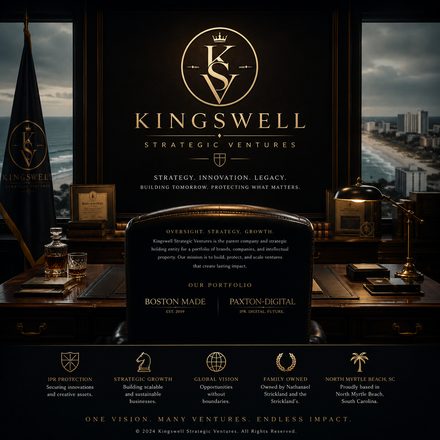
Kingswell Strategic Ventures is the holding and venture company behind several independent brands, including Paxton-Digital. Holding companies, entrepreneurs and individual buyers who consider acquiring a small business share a common challenge: confirming that what they are buying is what it appears to be. That process is called due diligence. This article explains the basics in plain language. It is general educational information, not legal, tax or financial advice. Anyone considering an acquisition should work with qualified attorneys, accountants and other advisors.

What Due Diligence Is

Due diligence is the investigation a buyer conducts before completing a purchase. Its purpose is to verify the seller’s claims, uncover risks, understand what is being acquired and inform the price and terms of the deal. In a small acquisition, it might take a few weeks; in a complex one, it can take months.

Advertisement

Advertisement

Due diligence usually begins after the buyer and seller agree on basic terms, often recorded in a letter of intent. That document typically includes a confidentiality agreement and sometimes an exclusivity period during which the seller agrees not to negotiate with other buyers.

Asset Purchase or Stock Purchase?

Small acquisitions are often structured in one of two ways. In an asset purchase, the buyer acquires specific assets, such as equipment, inventory, customer lists, intellectual property and contracts, and usually leaves many liabilities with the seller. In a stock or equity purchase, the buyer acquires ownership of the company itself, including its liabilities. The structure affects taxes, liability and what due diligence needs to cover, and it is an area where professional advice is essential.

1. Financial Review

Financial due diligence examines whether the business earns what the seller says it earns and whether those earnings are likely to continue. Common steps include:

  • Reviewing several years of financial statements and tax returns.
  • Comparing reported revenue with bank statements and payment processor records.
  • Examining profit margins, expenses and how they have changed over time.
  • Understanding any adjustments the seller proposes, such as removing the owner’s personal expenses from the accounts.
  • Reviewing accounts receivable, accounts payable, debt and inventory.
  • Assessing seasonality and the impact of one-time events.

A quality of earnings review, often performed by an independent accountant, can help assess whether reported profits are sustainable.

2. Customers and Revenue Concentration

Buyers want to know who the customers are and how dependent the business is on a few of them. If one customer accounts for a large share of revenue, losing that customer after the acquisition could be a serious problem. Questions include how long customers have stayed, whether they have contracts, how they were acquired and whether relationships depend on the current owner personally.

Advertisement

3. Contracts and Commitments

A business is bound by its agreements. Buyers typically review:

  • Customer and supplier contracts, including terms, renewals and termination rights.
  • Leases for office, retail or warehouse space.
  • Loans, guarantees and liens on assets.
  • Licenses and software subscriptions essential to operations.
  • Agreements with contractors, agencies and partners.

Some contracts include change-of-control clauses that allow the other party to terminate or renegotiate if the business is sold. Identifying these early prevents surprises.

4. Legal and Regulatory Matters

Legal due diligence, conducted with an attorney, looks for risks such as pending or threatened lawsuits, regulatory violations, required permits and licenses, and compliance with employment, privacy and consumer protection laws. For businesses in regulated industries, such as health care, finance or government contracting, specific rules may apply to ownership changes.

5. Intellectual Property and Digital Assets

For brands and online businesses, intangible assets can be the most valuable part of the deal. Buyers should confirm:

  • Ownership of trademarks, copyrights, domain names and any patents.
  • That logos, content and software were created by employees or contractors who assigned the rights to the business.
  • Control of websites, hosting accounts, social media accounts, email lists and analytics.
  • Compliance with privacy laws for any customer data being transferred.

An asset that the seller does not clearly own, such as a domain registered in an employee’s personal name, can create complications.

6. Operations

Operational due diligence asks how the business actually runs. Who does what? Which processes are documented, and which exist only in the owner’s head? What systems and suppliers does it depend on? Are there quality, safety or capacity problems? Visiting the business, observing operations and speaking with key staff, with the seller’s permission, can reveal much more than documents alone.

Advertisement

7. People

Small businesses often depend heavily on a few people, especially the owner. Buyers should understand the roles of key employees, their compensation and their likelihood of staying. Transition plans matter: will the seller stay on for a period to help with the handover? Are there non-compete or non-solicitation agreements, where legally permitted? Cultural fit between the buyer and the business can be as important as the numbers.

8. Taxes

Unpaid taxes can follow a business, particularly in stock purchases. Buyers typically review tax filings and payments for income, payroll and sales taxes. Tax structure also affects the deal’s economics, which is another reason to involve an accountant early.

Red Flags

Some warning signs warrant closer attention:

  1. Financial records that are incomplete or inconsistent with bank records.
  2. Reluctance to share information or allow verification.
  3. Heavy dependence on one customer, supplier or platform.
  4. Recent sharp changes in revenue without a clear explanation.
  5. Unresolved legal disputes or regulatory issues.
  6. Key assets held in someone’s personal name.

Red flags do not always end a deal, but they may change the price, structure or protections the buyer requires.

Using What You Learn

Due diligence findings feed into the final purchase agreement. Buyers and their advisors may negotiate price adjustments, representations and warranties from the seller, indemnification provisions, escrow or holdback of part of the purchase price, or conditions that must be met before closing. Sometimes the right decision is to walk away.

The Takeaway

Due diligence is about replacing assumptions with verified facts. A structured review of finances, customers, contracts, legal issues, intellectual property, operations, people and taxes, guided by qualified professionals, helps buyers understand what they are acquiring and make sound decisions.

Quick check: Why do buyers check for change-of-control clauses in contracts?

  1. They set the purchase price
  2. They may let the other party end or renegotiate a contract after a sale
  3. They determine the tax rate
Show answer

B. Change-of-control clauses can allow customers, suppliers or landlords to terminate or renegotiate when ownership changes.


Boston Made Foundation Boston Made family Boston Made Foundation The philanthropic arm of the Boston Made family. Visit site →

Advertisement

Latest stories

View all

The institutional news desk of the Boston Made network. Reporting is researched from wire services including The Associated Press and local sources, and written by the desk.

Continue Reading

Entrepreneurship

Inside Boston’s $7.8 Billion AI Year: Walden Robotics, Blitzy, and Whoop Lead a Different Kind of Boom

Ecosystem Intelligence Desk

Published

on

Title card: Inside Boston’s $7.8 Billion AI Year: Walden Robotics, Blitzy, and Whoop Lead a Different Kind of Boom

CAMBRIDGE — Boston’s startup economy is having its strongest fundraising year in roughly four years, with greater-Boston companies pulling in an estimated $7.8 billion in venture investment so far in 2026. The headline number is real. So is the more complicated story underneath it: Boston is winning big, specific bets in artificial intelligence and robotics — just not in the way Silicon Valley is.

Two Cambridge companies, two different AI plays

Walden Robotics, based in Cambridge and spun out of the Toyota Research Institute, raised a $300 million round this year at a $1.1 billion valuation, with backing from Toyota, Nvidia, Boeing, and Deviation Capital. The company builds partially humanoid robots — arms, sensors, wheeled bases — for factory and warehouse floors, trained using “large behavior models” that let a robot learn a new task from demonstration rather than new code. Led by MIT professor Russ Tedrake, Walden already has robots running inside a Toyota manufacturing plant in North America. It’s one of the largest robotics deals to come out of Boston, trailing only autonomous-vehicle maker Motional.

Advertisement

Advertisement

A few subway stops away in Kendall Square, Blitzy took a different path to a similar milestone. The company, founded by former Army Ranger Brian Elliott and ex-Nvidia engineer Sid Pardeshi, builds AI tools that help large enterprises untangle and modernize legacy codebases — some running software 25 to 30 years old — before generating AI-assisted rewrites. Blitzy raised $200 million at a $1.4 billion valuation, led by Northzone with a bench of Boston-area investors including Battery Ventures, Flybridge Capital, and PSG. At roughly 80 employees, it’s now a Kendall Square unicorn built on unglamorous, essential infrastructure — exactly the kind of company Boston tends to produce.

Whoop and the AI-health crossover

The single largest round of the year in Boston didn’t come from a pure AI lab — it came from a wearable. Whoop closed a $575 million Series G in March at a $10.1 billion valuation, built on what the company describes as 24 billion hours of physiological data feeding purpose-built AI models to generate personalized health insights. It’s a reminder that Boston’s AI story is increasingly inseparable from its health-tech and biotech story — sectors that, combined, still account for more than half of the region’s largest funding rounds this year.

The honest comparison

Boston hasn’t produced a foundation-model company on the scale of OpenAI or Anthropic, and reporting on the region’s 2026 numbers has been candid about that gap — no single Boston round this year approaches the scale of the largest Bay Area AI mega-deals. But the region’s institutional advantages haven’t gone anywhere: MIT alone has been actively working to unleash more faculty and student startups amid the AI boom, and Kendall Square continues to sit at the intersection of deep technical talent, biotech capital, and now a growing bench of applied-AI companies solving specific, high-value enterprise problems rather than chasing general intelligence.

That’s the pattern worth watching. Boston’s AI wins in 2026 look less like a single breakout lab and more like a cluster of well-capitalized, narrowly-focused companies — a humanoid-robotics spinout with a real customer on a factory floor, a legacy-code unicorn with enterprise contracts already signed, a wearable-AI company with a decade of physiological data no competitor can replicate overnight. It’s a different kind of AI boom. It’s still a boom.


Boston Made, Inc. tracks the companies and capital shaping the Boston business landscape as part of its ongoing coverage of the region’s technology and startup ecosystem.

Advertisement

Background

Greater Boston’s startup economy has long drawn on a dense concentration of universities, research hospitals and established technology and life sciences companies. Kendall Square in Cambridge, next to MIT, became one of the best-known innovation districts in the world over the past few decades, as biotech firms, software companies and research labs clustered within walking distance of one another. That proximity makes it easier for founders to recruit technical talent, for researchers to move between academia and industry, and for investors to meet companies early.

Venture capital, the main source of funding for young, high-growth companies, tends to move in cycles. Periods of rapid fundraising are often followed by slower stretches when investors become more selective. Annual totals for a region can also swing sharply because of a handful of very large rounds, which is why a single headline number rarely tells the whole story of a local startup economy.

What it means for Boston-area readers

For people who live and work in the region, large funding rounds can translate into hiring, office and lab leases, and demand for local services. They can also shape which skills employers are looking for. Applied AI, robotics and health technology draw on engineers and scientists, but also on product managers, sales staff, operations teams, lawyers and accountants who understand those industries.

  • Job seekers may find opportunities in companies applying AI to specific industries, not only in pure research labs.
  • Students at local universities can see a wide range of paths from research into startups.
  • Small businesses near innovation hubs may notice changes in demand for space, food, transportation and professional services.
  • Policymakers watch how funding trends interact with housing, transit and talent retention.

Key terms

  • Venture capital: investment in young companies in exchange for ownership, usually with high risk and high potential reward.
  • Funding round: a single fundraising event, often labeled by letter, such as Series A or Series G, as a company matures.
  • Valuation: the value investors assign to a company at the time of a funding round.
  • Unicorn: a privately held startup valued at $1 billion or more.
  • Spinout: a company formed from research or technology developed inside another organization.
  • Foundation model: a large AI model trained on broad data that can be adapted to many tasks.
  • Applied AI: AI built to solve a specific problem in a particular industry or workflow.
  • Legacy code: older software still in use, often difficult to maintain or modify.

What to watch

  • Whether full-year funding totals continue the pattern seen so far, and how they are measured by different trackers.
  • How applied-AI and robotics companies convert pilot deployments into broader customer use.
  • The balance between AI, health technology and biotech in the region’s largest rounds.
  • Whether universities and research institutions expand programs that help faculty and students start companies.
  • How housing costs and transit affect the region’s ability to attract and keep technical workers.

Funding figures can differ between data providers because of how they define a region, a sector and a completed deal. Comparing totals from the same source over time is generally more meaningful than comparing different sources with each other.

Quick check: Which company closed the largest single round of the year in Boston, according to the article?

  1. Blitzy
  2. Walden Robotics
  3. Whoop
Show answer

C. Whoop closed a $575 million Series G, the largest single round of the year in Boston.

Paxton-Digital Boston Made family Paxton-Digital Enterprise technology for IP protection and portfolio management · a Kingswell company. Visit site →

Advertisement

Continue Reading

Education

Naming a New Brand: Trademark Searches, Domains and Avoiding Confusion

A brand name has to be memorable, available and distinct from names already in use. This guide walks through brainstorming, screening for conflicts, checking domains and testing a shortlist.

Ecosystem Intelligence Desk

Published

on

5 Lessons From Building a Multi-Brand Portfolio

Kingswell Strategic Ventures is a holding and venture company behind several independent brands, including Paxton-Digital. Any organization that starts more than one brand eventually faces the same recurring task: choosing a name. A strong name is easy to say, easy to remember and unlikely to be confused with someone else’s. This guide explains a practical naming process, from brainstorming through basic availability checks. It offers general education only; for decisions about trademark rights, a qualified trademark attorney is the right resource.

Why Naming Is Harder Than It Looks

Most simple, descriptive words are already in use somewhere. A name that seems perfect on a whiteboard may already belong to a company in a related field, may be impossible to secure as a domain or social handle, or may carry an unintended meaning in another language. A methodical process saves time and reduces the risk of renaming later, which is far more expensive than getting it right at the start.

Advertisement

Advertisement

Understanding Types of Names

Brand names generally fall along a spectrum from descriptive to invented:

  • Descriptive names say exactly what the business does. They are clear but often hard to protect and easy to confuse with competitors.
  • Suggestive names hint at a quality or benefit without stating it outright. They balance clarity with distinctiveness.
  • Arbitrary names use a real word in an unrelated context. They can be memorable and distinctive.
  • Invented names are coined words with no prior meaning. They are usually the most distinctive but require more effort to build recognition.

In general, the further a name moves from pure description, the easier it tends to be to distinguish in the marketplace.

Step 1: Write a Naming Brief

Before brainstorming, write down what the name needs to do. A short brief might include the audience, the tone (playful, authoritative, warm), words or ideas to avoid, the markets where the brand will operate and any constraints, such as a preference for short names or names that work well as a domain. The brief gives everyone a shared standard for judging ideas.

Step 2: Brainstorm Widely

Generate far more options than seem necessary. Useful techniques include:

  • Listing words associated with the brand’s values, audience and setting.
  • Combining two short words into a compound.
  • Borrowing from history, geography or nature in ways that fit the brand.
  • Altering spellings carefully, though unusual spellings can make a name harder to find and type.

It is common to begin with a long list of a hundred or more candidates. Many will be eliminated quickly.

Advertisement

Step 3: Screen for Obvious Conflicts

A preliminary screen weeds out names that are clearly unavailable. It typically involves:

  1. A general web search for the exact name and close variations, paying attention to businesses in the same or related fields.
  2. A search of the national trademark database. In the United States, the U.S. Patent and Trademark Office offers a public search tool for registered and pending marks.
  3. State business registries, which show companies registered under similar names.
  4. App stores and marketplaces, where product names may appear without formal registration.

Trademark conflicts usually turn on whether a name is likely to cause confusion among consumers, which depends on how similar the names are and how related the goods or services are. Two businesses in completely different fields can sometimes share similar names, while a near-match in the same field is a warning sign. A preliminary screen is not a clearance opinion, and a professional search is advisable before investing heavily in a name.

Step 4: Check Domains and Handles

For most brands, a matching or closely matching domain is important. When checking:

  • Look for the exact name in the most common extension first, then consider alternatives.
  • Be cautious with domains that differ from the brand name in confusing ways, such as added hyphens or misspellings.
  • Check major social platforms for available handles, aiming for consistency across them.
  • Consider registering common misspellings and redirecting them to the main site.

A domain or handle being available does not mean a name is free of trademark issues, and a taken domain does not always rule a name out. Both are simply part of the picture.

Advertisement

Step 5: Test the Shortlist

Narrow the list to a handful of finalists and test them with real people outside the team. Useful questions include:

  • Can people spell the name after hearing it once?
  • Can they pronounce it after seeing it written?
  • What does the name make them think the business does?
  • Is it memorable a day later?

Also check meanings in languages relevant to the brand’s audience, and look for unfortunate readings when words run together in a domain name.

Naming Within a Group of Brands

Organizations behind several brands must decide whether names should share a common element or stand fully apart. A shared prefix or word signals a relationship, while independent names give each brand room to develop its own identity. Neither approach is universally better; the choice depends on whether the brands benefit from being associated or from being judged on their own. Whatever the approach, keeping a central record of every name, domain, handle and registration helps prevent lapses and confusion.

Step 6: Secure and Document

Once a name is chosen, move promptly. Register the domain, claim social handles and, after appropriate professional guidance, consider filing for trademark protection in the relevant classes. Record renewal dates and store login credentials securely. Then write a short note explaining why the name was chosen; it becomes a useful reference for future marketing and for anyone who joins the team later.

Common Naming Mistakes

  • Falling in love with a name before checking availability.
  • Choosing a name so descriptive that it blends in with competitors.
  • Picking a spelling that customers will consistently get wrong.
  • Ignoring how the name will look in a logo, on a phone screen and in a web address.
  • Skipping professional advice when significant money is at stake.

A good name will not make a brand succeed by itself, but a poor one can create years of friction. Careful screening up front is time well spent.

Quick check: Which type of brand name is generally the hardest to distinguish from competitors?

  1. An invented, coined word
  2. A purely descriptive name
  3. An arbitrary word used in an unrelated context
Show answer

B. Descriptive names state what a business does, so they tend to resemble competitors’ names and are harder to set apart.

BOSSTOX Boston Made family BOSSTOX AI-infrastructure news and research covering power, cooling, chips and capital. Visit site →

Advertisement

Continue Reading

Entrepreneurship

Planning a Recurring Video Series: Formats, Episode Templates and a Realistic Cadence

A recurring video series builds familiarity in a way one-off clips cannot. This guide covers choosing a repeatable format, designing an episode template and setting a schedule a small team can keep.

Ecosystem Intelligence Desk

Published

on

New Video Series Spotlights Portfolio Brands

Boston Made, the media and marketing brand of Boston Made, Inc. at bostonmade.com, focuses on how brands tell stories and reach audiences. A recurring video series is one of the most effective tools for that work, because repetition builds recognition. Viewers learn what to expect, creators get faster with each episode and a library of related videos accumulates over time. This guide explains how to plan a series that a small team can sustain.

Series Versus One-Off Videos

A one-off video has to earn attention from scratch. A series borrows attention from its earlier episodes. When viewers enjoy one episode, they look for the next. Series also simplify production: once the format is set, each new episode follows a known pattern instead of requiring a fresh creative concept.

Advertisement

Advertisement

The trade-off is commitment. A series that starts strong and then stops abruptly can leave a brand looking inconsistent. Planning for sustainability from the beginning matters more than planning for a big launch.

Choosing a Repeatable Format

The best series formats have a clear, repeatable structure. Common examples include:

  • How-to or tutorial episodes, each solving one specific problem.
  • Interview or conversation episodes built around a consistent set of questions.
  • Behind-the-process episodes showing how something is made, step by step.
  • Question-and-answer episodes responding to common customer questions.
  • Short explainers that define a term or concept in a minute or two.
  • Roundups summarizing recent developments in a field.

A good test is to list at least twelve episode ideas that fit the format. If the list runs dry at four, the format may be too narrow.

Defining the Audience and Promise

Every series should make a simple promise to a specific audience. For example: “Each episode answers one common question a first-time homeowner has, in under three minutes.” That sentence sets the topic, the audience and the length. It also gives the team a quick way to judge whether a proposed episode belongs in the series.

Building an Episode Template

An episode template is the skeleton every episode follows. It speeds up scripting, shooting and editing. A typical template includes:

Advertisement
  1. Cold open: a short hook in the first few seconds that shows what the episode covers.
  2. Branded intro: a brief title card or sound cue, kept short so it does not delay the content.
  3. Main segment: the core teaching, conversation or demonstration.
  4. Recap: one or two sentences summarizing the takeaway.
  5. Close: a consistent sign-off and a pointer to related episodes.

Templates also cover visual consistency: the same lower-third style for names, the same caption font, a recognizable thumbnail layout and a consistent title pattern, such as “Episode number: Topic.”

Setting a Realistic Cadence

Cadence is how often new episodes appear. Weekly is common, but it is only the right choice if the team can genuinely deliver it. A reliable monthly series often serves a brand better than an ambitious weekly series that stalls after six episodes.

To estimate a sustainable cadence, time the first two or three episodes from idea to publication, including research, scripting, filming, editing, captioning and uploading. Multiply that time by the proposed frequency and compare it with the hours actually available.

Batch Production

Batching is one of the most effective habits for series work. Instead of producing one episode at a time, the team scripts several in one session, films several on the same day with the same setup and edits them in sequence. Batching reduces setup time, keeps visual consistency high and creates a buffer of finished episodes, which protects the schedule when something unexpected happens.

Advertisement

A practical goal is to have two or three finished episodes ready before the first one is published.

Organizing Seasons

Dividing a series into seasons offers natural breaks. A season might be eight or ten episodes on a related theme, followed by a pause to review results and plan the next set. Seasons make it acceptable to rest without appearing to abandon the series, and they give the team regular moments to refine the format.

Distribution Planning

Different platforms favor different lengths and shapes. A horizontal episode might live on a website or video platform, while short vertical clips drawn from it serve social feeds. Plan these derivative clips during filming so the right shots exist. For each episode, a simple distribution checklist might include:

  • Full episode uploaded with title, description and captions.
  • One to three short clips cut for social platforms.
  • A still image or thumbnail for newsletters and posts.
  • A written summary for the website.

Measuring What Matters

Raw view counts can be misleading for a young series. More useful early signals include how much of each episode viewers watch, whether returning viewers are increasing over time and whether people comment, share or ask follow-up questions. Review these signals at the end of each season rather than after every episode, since individual episodes can vary for reasons unrelated to quality.

Common Pitfalls

  • Launching without a buffer of finished episodes.
  • Letting episode length creep upward without reason.
  • Changing the format so often that the series loses its identity.
  • Skipping captions, which limits reach and accessibility.
  • Stopping without explanation instead of ending a season deliberately.

A recurring series rewards patience. The first few episodes are rarely the best; the value comes from steady improvement and a growing library that viewers can return to.

Quick check: What is the main benefit of batch-producing several episodes at once?

  1. It guarantees more views per episode
  2. It reduces setup time and builds a buffer that protects the schedule
  3. It removes the need for an episode template
Show answer

B. Filming and editing in batches saves repeated setup work and creates finished episodes in reserve for busy weeks.

Kingswell Strategic Ventures Boston Made family Kingswell Strategic Ventures Holding company that owns Boston Made, Inc. and Paxton-Digital, and sets long-term strategy. Visit site →

Advertisement

Continue Reading
Advertisement

Advertisement

Ad

Advertisement

Trending

--:--·---·--°