Connect with us

Weather where you are

Choose your location or share it once. We round your coordinates to about 1 km before sending them to our site and MET Norway for your forecast. Your choice stays in this browser tab.

Stay close to Boston

Get new Boston stories and Boston Made company updates, delivered as browser notifications.

Choose Enable notifications, then allow notifications in your browser.

Your browser subscription is stored by Boston Made and delivered through your browser’s push service. You can turn notifications off in your browser’s site settings. Privacy policy

Economy

Amazon Plans 6,000 Seasonal Jobs in Massachusetts as Holiday Hiring Heats Up

Half of the openings are in Greater Boston, averaging about $20 an hour, while Target adds 1,900 seasonal workers across the region.

Ecosystem Intelligence Desk

Published

on

transit station

The holiday labor market in Massachusetts got its biggest signal of the season this week.

Amazon says it will hire about 6,000 seasonal workers in Massachusetts, roughly 3,000 of them in the Boston area, as part of a national push for more than 300,000 holiday hires. The company puts average seasonal pay at about $20 an hour, with both part-time and full-time shifts across its fulfillment and delivery network.

Advertisement

What workers get

  • Pay: an average of about $20 an hour, according to the company.
  • Benefits: starting Jan. 1, seasonal staff working 30 or more hours a week become eligible for health coverage.
  • A path in: many seasonal roles can convert to permanent positions.
  • Timing: openings are posted on a rolling basis and added weekly through December.

Target is adding about 1,900 seasonal team members across Boston as well, adding to competition for warehouse and retail labor heading into November.

The read for the Massachusetts economy

Seasonal hiring is a useful early read on how retailers see consumer demand. Big headcount plans suggest companies still expect a solid holiday quarter, even as households in the state report pressure from rising costs and as tariff fights with Canada weigh on local manufacturers. For small businesses, the bigger question is wages: when the largest employers set a $20 average, hourly staffing across retail and hospitality gets more expensive for everyone.

Sources: Boston.com. Reported and written by the Ecosystem Intelligence Desk.

Pupwear Boston Made family Pupwear Dog apparel and gear inspired by Boston the GoldenDoodle. Visit site →

Advertisement

The institutional news desk of the Boston Made network. Reporting is researched from wire services including The Associated Press and local sources, and written by the desk.

Economy

Week Ahead: A Fed Decision, a First Look at Q3 GDP and a Flood of Earnings Test a Shaky AI Rally

The Fed announces Wednesday at 2 p.m., GDP and the PCE inflation gauge land Thursday, and Alphabet, Eli Lilly and Cambridge’s Biogen are among the names reporting.

Ecosystem Intelligence Desk

Published

on

economy fed

After a week that ended with the Dow down 650 points on AI-spending jitters and $100 oil, investors face one of the busiest stretches of the fall: a Federal Reserve decision, the first read on third-quarter growth, the Fed’s preferred inflation gauge, and earnings from some of the market’s biggest names.

The calendar

  • Monday: a quiet start, with no major data scheduled.
  • Tuesday: September durable goods orders, the Case-Shiller home price index, new home sales and consumer confidence. The Fed’s two-day meeting begins.
  • Wednesday: the Fed’s rate decision at 2 p.m. ET, followed by the Fed chair’s press conference. Trade balance and inventory data come out in the morning.
  • Thursday: the advance estimate of Q3 GDP, weekly jobless claims, and September personal income, spending and PCE inflation, including the core reading the Fed watches most closely.
  • Friday: the employment cost index and the Chicago PMI.

Earnings to watch

Alphabet heads the list, and its spending plans for AI data centers will be read as a signal for the whole infrastructure trade. Also reporting this week: Eli Lilly, Novartis, Coca-Cola, Ford, FedEx, PayPal, eBay, T-Mobile, Chipotle, Coinbase, SoFi, Corning, Enphase, Twilio and Strategy.

Advertisement

The Massachusetts angle: Cambridge-based Biogen reports this week, one of the few Boston-area large caps on the calendar. Its results and pipeline commentary matter for the region’s biotech sector, which has been coping with a thinner pool of early-stage funding.

What we’re watching

  1. The Fed’s tone on oil. With crude near $100, the question is whether policymakers see an energy shock as a reason to hold rates higher for longer.
  2. Capex versus payoff. Last week’s sell-off came from doubts that AI spending will earn its return. Megacap guidance is the next test.
  3. Core PCE. A hot reading Thursday, the day after the Fed decides, could undercut whatever message the Fed sends.

This article is for informational purposes only and is not investment advice. Dates are as scheduled and may change.

Sources: Schaeffer’s Investment Research · Stock Titan earnings calendar. Reported and written by the Ecosystem Intelligence Desk.

PupWear (.org) Boston Made family PupWear (.org) Dog apparel and gear inspired by Boston the GoldenDoodle. Visit site →

Advertisement

Continue Reading

E-Commerce

Holiday Sales Forecast Tops $1 Trillion as AI Shoppers Reshape the Season

Ecosystem Intelligence Desk

Published

on

weather storm

The National Retail Federation expects holiday sales to top $1 trillion for the first time this year, and with Adobe forecasting a record $275.1 billion online and AI-driven shopping traffic more than doubling, the weeks before Black Friday on Nov. 27 will decide how much of that spending reaches small businesses’ own websites.

The headline forecasts

On Oct. 15, 2026, the NRF projected that November and December retail sales will grow 4.2 percent from last year, to $1.013 trillion. Its figures exclude auto dealers, gas stations and restaurants. Last season came in at $972 billion, a 3.1 percent gain, short of the trade group’s own initial forecast, according to Chain Store Age. NRF President and CEO Matthew Shay said households “continue to navigate persistent inflation and uneven confidence about the economy,” Logistics Management reported. The group expects retailers to hire 325,000 to 375,000 seasonal workers, roughly in line with about 356,000 last year.

Advertisement

Other forecasters land in a similar range for total spending. Deloitte projects holiday retail sales from November through January will rise 4 percent to 4.8 percent, to about $1.7 trillion. The Mastercard Economic Institute expects retail sales excluding autos and gas to rise 5.5 percent between Nov. 1 and Dec. 24, which coverage of its forecast described as the strongest growth in four years.

Online grows faster than the season

Every major forecast has e-commerce outpacing total retail. Adobe, which tracks transactions on retail websites, projects U.S. online holiday spending of $275.1 billion from Nov. 1 through Dec. 31, up 6.7 percent. Deloitte’s range for holiday e-commerce is $316.1 billion to $318.9 billion, up 7.5 percent to 8.4 percent, using a longer season and a different method. Mastercard’s institute put online growth at 11 percent and in-store growth at 3.9 percent.

Adobe’s day-by-day projections show where the pressure lands. It expects Cyber Week, from Thanksgiving on Nov. 26 through Cyber Monday on Nov. 30, to bring in $47.5 billion, up 7.4 percent. Cyber Monday alone is forecast at $15.1 billion, which Adobe said “is expected to set a new milestone for U.S. e-commerce.” Black Friday is forecast at $12.9 billion and Thanksgiving at $6.9 billion, both growing faster than Cyber Monday. Adobe expects peak discounts of up to 30 percent during Cyber Week, with electronics and toys leading.

Inflation is doing part of the work

The trillion-dollar figure is not all new demand. NRF economists said nearly half of the 4.2 percent gain reflects higher prices, according to Chain Store Age, and the trade group expects core goods inflation to average 2.5 percent in 2026, up from 1.6 percent in 2025. NRF chief economist Mark Mathews pointed to higher diesel prices raising shipping costs and surging memory-chip prices weighing on electronics, Logistics Management reported. NRF also cited rising gas prices, higher interest rates and elevated consumer debt as reasons retailers are hiring cautiously.

For a small retailer, that combination means customers comparing prices more carefully while the retailer’s own costs for shipping and inventory climb.

AI and phones change where the click comes from

The fastest-growing source of shopping traffic is not a search engine or a social feed. Adobe expects referrals from generative AI tools to U.S. retail sites to rise 130 percent from last year, with jumps of 159 percent on Thanksgiving, 95 percent on Black Friday and 88 percent on Cyber Monday. Salesforce, in its July holiday predictions, forecast that AI chat agents would generate 20 percent of all holiday e-commerce traffic worldwide and that one in three e-commerce sites would have a shopping agent of their own live by Cyber Week.

Phones remain the default storefront. Adobe expects mobile devices to account for 57.4 percent of online holiday spending, up from 56.4 percent, and 82 percent of buy-now-pay-later spending, which it forecasts at $21.3 billion for November and December, up 6.6 percent.

Where marketing dollars are moving

Hard forecasts for holiday ad prices are scarce; none of the major retail forecasters published projections for search or social ad costs. The channel data that does exist points away from paid search. Adobe projects that social media’s share of online revenue will grow 17 percent and affiliates and partners, including influencers, 12 percent, compared with 4 percent for paid search. Salesforce predicted social commerce would grow nine times faster than traditional e-commerce and that retailers would spend an extra $3 billion globally on free shipping.

Advertisement

“Getting eyes on your brand is no longer the same as closing the sale,” Salesforce consumer insights director Caila Schwartz wrote in the company’s predictions.

Fenway’s Take

The forecasts describe a season that is bigger on paper, partly inflated by prices, and increasingly routed through intermediaries: AI assistants, marketplaces and social platforms. For a local shop, bakery or service business, the risk is not that holiday shoppers stay home. It is that the shoppers who would have found the business directly now arrive through a channel that summarizes, compares and sometimes completes the purchase elsewhere.

The counterweight is a website that answers the questions an AI assistant or a hurried phone shopper asks, in plain text, on fast pages: what is in stock, what it costs, when it ships or when the store is open, and how to pay. Adobe’s growth in buy-now-pay-later spending and mobile share suggests that payment options and mobile checkout speed are not cosmetic. They are where holiday orders are won or abandoned.

Timing matters as much as content. Changes made the week of Thanksgiving have little time to be crawled, tested or fixed. The practical window for a small business to prepare its site is the next three weeks.

What it means for you

  • Publish holiday hours, shipping cutoff dates and return policies as plain text on your site and in your Google Business Profile by mid-November, so AI tools and search can find them.
  • Test checkout on a phone over a cellular connection, including any buy-now-pay-later option, and remove steps that require creating an account.
  • Build one page per gift category or offer rather than a single long sale page, so each can be found and cited on its own.
  • Plan for higher shipping costs in pricing and free-shipping thresholds rather than absorbing them during Cyber Week.
  • Freeze major site changes by about Nov. 20 so there is time to fix problems before Thanksgiving traffic arrives.

Test yourself

1. What total does the NRF forecast for November and December 2026 retail sales?

Answer: $1.013 trillion, up 4.2 percent from last year, which would be the first season above $1 trillion.

2. Which day does Adobe expect to be the biggest online shopping day of the season?

Answer: Cyber Monday, Nov. 30, at a forecast $15.1 billion.

3. How much does Adobe expect traffic from generative AI tools to U.S. retail sites to grow?

Answer: About 130 percent year over year, with the biggest jump on Thanksgiving.

4. Roughly how much of NRF’s forecast growth comes from inflation?

Answer: Nearly half, according to NRF economists, with core goods inflation expected to average 2.5 percent this year.

Discussion

  1. If AI assistants send a growing share of shoppers to retail sites, should small businesses optimize for those assistants the way they once optimized for search engines?
  2. Is a trillion-dollar holiday season good news for local retailers if nearly half the growth comes from higher prices?
  3. Should small retailers match big-box free-shipping offers this year, or compete on pickup, service and speed instead?

From the network

The post Holiday Sales Forecast Tops $1 Trillion as AI Shoppers Reshape the Season appeared first on Fenway Web.


Lumo Kingswell Lumo Precious-metals education and a two-sided gold exchange with a live gold price. Visit site →

Advertisement

Continue Reading

Economy

Dow Sinks 650 Points as AI Capex Jitters and $100 Oil Cap a Volatile Week

Wall Street ended a whipsaw week lower Friday: the AI-spending worry flipped from too much to too little, crude pushed past $100, and the 10-year yield touched 5%. What it means for BOSSTOX, Lumo and Main Street.

Ecosystem Intelligence Desk

Published

on

markets screen

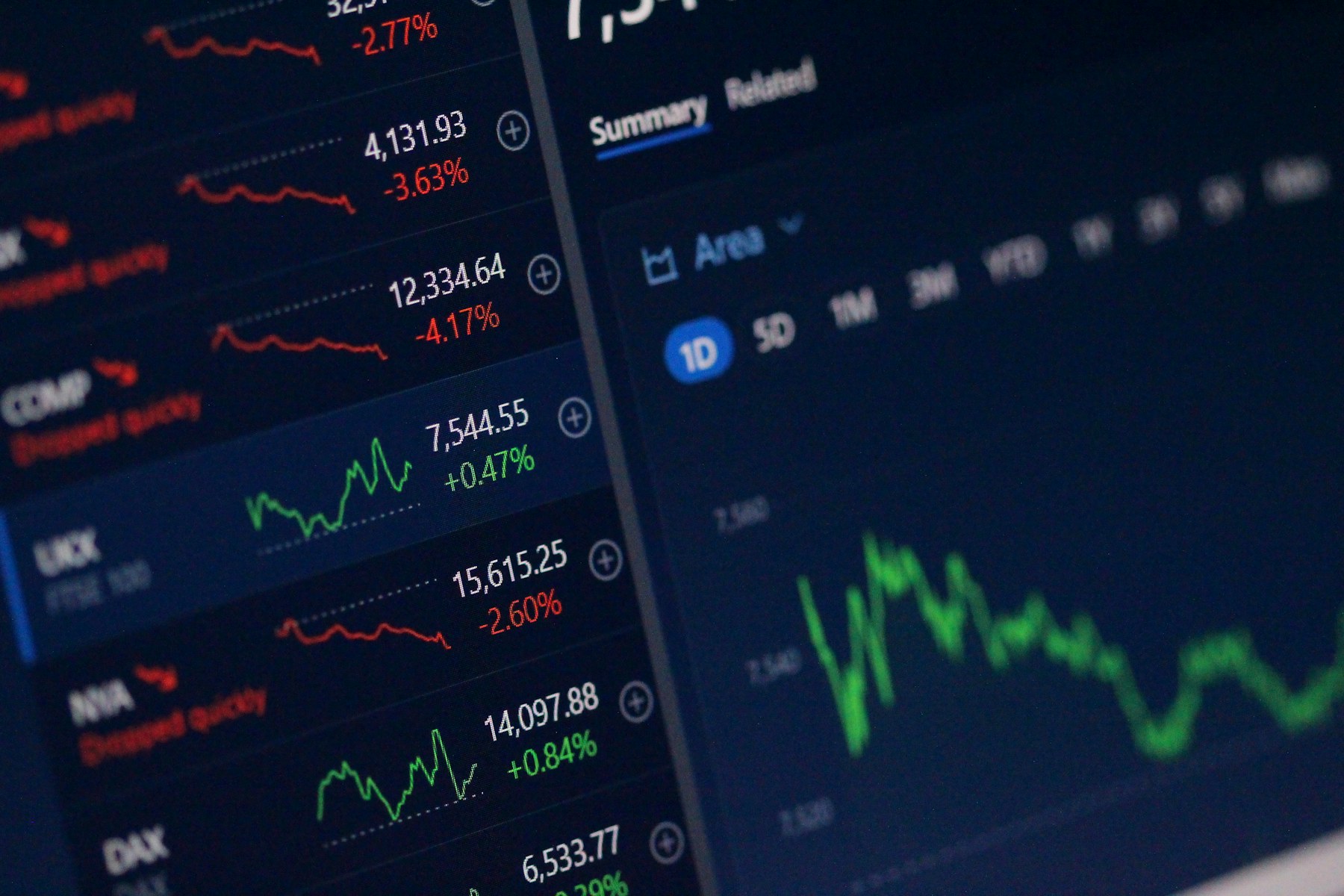
BOSTON — Wall Street closed out a volatile week on a sour note Friday, with the Dow Jones Industrial Average sliding more than 650 points as investors wrestled with two problems at once: fresh doubts about how much the biggest technology companies will keep spending on artificial intelligence, and crude oil pushing past $100 a barrel on rising tension in the Middle East.

The numbers at Friday’s close

  • Dow Jones Industrial Average: 52,215.16, down 652.82 points (−1.23%)
  • S&P 500: 7,623.68, down 39.75 (−0.52%)
  • Nasdaq Composite: 25,955.34, down 53.52 (−0.21%)
  • Russell 2000: 2,775.90, down 8.13 (−0.29%)
  • 10-year Treasury yield: 4.99%, up about 3.5 basis points
  • WTI crude (December): $103.44, up 3.99% — the highest since April; Brent topped $116
  • Gold: $4,010, down 1.24%
  • VIX: 19.45, up 2.21%

What moved the market

The AI spending question flipped. For most of 2026 the worry was that Big Tech was spending too much on data centers, chips and power. This week the worry inverted. Meta left its capital-expenditure guidance unchanged in its third-quarter report, and Tesla cut its full-year capex outlook by roughly 20%. “Tech stocks got slammed amid fresh concerns about the outlook for artificial intelligence,” Capital.com analyst Kyle Rodda said, noting the concern has shifted from spending being too high to spending possibly being too low. For the picks-and-shovels names that benefit from every new data center — power, cooling, networking — a slower build-out is a direct hit to the growth story, and it showed: Bloom Energy fell about 11% and Comfort Systems USA about 10.7% intraday.

Advertisement

Oil at $100-plus. WTI and Brent both reached their highest levels since April after reports that the United States and Israel are weighing further strikes on Iran following the November midterms, and after Iran warned it would target Gulf energy infrastructure if attacked. Higher oil feeds straight into inflation expectations, which is why the bond market sold off alongside stocks: the 10-year yield finished just under 5%.

The consumer is in a dark mood. The University of Michigan’s consumer-sentiment index fell to 48.0, near record lows, with one-year inflation expectations at 4.7%. That reading landed the same day American Express said it plans to trim about 5% of its workforce; its shares fell roughly 2.9%.

Hedge funds had a rough day. Reuters reported that several major hedge-fund strategies posted their worst single-day performance since the COVID-era rout of 2020, a sign of how crowded the AI-infrastructure trade had become.

Notable movers

  • Crown Castle jumped about 11.7% and SBA Communications about 7.8% on reports that SpaceX is in talks to lease cell sites. SpaceX itself closed at $147.49 (+1.9%) after Phillip Securities upgraded the stock from Sell to Buy and lifted its price target to $250 from $75.
  • Robert Half rose about 13% after earnings; RingCentral added about 6.6%.
  • Deckers Outdoor slid about 6.2%; Kering, owner of Gucci and Saint Laurent, fell 12.4% after weak third-quarter results; Volvo Cars plunged about 24% on a plan to cut 2,500 jobs.
  • Bitcoin hovered near $81,300, little changed on the day.

The Boston Made read

Three of the week’s threads run straight through the businesses in the Boston Made family.

AI infrastructure is now a two-sided bet. BOSSTOX has spent the fall tracking the companies that sell the compute, cooling, power and networking behind the AI build-out. This week is the first time the market priced in the possibility that the build-out slows. That doesn’t end the thesis — Meta’s guidance was unchanged, not cut — but it means the next leg is about which suppliers have contracted backlogs and which were riding sentiment. Expect BOSSTOX’s coverage to lean harder into backlog and order-book data from here.

$4,000 gold is a Main Street story, not just a trading story. Gold gave back about 1.2% Friday but remains above $4,000 an ounce. At these levels the “cash for gold” market — the local-dealer trade that Kingswell’s Lumo.gold is built to organize, with a live gold price and melt calculator for households deciding whether to sell jewelry or coins — matters to far more people than it did at $2,000 an ounce. A one-day pullback does not change that.

Small business feels the sentiment number first. A consumer-confidence reading of 48 is the kind of figure that shows up in restaurant bookings, home-improvement quotes and event calendars before it shows up in an index. Fenway Web’s clients — remodelers, realtors, churches, musicians — are the businesses that number describes. The desk’s read for them this quarter is unchanged: a clear website and a working lead form matter more in a cautious economy, not less.

What to watch next week

Earnings from Verizon on Monday and Coca-Cola, UPS, SoFi and Robinhood on Tuesday will test whether the consumer caution in the survey data is showing up in actual sales. The midterm elections follow the week after, and the oil market is already trading on what comes after them.

Sources

The Boston Made Newsroom publishes market coverage for general information only. Nothing here is investment advice; consult a licensed professional before making investment decisions.

Kingswell Strategic Ventures Boston Made family Kingswell Strategic Ventures Holding company that owns Boston Made, Inc. and Paxton-Digital, and sets long-term strategy. Visit site →

Advertisement

Continue Reading
Advertisement

Advertisement

Ad

Advertisement

Trending

--:--·---·--°