
Service
The “Proof Stack” Every Service Business Website Needs


If you’re a service business owner, you’ve probably said this at some point:
“Our work is great… people just need to call us.”
And that might be true.
But here’s the brutal truth:
People don’t call websites they don’t trust.
Not because they’re rude.
Not because they’re broke.
Not because they’re “shopping around.”
They don’t call because your site didn’t prove anything.
It didn’t settle their nerves.
It didn’t make them feel safe.
So they do what humans do:
 they click they skim they hesitate they leave
And they usually end up calling the company that made them feel the most confident.
That’s what this post is about.
At Fenway Web, we call it:
The Proof Stack
(And every winning website has one.)
What Is a Proof Stack?
A Proof Stack is the combination of content, visuals, structure, and clarity that makes a stranger think:
“Okay… these people are real.”
“They’re legit.”
“They’ve done this before.”
“I can trust them with my money.”
It’s not one testimonial.
It’s not a 5-star badge.
It’s an entire system of proof layered across the website.
That’s why it works.
Why Service Business Websites Struggle with Trust
Service businesses have a unique problem:
Your customer can’t “test drive” you.
They can’t touch your work.
They can’t verify your professionalism until AFTER they hire you.
Which means your website has to do a hard job:
It has to build trust instantly.
And if it doesn’t?
You lose.
Not in a dramatic way.
In a quiet way.
The kind of loss that looks like:
- low calls
- low leads
- low conversion
- “the website doesn’t work”
- “we need more traffic”
When the real issue is:
Your website doesn’t prove enough.
The 10 Proof Layers That Multiply Conversions
If you want your website to convert, you need proof stacked in multiple forms.
Here are the 10 layers Fenway Web installs in a real Proof Stack.
1) The “What You Do” Statement (Clarity is Proof)
Most websites try to sound fancy.
Big mistake.
Your visitor should understand what you do in 3 seconds.
Good example:
“We install ductless mini-splits in Myrtle Beach.”
 Bad example:
“We provide innovative comfort solutions for modern environments.”
Clarity builds trust because it reduces uncertainty.
Uncertainty kills calls.
2) The Process Breakdown
People are scared of the unknown.
So show them the steps.
Example:
- Schedule a free estimate
- We inspect & recommend options
- Install day + walkthrough
- Support after the job
When someone understands the process, they trust it.
3) Visual Proof (Real Photos)
Real photos beat perfect design.
Every time.
Photos that build trust:
- you & your team (not stock models)
- your truck/van
- your storefront or office
- you working
- before/after shots
- on-the-job photos
Stock photos might look clean…
…but they destroy credibility.
4) Numbers (Hard Proof)
Numbers feel like gravity.
They make a business feel real.
Examples:
- 14+ years in business
- 2,100+ installs
- 5-star average rating
- serving 6 counties
- 24-hour response time
Even small numbers are powerful.
5) Testimonials That Are Specific
“Great service!” is nice…
…but it’s not convincing.
Specific testimonials are conversion gold.
High-trust testimonial:
“They showed up on time, explained everything, and finished the install in one day. The unit is quiet and our power bill dropped.”
That’s real.
That sells.
6) Logos + Brands You’ve Worked With
Even one recognizable logo boosts trust instantly.
Add:
- partners
- suppliers
- vendors
- certifications
- associations
Logos = borrowed credibility.
7) Guarantees / Promises (Risk Removal)
People don’t buy services…
They buy safety.
Examples:
- “We show up on time or you get $50 off.”
- “No surprise fees.”
- “Workmanship guarantee.”
- “Satisfaction promise.”
A guarantee makes the visitor feel protected.
8) FAQs That Answer What People Are Afraid to Ask
FAQs are not filler.
They’re a trust weapon.
FAQs that convert:
- “How much does this cost?”
- “What’s the turnaround time?”
- “Do you offer financing?”
- “Do you serve my area?”
- “Are you insured?”
- “What if something breaks later?”
Answer fears = create action.
9) Proof of Communication (Responsiveness)
A lot of small businesses lose leads because they don’t respond.
So smart visitors look for signs you’ll reply.
Add:
- “Average response time”
- “We reply same-day”
- “Text us anytime”
- “Online booking”
- “Instant estimate form”
People trust businesses that communicate.
10) Case Studies (The Ultimate Proof Stack Layer)
If testimonials are trust…
Case studies are domination.
They show:
- the problem
- the plan
- the outcome
- the results
Even one good case study can outperform 50 testimonials.
The Biggest Mistake: Putting Proof in One Place
Most businesses do this:
- they hide reviews on one page
- they hide photos in one gallery
- they hide process in one About page
But your visitor doesn’t explore like that.
They skim.
So proof must be:
Spread across the entire website.
Proof needs to be everywhere:
- homepage
- service pages
- about page
- contact page
- footer
- sidebar
- call-to-action sections
That’s a real Proof Stack.
What Fenway Web Builds: Websites That Prove
A Fenway Web website isn’t built for decoration.
It’s built for:
- trust
- proof
- conversion
- action
- growth
A website should make strangers feel like:
“These people are legit.”
And then…
give them one obvious next step.
That’s how you get more leads without running ads, begging for traffic, or constantly redesigning.
Final Word: If You Want More Calls, Build More Proof
The fastest way to improve a service business website isn’t adding another paragraph.
It’s stacking more proof.
Because proof is what makes people click:
Call Book Request Quote Schedule Visit
Traffic doesn’t convert.
Trust converts.
Want Fenway Web To Build Your Proof Stack?
If your website looks good but doesn’t generate leads…
it’s probably missing proof.
Fenway Web can rebuild your site with:
- Proof Stack structure
- modern design
- speed optimization
- conversion-focused layout
- tracking + analytics
A website that performs like it should.
The post The “Proof Stack” Every Service Business Website Needs appeared first on Fenway Web.


Behind the Build · Fenway Web
Building the Kingswell Chronicles Across the Boston Made Family
Fenway Web led the design and build-out behind The Kingswell Chronicles — a new Fiction saga spanning the Boston Made family of sites, complete with story-driven calculators and cross-linked brand tie-ins. Here’s where to find it.
Explore the Saga & the Brands
- The Kingswell Chronicles on Boston Made
- The Kingswell Chronicles on Boston Made Newsroom
- More Fiction on Boston Made Newsroom
- Every Boston Made Brand, In One Place
- Kingswell Strategic Ventures — wealth management & legacy
- Paxton-Digital — infrastructure, IPR & HealthSync
- Pupwear — stylish dog wearables
- Lumo.gold — cash for gold, fast and secure
Fenway Web builds the sites, storefronts, and digital presence for the whole Boston Made family — this project included.
Boston Made Family of Brands


The post Behind the Build: The Kingswell Chronicles appeared first on Fenway Web | A Boston Made Brand.
Service
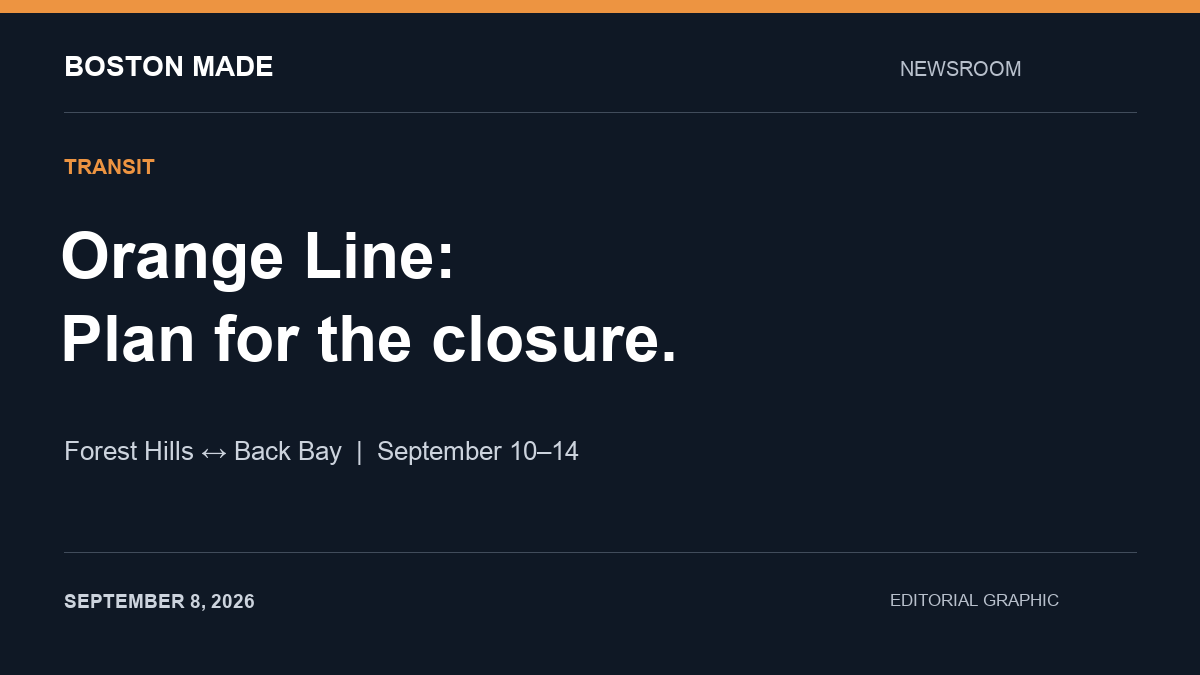
Orange Line Closure September 10–14: What Boston Riders Need to Know
Shuttles replace Orange Line trains between Forest Hills and Back Bay September 10–14, with a fare-free Commuter Rail alternative.


Boston Made Brands Opens Submissions for Mergers, Acquisitions & Restructuring

Boston Made Network Rolls Out Cross-Site Advertising Across Every Brand

The Paxton-Digital Chronicles: A Boston Made Fiction Saga

Boston Made Introduces Music Videos

Building Something Bigger: The Future of Boston Made Pets Is Under Construction

Boston Made Expands Creative Content with New “Bands” Music Video Series
-
 Videos2 months ago
Boston Made Introduces Music Videos
-
 E-Commerce9 months ago
Building Something Bigger: The Future of Boston Made Pets Is Under Construction
-
 Videos2 months ago
Boston Made Expands Creative Content with New “Bands” Music Video Series
-

 E-Commerce9 years ago
Boston Made Launches Online Tech Store
-

 E-Commerce9 months ago
The Future of Pet Care: Exploring Smart Dog Wearables and Innovative Pet Tech
-

 Boston Made+ Exclusive8 months ago
Your Website Isn’t Broken—It’s Confusing (And That’s Why Leads Don’t Convert)
-

 Service8 months ago
What a Real Website Maintenance Plan Includes (And What’s a Scam)
-

 Economic Development1 week ago
Is the Massachusetts Economy in Trouble? Inside the Population and Business Exodus