
Service
What a Real Website Maintenance Plan Includes (And What’s a Scam)


You don’t need a “maintenance plan.”
You need protection, performance, and peace of mind — because a website isn’t something you build once and forget.
A real website is a living system:
- it needs updates,
- it needs monitoring,
- it needs backups,
- and it needs someone who knows how to fix things before your customers notice.
Unfortunately, the internet is full of maintenance plans that are basically:
“We’ll charge you monthly and do nothing.”
So in this post, we’re going to break down the truth:
- what real maintenance actually includes
- how to spot a fake plan
- and what Fenway Web believes support should look like
Why “Maintenance” Isn’t Optional Anymore
Modern websites run on:
- platforms (WordPress, Webflow, Shopify)
- plugins/extensions
- themes
- scripts
- servers
- security layers
- analytics + tracking
- forms + email delivery
- SEO indexing systems
That means even if your site looks perfect today…
…a single plugin update, expired SSL certificate, or broken form can quietly kill:
- your leads
- your credibility
- your rankings
- and your ability to grow
A maintenance plan isn’t a “nice to have.”
It’s insurance for your digital storefront.
What a REAL Website Maintenance Plan Includes
Here’s what legit website maintenance looks like when it’s done correctly.
1) Weekly / Monthly Software Updates (With Safety)
If you’re on WordPress, updates are constant:
- plugin updates
- theme updates
- core WordPress updates
But here’s the catch…
Updates can break things.
A real maintenance provider doesn’t just click “update all” and walk away.
They update in a controlled way, verify compatibility, and check key functions afterward.
 You should expect:
- planned update schedule
- compatibility checks
- post-update testing
2) Daily Backups (Not “Sometimes”)
If your maintenance plan doesn’t include automated backups…
…it isn’t maintenance. It’s a gamble.
A real plan includes:
- daily backups (minimum)
- off-site storage
- ability to restore quickly
- backup testing (yes, backups can fail)
Because if your website gets hacked or breaks, the backup is your lifeline.
3) Security Monitoring + Hardening
Security is not a one-time checkbox.
A real maintenance plan includes prevention, detection, and response.
It should include:
- firewall / threat monitoring
- malware scanning
- login protection
- 2FA setup
- admin hardening (limit exposure)
- plugin security review
If your provider never talks about security, you’re not protected.
4) Uptime Monitoring (So You Know When You’re Down)
If your website goes down at 2:00 AM, you want to know immediately.
Not 4 days later when a customer tells you.
A real maintenance plan includes:
- uptime monitoring alerts
- quick response protocol
- issue documentation
Because downtime = lost money.
5) Form Testing + Lead Pipeline Protection
This one is huge — and almost nobody talks about it.
Your site may look perfect…
…but if your form isn’t delivering emails, you’re losing leads every day.
Your plan should include:
- monthly form tests
- email delivery checks
- spam filtering adjustments
- contact form troubleshooting
This is one of the most common “silent killers” in small business websites.
6) Performance Optimization (Not Just “Speed”)
Speed impacts:
- conversions
- SEO
- user experience
- trust
Real maintenance includes performance improvements over time.
Examples:
- image compression improvements
- caching configuration
- database cleanup
- script optimization
- Core Web Vitals monitoring
A maintenance plan should keep your site getting faster — not slower.
7) SEO Health Checks (Not Full SEO — but Protection)
Maintenance isn’t a full SEO campaign…
…but it must protect the SEO foundation you already have.
A real plan includes:
- broken link scans
- 404 monitoring
- redirect checks
- sitemap checks
- indexability monitoring
- basic metadata cleanup
SEO can “bleed” quietly if nobody is watching.
8) Real Support and Real Response Times
This is where scam plans get exposed.
If you submit a ticket and hear nothing for 7 days…
…that’s not support. That’s subscription theft.
Your maintenance plan should clearly state:
- response time expectations
- emergency priority conditions
- how requests are handled
- what’s included vs. billed separately
What’s NOT Included (And That’s Okay)
Here’s what a real maintenance plan usually does NOT include automatically:
- full website redesign
- massive content writing projects
- marketing campaigns
- complicated custom development features
- full SEO services
But here’s the key:
A good maintenance provider is transparent and says:
“This is included. This is not. But we can help.”
That honesty matters.
The Maintenance Plan Scam Checklist 
If your maintenance plan has these signs… run.
No backups mentioned No security language at all “Unlimited edits” with no process They can’t tell you what they do monthly Updates are done blindly (“update all”) No uptime monitoring No reporting No test environment / no QA No emergency procedure No proof they touched your site
If you don’t know what you’re paying for…
you’re paying for nothing.
What Fenway Web Believes Maintenance Should Be
At Fenway Web, we treat website maintenance like:
being responsible for the brand’s digital heartbeat.
Your website isn’t a brochure.
It’s your:
- showroom
- lead system
- proof engine
- trust builder
- brand anchor
So maintenance must protect:
- uptime
- speed
- security
- conversion
- lead flow
Because if your website fails…
your business looks like it fails.
And we don’t allow that.
Final Thought: Don’t Buy Maintenance — Buy Certainty
You’re not paying for clicks.
You’re paying for:
- prevention,
- monitoring,
- execution,
- response,
- and someone who actually cares.
A real maintenance plan doesn’t just keep your website alive.
It keeps your business moving.
Ready to Upgrade Your Website Maintenance?
If you’re not sure whether your current maintenance plan is protecting you or scamming you, Fenway Web can help.
We can:
- audit your website
- identify risks
- stabilize performance
- and build a real support system behind your brand
Welcome to maintenance done the Fenway way.
The post What a Real Website Maintenance Plan Includes (And What’s a Scam) appeared first on Fenway Web.


Behind the Build · Fenway Web
Building the Kingswell Chronicles Across the Boston Made Family
Fenway Web led the design and build-out behind The Kingswell Chronicles — a new Fiction saga spanning the Boston Made family of sites, complete with story-driven calculators and cross-linked brand tie-ins. Here’s where to find it.
Explore the Saga & the Brands
- The Kingswell Chronicles on Boston Made
- The Kingswell Chronicles on Boston Made Newsroom
- More Fiction on Boston Made Newsroom
- Every Boston Made Brand, In One Place
- Kingswell Strategic Ventures — wealth management & legacy
- Paxton-Digital — infrastructure, IPR & HealthSync
- Pupwear — stylish dog wearables
- Lumo.gold — cash for gold, fast and secure
Fenway Web builds the sites, storefronts, and digital presence for the whole Boston Made family — this project included.
Boston Made Family of Brands


The post Behind the Build: The Kingswell Chronicles appeared first on Fenway Web | A Boston Made Brand.
Service
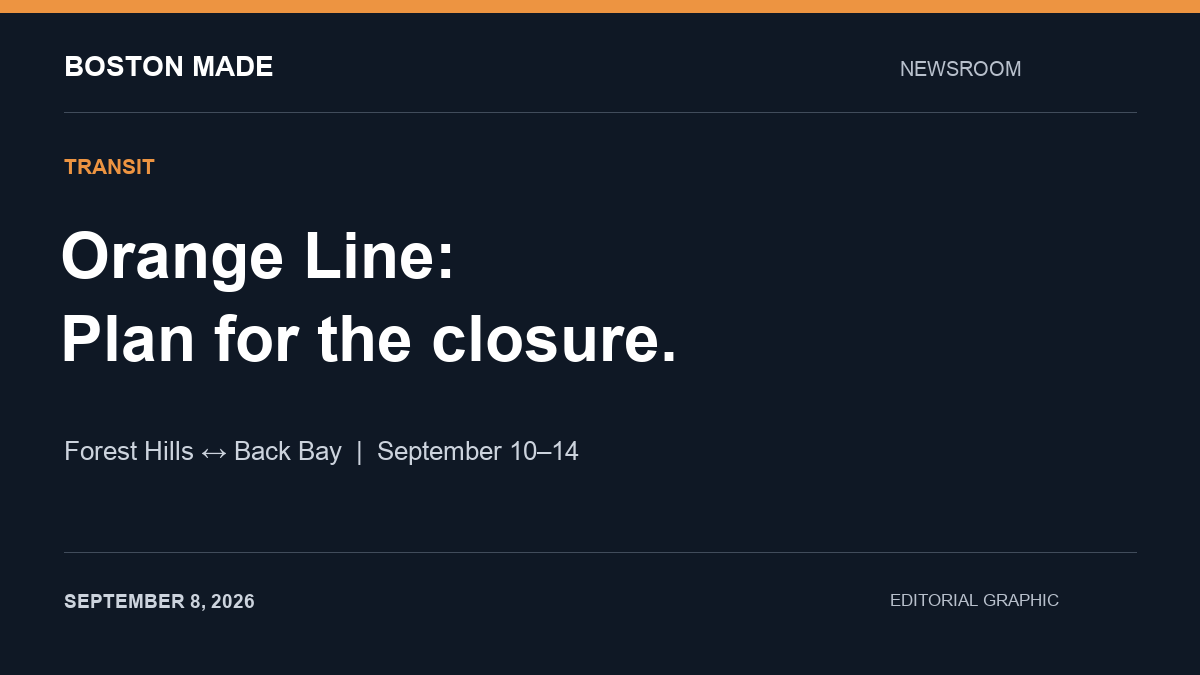
Orange Line Closure September 10–14: What Boston Riders Need to Know
Shuttles replace Orange Line trains between Forest Hills and Back Bay September 10–14, with a fare-free Commuter Rail alternative.



Boston Made Brands Opens Submissions for Mergers, Acquisitions & Restructuring

Boston Made Network Rolls Out Cross-Site Advertising Across Every Brand

The Paxton-Digital Chronicles: A Boston Made Fiction Saga

Boston Made Introduces Music Videos

Building Something Bigger: The Future of Boston Made Pets Is Under Construction

Boston Made Expands Creative Content with New “Bands” Music Video Series
-
 Videos2 months ago
Boston Made Introduces Music Videos
-
 E-Commerce9 months ago
Building Something Bigger: The Future of Boston Made Pets Is Under Construction
-
 Videos2 months ago
Boston Made Expands Creative Content with New “Bands” Music Video Series
-

 E-Commerce9 years ago
Boston Made Launches Online Tech Store
-

 E-Commerce9 months ago
The Future of Pet Care: Exploring Smart Dog Wearables and Innovative Pet Tech
-

 Boston Made+ Exclusive8 months ago
Your Website Isn’t Broken—It’s Confusing (And That’s Why Leads Don’t Convert)
-

 Economic Development1 week ago
Is the Massachusetts Economy in Trouble? Inside the Population and Business Exodus
-

 Service8 months ago
Small Business Analytics: What to Track (So You Don’t Lie to Yourself)