Connect with us

Weather where you are

Choose your location or share it once. We round your coordinates to about 1 km before sending them to our site and MET Norway for your forecast. Your choice stays in this browser tab.

Stay close to Boston

Get new Boston stories and Boston Made company updates, delivered as browser notifications.

Choose Enable notifications, then allow notifications in your browser.

Your browser subscription is stored by Boston Made and delivered through your browser’s push service. You can turn notifications off in your browser’s site settings. Privacy policy

Boston History

The Custom House Tower: How a Federal Building Became Boston’s First Skyscraper

Boston’s Custom House began as a domed Greek Revival temple at the water’s edge in the 1840s. In 1915 a tower was added that soared past the city’s height limit and remained Boston’s tallest building for half a century.

Ecosystem Intelligence Desk

Published

on

The Celtics Dynasty Begins

For roughly fifty years the tallest building in Boston was not an office tower, a hotel or a church. It was a federal customs house with a clock tower built on top of a Greek temple. The Custom House Tower, at the corner of State and India Streets in the Financial District, is one of the city’s oddest and best-loved landmarks. Its story involves the money the port earned, the land Boston kept creating and a legal exception that let one building rise far above everything around it.

Why Boston Needed a Custom House

In the early United States, customs duties on imported goods were the federal government’s main source of revenue. A busy port like Boston collected a great deal of money for the national treasury, and the collector of customs was an important federal official. Customs officers inspected cargoes, recorded ship arrivals and departures and collected duties, and they needed offices close to the wharves where ships unloaded.

Advertisement

Advertisement

Boston’s customs operations moved among several buildings in the decades after independence. By the 1830s, with trade growing, the federal government decided to build a permanent, imposing custom house that would reflect the port’s importance.

A Greek Temple by the Water, 1837–1847

The design was by Ammi B. Young, an architect who later became the supervising architect of the U.S. Treasury Department. Construction began in 1837 and the building was completed in 1847. Young produced a Greek Revival temple, the favorite style for American public buildings at the time, laid out in the shape of a cross. Massive fluted Doric columns of granite surrounded the exterior, and a dome topped by a skylight lit a central rotunda where merchants and officials did business.

When it opened, the Custom House stood at the head of the docks. Ships tied up so close that, according to period descriptions, their bowsprits reached almost to the building. Over the following decades, as Boston filled in more of the waterfront, the shoreline moved east. Today the building stands well inland, separated from the harbor by blocks of streets, the Greenway and newer development, a clear example of how much land the city created.

Outgrowing the Temple

By the end of the nineteenth century the Custom House was too small for the expanding customs service. The federal government considered several options, including replacing the building. In the end it chose an unusual compromise: keep the old Greek Revival structure and build a tower on top of it. The architecture firm Peabody & Stearns of Boston designed the addition. They removed the dome and built a tall, narrow tower rising out of the center of the old building, keeping the colonnaded base.

Above the Height Limit

The tower was completed in 1915. It reached about 496 feet, far taller than any other building in the city. That was possible because of a legal technicality. Boston had a strict height limit for buildings at the time, meant to protect light, air and the city’s skyline. As a federal property, however, the Custom House was not bound by the city’s rules. The federal government could build as high as it wanted, and it did.

Advertisement

The result was a skyline unlike that of other American cities, where many tall office buildings went up in the early twentieth century. In Boston, for decades, a single customs tower stood alone above a low city. It remained the tallest building in Boston until the Prudential Tower in the Back Bay surpassed it in the 1960s.

Clock, Eagle and Observation Deck

The tower has large clock faces on all four sides near the top. For long stretches of the twentieth century the clock was known for not working or showing different times on different faces, a source of local jokes. It was later restored. Above the clock, an observation deck offered some of the best views in the city when few other buildings were tall enough to provide them. Decorative sculpture, including carved eagles and other federal symbols, appears on the tower’s upper levels.

Inside the old base, the rotunda survived beneath the new structure. The tower’s narrow floors were used for customs offices for decades. Over time, though, the customs service needed different kinds of space, and federal operations gradually moved elsewhere.

From Federal Offices to a New Use

By the late twentieth century the building had largely been vacated by the federal government. The City of Boston acquired it in the 1980s, and after a period of uncertainty it was redeveloped in the 1990s. Today it operates as a hotel and vacation-ownership property, with the rotunda and the observation deck preserved. The deck is periodically open to visitors. The building is listed on the National Register of Historic Places and is a designated Boston landmark.

What the Tower Tells Us

  • About the port: Customs revenue made Boston important to the national government, and the building’s scale reflects that.
  • About landfill: A building that once stood at the water’s edge is now well inland.
  • About rules: Height limits shaped Boston’s skyline, and the tower shows what happened when one building was exempt.
  • About preservation: Instead of demolishing the old temple, builders kept it and built on top of it, an early form of adaptive reuse.

Old Base, New Purpose

The Custom House Tower has been a waterfront temple, the tallest building in the city, a federal office tower and a hotel, and its granite base has stayed in place through all of it. Building something new on top of something old is a good example of how Boston keeps reinventing itself.

Quick check: Why could the Custom House Tower rise far above Boston’s height limit when it was built in 1915?

  1. It was built on landfill outside city limits
  2. As federal property, it was not subject to the city’s height rules
  3. The height limit had been repealed that year
Show answer

B. As a federal building, the Custom House was exempt from local height restrictions, which let it become Boston’s tallest building for about fifty years.

Boston Made UK Boston Made family Boston Made UK Boston Made across the Atlantic. Visit site →

Advertisement

Latest stories

View all

The institutional news desk of the Boston Made network. Reporting is researched from wire services including The Associated Press and local sources, and written by the desk.

Continue Reading

Boston History

Ether Day, 1846: The Boston Operation That Changed Surgery Forever

On October 16, 1846, in a surgical amphitheater at Massachusetts General Hospital, dentist William T. G. Morton anesthetized patient Gilbert Abbott with ether while surgeon John Collins Warren removed a tumor. It was the first widely publicized demonstration of surgical anesthesia.

Ecosystem Intelligence Desk

Published

on

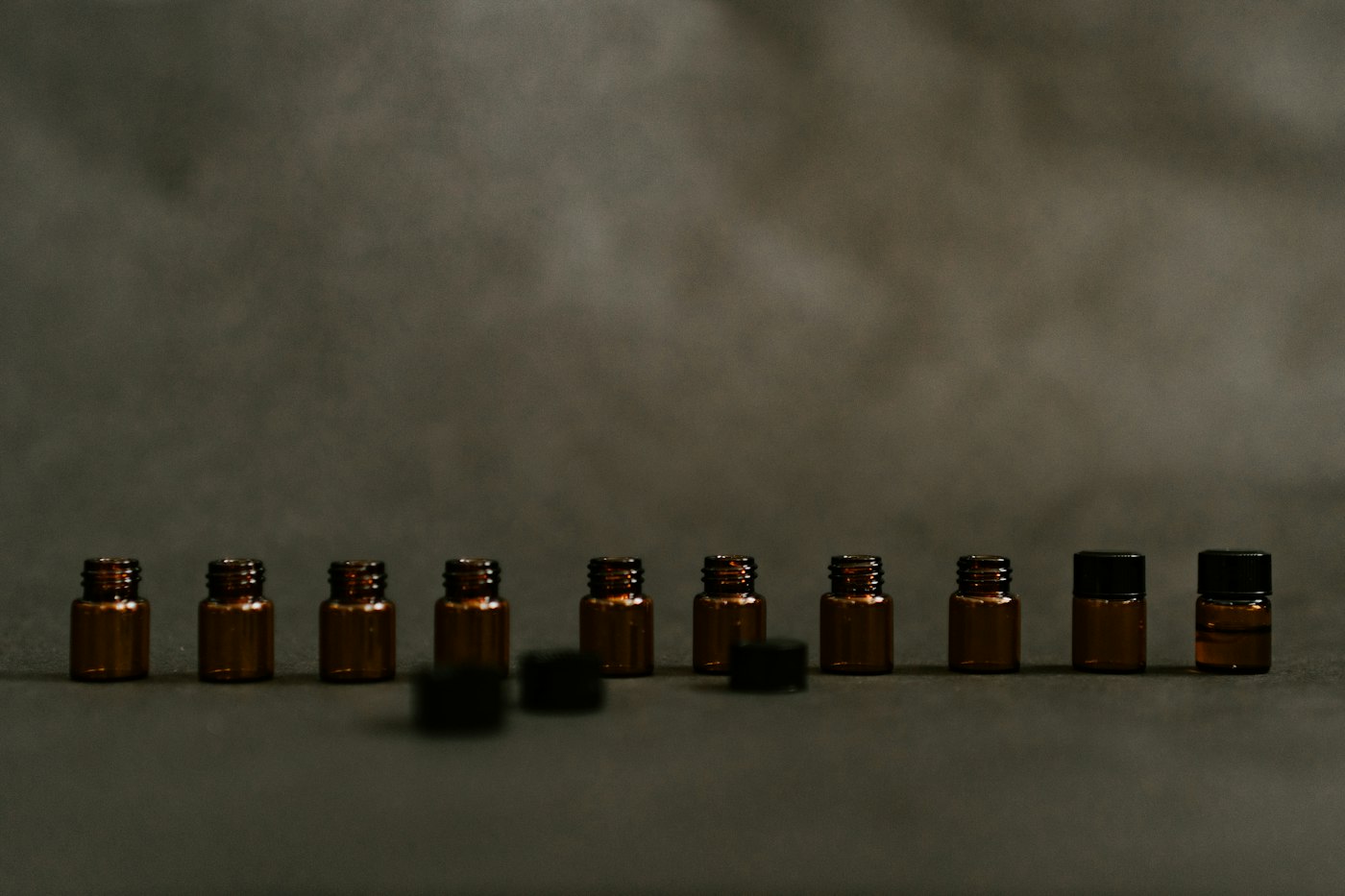
Amber glass bottles

Before the mid-1800s, surgery was a horror. Patients were held down, sometimes given alcohol or opium, and surgeons worked as fast as they could while patients screamed. Many people refused operations that might have saved their lives, preferring to risk the disease rather than face the knife. On a Friday morning in October 1846, in an operating theater at Massachusetts General Hospital in Boston, that began to change. This feature tells the story of Ether Day.

The Setting: A Room Under a Dome

Massachusetts General Hospital had opened in 1821 in a granite building designed by Charles Bulfinch. At the top of the building, beneath a dome, was a steeply tiered surgical amphitheater where students and physicians could watch operations. The room had good natural light from the dome, which was important in an era before electric lighting. After 1846 it would become known as the Ether Dome.

Advertisement

Advertisement

The Dentist: William T. G. Morton

William Thomas Green Morton was a young Boston dentist. Dentistry involved painful procedures, and pain discouraged patients. Morton had been interested in ways to reduce it. He had worked with Horace Wells, a Hartford dentist who had tried nitrous oxide, or laughing gas, in a Boston demonstration in 1845 that was judged a failure when the patient cried out.

Morton turned to sulfuric ether, a chemical that was known to cause unconsciousness and was sometimes inhaled recreationally at “ether frolics.” Encouraged in part by advice from the chemist and physician Charles T. Jackson, Morton experimented with ether on animals and on himself, and in September 1846 he used it to extract a tooth from a patient without pain. He then sought a chance to demonstrate it at the hospital.

The Surgeon: John Collins Warren

John Collins Warren was the senior surgeon at Massachusetts General Hospital and one of its founders. He was about sixty-eight years old, highly respected and cautious about unproven claims. He had seen supposed painkilling methods fail before. Nevertheless, he agreed to let Morton try his preparation during an operation.

The Patient: Gilbert Abbott

The patient was Edward Gilbert Abbott, a young man, often described as a printer, who had a vascular tumor on the left side of his neck, below the jaw. Removing it would normally have been a painful operation performed on a fully conscious patient. Abbott agreed to be the subject of the demonstration.

October 16, 1846: The Operation

On the morning of October 16, physicians and medical students filled the amphitheater. Warren and his colleagues were ready, and Abbott was in the operating chair. Morton was late. He had been working with an instrument maker to finish a glass inhaler for administering the ether. According to accounts of the day, Warren was about to proceed without him when Morton arrived.

Advertisement

Morton had Abbott breathe ether vapor through the inhaler. After a few minutes, Abbott appeared to be unconscious. Morton reportedly told Warren that his patient was ready. Warren began the operation, cutting into the neck and tying off the tumor’s vessels. Abbott did not cry out or struggle in the way patients normally did. Witnesses noted that he moved and murmured somewhat, but he showed none of the agony that everyone in the room expected.

When the operation was over, Abbott was asked what he had felt. He reportedly said that he had felt no pain, only a sensation like his neck being scratched. Warren then turned to the audience and, according to the traditional account, said, “Gentlemen, this is no humbug.” The phrase became famous because skeptical physicians had seen many supposed miracles turn out to be humbugs.

The Next Steps

A second demonstration the following day, in which the surgeon George Hayward removed a tumor from a woman’s arm, also succeeded. Within weeks ether was being used in other operations at the hospital, including a leg amputation.

Advertisement

Henry Jacob Bigelow, a young surgeon who had witnessed the demonstrations, published a report in the Boston Medical and Surgical Journal in November 1846. His article spread the news to physicians across the United States and to Europe. By the end of 1846 and early 1847, ether was being used in operations in London, Paris and elsewhere.

The physician and writer Oliver Wendell Holmes Sr. suggested in a letter to Morton in November 1846 that the new state be called “anaesthesia,” from Greek words meaning without sensation. The term stuck.

Secrecy and Controversy

At first, Morton tried to keep the nature of his preparation secret, calling it “Letheon” and seeking a patent. Hospital physicians objected to using a secret remedy, and Morton eventually disclosed that it was ether. The question of who deserved credit for discovering anesthesia, Morton, Jackson, Wells or the Georgia physician Crawford Long, who had used ether earlier without publicizing it, became one of the bitterest priority disputes in medical history. That fight is a story of its own.

Remembering Ether Day

The Ether Dome still exists in the Bulfinch Building at Massachusetts General Hospital and is preserved as a National Historic Landmark. It contains a painting of the operation and other historical displays. In the Boston Public Garden, the Ether Monument, dedicated in 1868, commemorates the discovery of anesthesia. October 16 is still marked in medicine as Ether Day.

A Breakthrough Born in Boston

One morning in a domed room in Boston turned surgery from a desperate last resort into something patients could survive and endure. Medical breakthroughs remain part of the city’s identity, and they are one of the main ways Boston keeps reinventing itself.

Quick check: Who was the patient in the October 16, 1846 ether demonstration at Massachusetts General Hospital?

  1. Edward Gilbert Abbott
  2. Henry Jacob Bigelow
  3. Horace Wells
Show answer

A. Edward Gilbert Abbott, who had a tumor removed from his neck while anesthetized by Morton, reportedly feeling only a scratching sensation.

PupWear (.org) Boston Made family PupWear (.org) Dog apparel and gear inspired by Boston the GoldenDoodle. Visit site →

Advertisement

Continue Reading

Boston History

The Salem Witch Trials of 1692: What Happened, and Why It Still Matters

In 1692, accusations of witchcraft in Salem Village led to the deaths of 25 people. Here is how the crisis unfolded, how it ended and why its lessons still resonate.

Ecosystem Intelligence Desk

Published

on

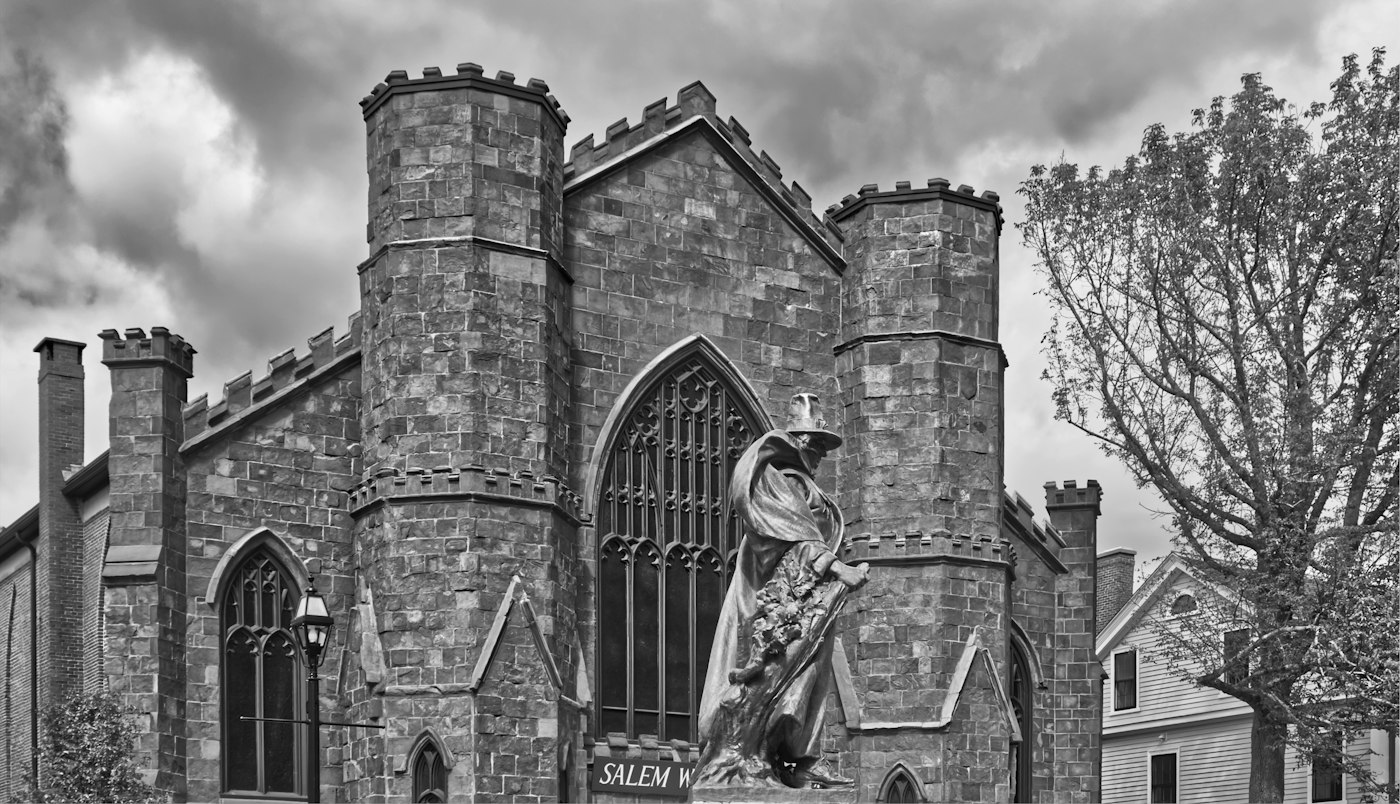
A black and white photo of an old church in Salem

In the winter of 1692, two girls in the household of a minister in Salem Village, Massachusetts, began behaving strangely. Within months, accusations of witchcraft had spread across Essex County and beyond, more than two hundred people had been accused, nineteen had been hanged, one man had been pressed to death and several others had died in jail. The Salem witch trials lasted less than a year, but they became one of the most studied episodes in American history and a lasting symbol of what can happen when fear overrides justice.

Salem Village in 1692

Salem Village, now the town of Danvers, was a farming community separate from the busier port of Salem Town. It was a place of tension. Villagers argued over land, boundaries and whether the village should be independent of the town. They were bitterly divided over their minister, Samuel Parris, who had arrived in 1689.

Advertisement

Advertisement

The wider colony was also unsettled. Massachusetts had lost its original charter in 1684 and was operating without a secure government while awaiting a new one. Frontier warfare with French and Native forces in Maine had brought refugees and fear. These conditions did not cause the trials on their own, but they created an atmosphere of anxiety.

The First Accusations

In January and February 1692, Parris’s nine-year-old daughter, Elizabeth, and his eleven-year-old niece, Abigail Williams, began suffering fits, contortions and outbursts. A local doctor reportedly suggested that the cause might be witchcraft.

Under pressure, the girls named three women: Tituba, an enslaved woman in the Parris household; Sarah Good, a poor woman; and Sarah Osborne, an elderly woman who rarely attended church. All three were outsiders in some way. When questioned, Tituba confessed and described a conspiracy of witches, a statement that fueled fears that more were at work.

The Crisis Spreads

Other young women and some adults began reporting afflictions and naming accused witches. The accusations soon reached respected church members, including Martha Corey and Rebecca Nurse, a widely admired elderly woman. Accusations spread to Andover, Topsfield, Ipswich and other communities. In total, more than two hundred people were accused.

The Court of Oyer and Terminer

In May 1692, Sir William Phips arrived from England as governor under the new charter. Faced with crowded jails, he established a special Court of Oyer and Terminer to hear the cases. Lieutenant Governor William Stoughton served as chief justice. Several of the judges were prominent Boston men.

Advertisement

The court accepted evidence that later generations regarded as deeply flawed:

  • Spectral evidence, testimony that the accused person’s spirit or shape had appeared to and tormented a victim, which the accused could not disprove.
  • Behavior of the afflicted in the courtroom, who sometimes appeared to suffer fits when the accused was present.
  • Physical examinations for supposed marks of witchcraft.
  • Confessions, often obtained under pressure. Those who confessed were generally not executed, which created a perverse incentive.

The Executions

Bridget Bishop was the first person hanged, on June 10, 1692. Further executions followed in July, August and September. In total, nineteen people were hanged. Among them were Rebecca Nurse, John Proctor and the Reverend George Burroughs, a former minister of Salem Village. In 2016, researchers confirmed that the executions took place at a site known as Proctor’s Ledge, where a memorial now stands.

Giles Corey, an elderly farmer, refused to enter a plea. Under the law of the time, he was subjected to pressing with heavy stones to compel him, and he died in September 1692. Several other accused people, including infants and adults, died in the harsh conditions of jail.

Doubts and the End of the Trials

As the accusations reached prominent people, and as more ministers questioned the reliance on spectral evidence, opinion shifted. In October 1692, Increase Mather, a leading Boston minister, presented arguments that came to be known as Cases of Conscience, cautioning that it was better for guilty witches to go free than for an innocent person to be condemned. Governor Phips, whose own wife was reportedly among those accused, dissolved the special court that month.

Advertisement

Remaining cases were heard in 1693 by a newly established Superior Court of Judicature, which limited spectral evidence. Few convictions resulted, and those convicted were reprieved. Phips eventually released the remaining prisoners.

Apology and Reversal

The aftermath unfolded over centuries:

  1. 1697: Samuel Sewall, one of the judges, stood in his Boston church, the Old South Meeting House, while a statement was read accepting blame and shame for his role. The colony also held a day of fasting and reflection.
  2. 1706: Ann Putnam Jr., one of the principal accusers, publicly apologized, saying she had been deluded.
  3. 1711: The legislature reversed the convictions of many of the accused and provided compensation to some families.
  4. 1957 and 2001: Massachusetts passed further measures clearing the names of others who had been convicted.
  5. 2022: Elizabeth Johnson Jr. became the last of those convicted to be formally exonerated.

Why Did It Happen?

Historians have offered many explanations, which are not mutually exclusive. Some have emphasized local disputes and factional divisions within Salem Village. Others highlight the fears produced by frontier warfare. Others focus on religious beliefs about the devil, the vulnerability of women and outsiders, and a legal system that allowed unreliable evidence. Medical theories have also been proposed, though they remain debated.

Why It Still Matters

The trials endure as a warning about the dangers of panic, scapegoating and abandoning fair procedures. Arthur Miller’s 1953 play The Crucible used them to explore the climate of his own time, and the phrase “witch hunt” has entered everyday language. The episode underscores the importance of reliable evidence, the presumption of innocence and the courage to question popular fears.

A Lesson the Region Carries Forward

Massachusetts spent more than three centuries correcting the injustices of 1692. That long reckoning is itself part of how Boston and its region keep reinventing themselves: by confronting the past honestly.

Quick check: What type of evidence, widely accepted by the 1692 court, was later discredited?

  1. Written contracts
  2. Spectral evidence
  3. Fingerprints
Show answer

B. Spectral evidence, claims that an accused person’s spirit had tormented a victim, could not be disproved and was later limited by the courts.


Paxton-Digital Boston Made family Paxton-Digital Enterprise technology for IP protection and portfolio management · a Kingswell company. Visit site →

Advertisement

Continue Reading

Boston History

The Big Dig, Revisited: How Boston Buried a Highway and Built a Greenway

Two decades after the elevated Central Artery came down, downtown Boston is a different city. A look at what replaced the highway, how neighborhoods reconnected and what other cities have learned.

Ecosystem Intelligence Desk

Published

on

Clash of Empires: How a Global War Changed Boston Forever

For nearly half a century, the elevated Central Artery was the dominant feature of downtown Boston. Opened in the 1950s, the green-painted steel highway sliced between the financial district and the waterfront, cast long shadows over the streets below and walled off the North End from the rest of the city. Its replacement, the Central Artery/Tunnel Project better known as the Big Dig, is famous for its engineering, delays and cost, which are covered in a separate Chronicles feature. This piece looks at what happened after the highway came down: how the land was used, how neighborhoods reconnected and what lessons other cities have taken from Boston’s experience.

The Day the Shadow Lifted

The underground highway opened in stages in 2003, and crews then dismantled the elevated structure. As the steel came down, people saw downtown views that had been blocked for decades. Sunlight reached streets that had been in shadow. The noise of traffic overhead disappeared. For many longtime Bostonians, simply walking from Faneuil Hall to the harbor without passing under a highway was a revelation.

Advertisement

Advertisement

The removal left a long strip of land above the tunnels. What to do with it became one of the most important planning decisions in the city’s modern history.

Choosing Open Space

Planning for the corridor had been underway for years. Many proposals were debated, including buildings, cultural institutions and commercial development. In the end, most of the surface land was dedicated to open space, an outcome shaped by earlier commitments, community advocacy and the practical limits of building over tunnels. The result was the Rose Fitzgerald Kennedy Greenway, which opened in 2008. The parks’ design, art and programming are explored in their own Chronicles feature.

The decision to prioritize parks over buildings had lasting effects. It created a continuous public space stretching through some of the most valuable real estate in the region, a choice that was controversial at the time and is still debated in specific cases.

The North End Reconnected

No neighborhood felt the change more than the North End. For decades, the elevated highway and its ramps had cut the historic Italian American neighborhood off from downtown. Reaching Haymarket, City Hall or Faneuil Hall meant walking under the dark structure or through underpasses.

With the highway gone, the North End’s edge opened up. Hanover Street, one of its main thoroughfares, once again connected more directly toward downtown. Visitors flowing along the Freedom Trail between Faneuil Hall and the Paul Revere House and Old North Church found the route more inviting. Restaurants and businesses along the neighborhood’s edge gained foot traffic, and residents gained easier access to the rest of the city.

Advertisement

The Waterfront Rediscovered

The downtown waterfront had also been isolated by the highway. Long Wharf, Rowes Wharf, the New England Aquarium and the ferry terminals were physically close to the financial district but felt separate. Once the barrier was gone, the walk from the office towers to the harbor became short and pleasant.

The Harborwalk, a public walkway along Boston’s shoreline that the city has been extending for years, benefited from the improved access. People could walk from downtown to the water, then follow the harbor’s edge for long distances. The waterfront’s identity shifted from a place you drove past to a place you went.

Real Estate and Investment

Removing the highway made adjacent property more desirable. Buildings that had faced a highway now faced parks. Over the following years, new residential, office and hotel projects rose near the Greenway, and older buildings were renovated. Economists and planners have studied these effects, and many have concluded that the project contributed significantly to downtown property values and development, though isolating its exact impact from broader economic trends is difficult.

Advertisement

Rising values also brought familiar questions about affordability, displacement and who benefits from public investment. These debates are part of the story, as they are in many cities that improve their public realm.

Other Changes Above Ground

  • The Leonard P. Zakim Bunker Hill Memorial Bridge, built as part of the project, became a new symbol of the city’s skyline.
  • Excavated material from the tunnels was used in several places, including the reshaping of Spectacle Island in Boston Harbor into a park.
  • Surface streets along the corridor were rebuilt, with new crossings and sidewalks, though some critics argue the roads alongside the Greenway remain too wide and difficult for pedestrians.

Lessons for Other Cities

Boston was not the only city to rethink an urban highway. San Francisco removed its elevated Embarcadero Freeway after it was damaged in the 1989 Loma Prieta earthquake, reopening its waterfront. Seoul removed an elevated highway and restored the Cheonggyecheon stream in the 2000s. Other American cities have since studied or carried out highway removal or capping projects.

Planners often draw several lessons from Boston:

  1. Removing a barrier can reconnect neighborhoods and transform how people move through a city.
  2. Burying a highway is extraordinarily expensive. Many cities have opted for cheaper approaches, such as replacing highways with boulevards rather than tunnels.
  3. Planning for the surface matters as much as the engineering. Decisions about land use, maintenance and programming determine whether new space succeeds.
  4. Long-term funding is essential. Parks need ongoing money for care and programming, which Boston has worked to secure through a mix of sources.
  5. Community involvement shapes outcomes. Neighborhood advocacy influenced what was built and how it serves residents.

A Downtown Transformed

Twenty years on, it is hard for younger Bostonians to picture the old elevated highway. The Big Dig’s legacy is not just the tunnels beneath the city but the reconnected neighborhoods and waterfront above them. It is one of the clearest recent examples of Boston tearing down part of itself and building something better in its place.

Quick check: Which neighborhood was most directly reconnected to downtown when the elevated Central Artery came down?

  1. The North End
  2. Back Bay
  3. Jamaica Plain
Show answer

A. The elevated highway had cut the North End off from downtown; its removal reopened streets and walking routes.

Lumo Kingswell Lumo Precious-metals education and a two-sided gold exchange with a live gold price. Visit site →

Advertisement

Continue Reading
Advertisement

Advertisement

Ad

Advertisement

Trending

--:--·---·--°