Connect with us

Weather where you are

Choose your location or share it once. We round your coordinates to about 1 km before sending them to our site and MET Norway for your forecast. Your choice stays in this browser tab.

Stay close to Boston

Get new Boston stories and Boston Made company updates, delivered as browser notifications.

Choose Enable notifications, then allow notifications in your browser.

Your browser subscription is stored by Boston Made and delivered through your browser’s push service. You can turn notifications off in your browser’s site settings. Privacy policy

Boston History

Kendall Square Becomes a Biotech Capital

Half a century ago, Kendall Square was a fading industrial district next to MIT. A city debate over genetic research, a wave of new companies and major research institutes turned it into a world center for biotechnology.

Published

on

Kendall Square Becomes a Biotech Capital

Today Kendall Square in Cambridge is synonymous with biotechnology. Within a short walk of the Kendall/MIT subway station sit research institutes, pharmaceutical company labs, startups, venture investors and shared lab spaces, packed so densely that the area has become a global symbol of life sciences innovation. Yet in the early 1970s, much of Kendall Square was a landscape of aging factories, parking lots and vacant land. Its transformation over the following decades is one of the most remarkable economic stories in the Boston area.

An Industrial Past

Kendall Square takes its name from Edward Kendall, whose boiler works operated in the area in the nineteenth century. For much of its history, the district was industrial. Factories produced soap, ink, candy, rubber goods and machinery, taking advantage of rail lines and proximity to Boston. The Massachusetts Institute of Technology moved to its Cambridge campus nearby in 1916, but for decades the university and the factory district existed side by side with limited connection.

Advertisement

Advertisement

By the mid-twentieth century, many factories had closed or moved. Urban renewal plans cleared land in the 1960s for a federal space research center, but the center was shut down around 1970, leaving a large area underused. Kendall Square was, in the eyes of many, a place in decline.

The Recombinant DNA Debate

A turning point came from an unexpected direction: a public debate over science. In the mid-1970s, scientists had developed techniques to cut and recombine DNA from different organisms, a breakthrough that opened vast possibilities for research and medicine. It also raised fears about the safety of creating new organisms in laboratories.

In 1976, when Harvard planned a new laboratory for this kind of research, the Cambridge City Council held public hearings. Mayor Alfred Vellucci and many residents questioned whether the work was safe. The city imposed a temporary moratorium on certain types of recombinant DNA research and created a citizens’ review board, made up of non-scientists, to study the issue.

After months of study, the review board recommended that the research continue under safety rules, and in 1977 Cambridge adopted an ordinance regulating recombinant DNA work. It was among the first such local laws in the country. Paradoxically, the controversy ended up helping the industry. By establishing clear, public rules, Cambridge gave companies and researchers a predictable environment in which to work.

The First Companies

Around the same time, scientists began founding companies to turn molecular biology into products. Biogen was founded in 1978 by a group of scientists that included Harvard’s Walter Gilbert and MIT’s Phillip Sharp, both of whom later received Nobel Prizes. The company established operations in Cambridge in the early 1980s. Genzyme was founded in 1981 and grew into a major company focused on treatments for rare diseases.

Advertisement

These early firms demonstrated that university science could be translated into businesses near the labs where it originated. They attracted scientists, investors and support services, and they set an example for those who followed.

Research Institutes Take Root

Major research institutions helped anchor the cluster:

  • The Whitehead Institute for Biomedical Research, founded in 1982 and affiliated with MIT, became a leading center for genetics and cell biology.
  • The Broad Institute, founded in 2004 as a partnership involving MIT, Harvard and affiliated hospitals, grew out of work on the Human Genome Project and became one of the largest genomics research centers in the world.
  • The Koch Institute for Integrative Cancer Research at MIT brought together biologists and engineers to work on cancer.

These institutions brought talent and funding, generated discoveries and trained young scientists, many of whom started companies nearby.

Big Pharma Moves In

In the early 2000s, major pharmaceutical companies began establishing research centers in Kendall Square. One of the most visible moves came when Novartis chose Cambridge for its global research headquarters, occupying a former candy factory and later building new facilities. Other large companies followed, opening labs to be close to the area’s science, talent and startups. This shift confirmed Kendall Square’s status as a global hub rather than a regional curiosity.

Advertisement

Startups and Shared Space

Kendall Square also developed an ecosystem for young companies. Shared office and lab spaces, including the Cambridge Innovation Center, which opened in 1999, allowed startups to rent space flexibly and work alongside other entrepreneurs. Venture capital firms opened offices nearby. Law firms, consultants and specialized suppliers clustered in the area. The density of people and organizations made it easy for ideas, workers and money to move between them.

Some of the companies founded in Cambridge during this era became widely known, including firms developing new types of medicines based on genetic research.

Why Kendall Square?

Observers often point to a combination of factors:

  1. World-class research universities and hospitals producing discoveries and trained scientists.
  2. Available land and buildings left by the area’s industrial decline.
  3. Clear local regulation established early through public debate.
  4. Access to capital from a regional investment community with long experience funding technology.
  5. Transit and proximity, with a subway stop and a short trip to Boston and its airport.
  6. Clustering effects, as each new company and institute made the area more attractive to the next.

Growing Pains

Success brought challenges. Lab space became expensive and scarce, rents rose and housing costs in Cambridge and surrounding communities increased. Critics noted that for years the area could feel empty in the evenings, dominated by office and lab buildings. Recent development has added housing, retail, open space and public amenities in an effort to make Kendall Square a more complete neighborhood. The life sciences industry has also spread to other parts of the region, including Boston’s Seaport, Somerville and the suburbs.

From Factories to Labs

Kendall Square’s story is one of Greater Boston’s clearest examples of reinvention: old industrial land turned into a center of discovery through science, public debate and patient investment. Its next chapter is still being written in its labs.

Quick check: What did Cambridge adopt in 1977 after its public debate over recombinant DNA research?

  1. A permanent ban on genetic research
  2. An ordinance regulating the research under safety rules
  3. A tax break for biotech companies
Show answer

B. The city chose regulation over prohibition, creating predictable rules that later helped the industry grow.

Keep Up With Nate Boston Made family Keep Up With Nate The personal site of Boston Made founder Nathan Strickland. Visit site →

Advertisement

Latest stories

View all
Service · Nov 25, 2026Write Image Descriptions After You Choose the Actual CropAn image description should reflect the image a visitor actually receives. Writing it before the final crop can leave a description that mentions a…Read story
Continue Reading

Boston History

Clash of Empires: How a Global War Changed Boston Forever

The Seven Years’ War stretched from North America to Europe, the Caribbean, Africa, and Asia—and its aftermath pushed Boston toward revolution.

Published

on

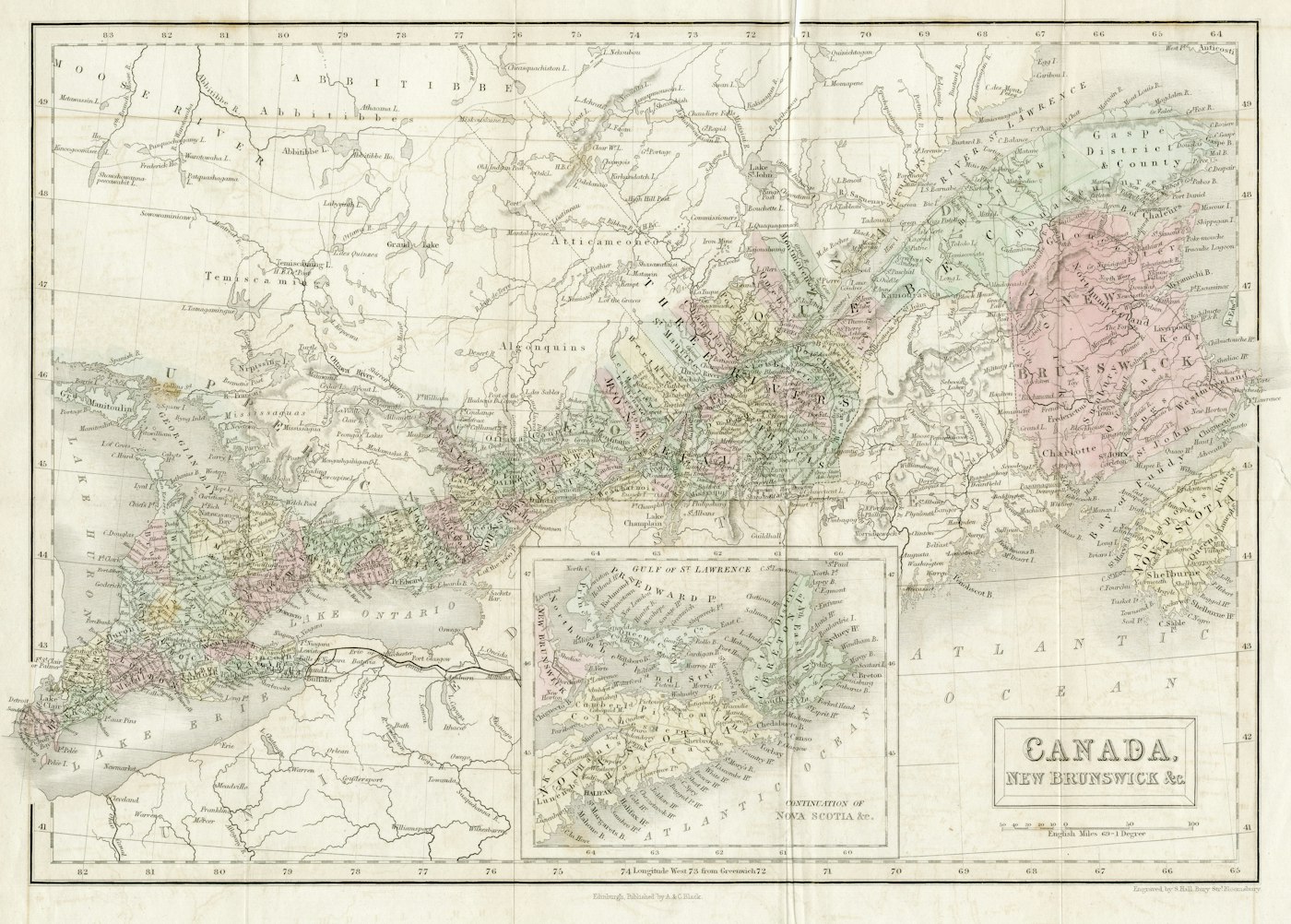
Antique map of Canada showing rivers and mountains

31 Days of Boston — Day 9

The Seven Years’ War stretched from North America to Europe, the Caribbean, Africa, and Asia—and its aftermath pushed Boston toward revolution.

Advertisement

Advertisement

Before Boston fought Britain, Boston fought within Britain’s empire. The Seven Years’ War—whose North American phase is commonly called the French and Indian War—was a global struggle involving European empires, Native nations, colonial troops, fleets, forts, and trade routes. For Bostonians, it was a moment of pride in British victory. It was also the beginning of a chain of decisions, on both sides of the Atlantic, that would turn loyal subjects into revolutionaries within little more than a decade.

A World War Before the World Wars

Fighting in North America began in the mid-1750s over control of the Ohio Country, the rich interior lands claimed by both Britain and France and long home to Native nations with their own interests. War was formally declared between Britain and France in 1756, and the conflict soon spread far beyond the forests of the frontier.

British and French forces, along with their allies, fought in Europe, on the seas, in the Caribbean sugar islands, along the coast of West Africa and in India. Prussia, Austria, Russia, Spain and other powers were drawn in. It was one of the first conflicts that could fairly be called global, and it was fought for markets, colonies and imperial supremacy as much as for territory near home.

Massachusetts Goes to War

Massachusetts contributed men and resources to Britain’s war effort. For the colony, the struggle against France was not abstract. New Englanders had fought the French and their allies repeatedly for generations, and many in Boston saw French Canada as a permanent threat to their trade, their frontier towns and their Protestant faith.

The colony raised provincial regiments, paid soldiers, supplied provisions and taxed its own residents heavily to do so. Boston, as the colony’s capital and largest port, became a center for recruitment, shipping and finance. Merchants supplied the army and navy; some prospered, while others suffered when trade was disrupted.

Advertisement

Colonists and regulars

The war also brought many New Englanders into close contact with British regular soldiers and officers for the first time. That contact was not always happy. Provincial troops often resented the strict discipline, harsh punishments and condescension they experienced. British officers, for their part, frequently dismissed colonial soldiers as poorly trained. Those impressions lingered after the fighting ended.

Victory and Its Price

Victory removed France as Britain’s principal imperial rival in much of eastern North America, but victory came with enormous expense. The fall of Quebec in 1759 and of Montreal in 1760 broke French power in Canada. The Treaty of Paris in 1763 confirmed British control of Canada and the lands east of the Mississippi, while Spain ceded Florida to Britain.

In Boston, there were celebrations. Colonists toasted the king and took pride in their part in a great imperial triumph. Yet Britain’s national debt had soared, and the cost of defending a vastly enlarged territory was only beginning.

The new problems of a larger empire

  • Defense. Britain decided to keep a standing army in North America, and someone had to pay for it.
  • The frontier. Conflict with Native nations, most notably during Pontiac’s War, led to the Proclamation of 1763, which restricted colonial settlement west of the Appalachians and angered many colonists.
  • Revenue. Officials in London concluded that colonies benefiting from British protection should share more of the cost.
  • Enforcement. Smuggling, long tolerated, was now treated as a serious drain on revenue.

From Victory to Resistance

London emerged determined to make the colonies contribute more directly to imperial costs and administration. New taxes and tighter enforcement followed. In Boston, merchants and political leaders increasingly resisted what they saw as unconstitutional interference.

The signs were there even before the war ended. In 1761, Boston lawyer James Otis argued against writs of assistance, broad search warrants that allowed customs officials to enter premises looking for smuggled goods. Otis lost the case, but his argument about the limits of government power resonated widely; John Adams, who watched, later recalled it as a turning point.

Advertisement

After the peace, the pressure increased. The Sugar Act of 1764 sought to collect duties more effectively. The Stamp Act of 1765 imposed a direct tax on printed materials across the colonies, setting off fierce protest, nowhere more dramatically than in Boston. The Townshend duties followed later in the decade, and British troops arrived in Boston in 1768. Each step made sense to officials trying to manage an expensive empire. Each looked, to many Bostonians, like a threat to the rights of English subjects to be taxed only by their own representatives.

The Great Irony

That is the great irony. Britain’s triumph helped create the conditions for Britain’s American crisis. The empire won a global war and then struggled to govern the enlarged world it had acquired. Boston became one of the places where that struggle turned into rebellion.

There is a second irony too. With France gone from Canada, colonists no longer depended on British protection from a powerful neighbor to the north. The threat that had bound New England tightly to the empire had disappeared, and with it some of the reasons to accept London’s terms.

For modern readers, the story is a reminder that victories can carry their own risks. Success changes the scale of a problem, and institutions built for one situation may not fit the next. The men who governed Britain in the 1760s were not fools; they faced real debts and real administrative questions. But they underestimated how colonists would interpret their solutions, and Boston was where that misjudgment first became impossible to ignore.

Seeing the Story in Boston Today

  • The Old State House, where colonial government met and where the writs of assistance case was argued.
  • Faneuil Hall, a marketplace and meeting space where merchants and townspeople debated imperial policy.
  • The Freedom Trail, which ties these sites to the revolutionary events that followed.

Research & Further Reading

For deeper research, consult authoritative collections including the Massachusetts Historical Society, Boston Public Library, National Park Service, Library of Congress, Massachusetts Archives, and relevant museum and university collections. Readers should verify contested details against primary and scholarly sources.

Explore More from Boston Made

Continue with the Latest Boston Made Wires, About Boston Made, The Boston Made Story and the Boston Made Portfolio.

Boston Made is an independent editorial and archival platform. Historical stories are intended to encourage further exploration of primary sources, museums, libraries, and scholarly research.


Pupwear Boston Made family Pupwear Dog apparel and gear inspired by Boston the GoldenDoodle. Visit site →

Advertisement

Continue Reading

Boston History

The Great Fire of 1676: The Night Boston Burned

A devastating seventeenth-century fire exposed just how vulnerable early Boston was to flame, crowding, and wooden construction.

Published

on

The Great Fire of 1676: The Night Boston Burned

31 Days of Boston — Day 4

A devastating seventeenth-century fire exposed just how vulnerable early Boston was to flame, crowding, and wooden construction.

Advertisement

Advertisement

Fire was one of colonial Boston’s most persistent terrors. Timber buildings stood close together. Chimneys, hearths, workshops, candles, and stored goods created countless opportunities for disaster. In 1676, a major fire tore through part of the town and reminded residents how quickly a settlement could be transformed into ash. It was not the last time Boston would burn, but it was one of the moments that taught the young town a lesson it would relearn for two centuries: the same closeness that made Boston thrive also made it fragile.

A Town Built of Wood and Fire

To understand why a fire could do so much damage, picture Boston in the 1670s. The town occupied a small, hilly peninsula connected to the mainland by a narrow neck. Land near the harbor was precious, so houses, shops, warehouses and taverns crowded along crooked lanes that ran down to the wharves. Most buildings were framed in timber, sheathed in wooden clapboards and often roofed with wooden shingles or thatch.

Inside, fire was part of daily life. Every household cooked over an open hearth. Candles and oil lamps lit the evenings. Blacksmiths, bakers, coopers, chandlers and brewers all relied on heat to work. Warehouses near the water held tar, pitch, rope, cloth, grain and other goods that burned readily. In winter, chimneys worked constantly and wind swept across the harbor.

The result was a town where a single spark, an unattended candle or a cracked chimney could threaten an entire neighborhood.

The Night Boston Burned

The fire of 1676 broke out in the crowded northern part of town, the area Bostonians would come to call the North End. Accounts describe flames racing from building to building, consuming dozens of houses along with shops and other structures. Among the losses was the meetinghouse of the Second Church, the congregation associated with the minister Increase Mather. A timely rain is often credited with helping bring the blaze under control.

Advertisement

The fire came at an exhausting time. New England was emerging from King Philip’s War, one of the most destructive conflicts in the region’s colonial history. Boston had sent men and money into that war and absorbed refugees from towns that had been attacked. To lose homes and a house of worship to fire in the same year added a heavy burden to a community already strained.

How fire was fought

There were no modern engines, hydrants, radios, or professional fire departments. Fighting fire meant bells, buckets, hooks, ladders, wells, and organized neighbors. A strong wind could make human effort almost irrelevant.

The basic tools were simple:

  • Bells and cries of alarm to wake the town and call people out.
  • Leather buckets, passed hand to hand in lines from wells, cisterns or the harbor.
  • Ladders to reach roofs and upper windows.
  • Fire hooks, long poles used to pull down burning walls and roofs.
  • Firebreaks, created by deliberately tearing down or even blowing up buildings in the fire’s path to starve it of fuel.

That last method shows how desperate fire-fighting could be. Sometimes the only way to save a street was to destroy part of it first.

What the Fire Taught Boston

The destruction forced Boston to think about building practices, public safety, and collective response. In the years around 1676, and especially after another serious fire in 1679, the town and colony moved toward rules intended to reduce the risk: encouraging or requiring construction in brick or stone, roofs of slate or tile rather than wood or thatch, and expectations that households keep fire-fighting equipment on hand. Enforcement was uneven, and wooden buildings remained common, but the direction was clear.

Boston also began to treat fire as a shared responsibility rather than a private misfortune. Watchmen patrolled at night. Citizens were expected to turn out and help. Over time, organized fire companies and official fire wardens took on the work that had once depended on whoever happened to be nearby.

Advertisement

The city learned early that survival required more than individual grit; it required systems.

A Recurring Boston Lesson

Later generations would confront even larger fires, including the catastrophic blaze of 1872, but the seventeenth-century fires established a recurring Boston lesson: density creates opportunity and danger at the same time.

That tension runs through the city’s history. Boston grew rich because it was crowded: merchants, artisans, sailors and families lived close together, traded constantly and shared ideas quickly. The same crowding meant that disasters spread fast. The Great Fire of 1711 destroyed the town’s center, including the Town House; the building that replaced it in 1713 survives today as the Old State House. Each fire prompted new rules, new institutions and new ways of building.

Every rebuilt street made the town more permanent. Fire destroyed property, but rebuilding also pushed Boston toward stronger civic institutions. Brick replaced timber in many places. Streets were adjusted. Public authority over safety grew. The Boston that exists today, with its brick row houses and masonry commercial blocks, carries traces of those hard lessons.

Seeing the Story Today

Almost nothing from seventeenth-century Boston’s built environment survives, in part because of fires like this one. Visitors can still sense the scale of the early town, however:

  • Walk the narrow, irregular streets of the North End and imagine them lined with timber houses and workshops.
  • Visit the Paul Revere House in North Square, a rare surviving wooden house from the late seventeenth century, built on land that had been part of the area affected by the 1676 fire.
  • Stand at the Old State House and remember that it exists because an earlier building burned.
  • Notice how much of central Boston is brick and stone, the long legacy of a town that learned to fear fire.

Research & Further Reading

For deeper research, consult authoritative collections including the Massachusetts Historical Society, Boston Public Library, National Park Service, Library of Congress, Massachusetts Archives, and relevant museum and university collections. Readers should verify contested details against primary and scholarly sources.

Useful questions to bring to those collections include: What do surviving town records say about the fire’s damage and the response? How did ministers and diarists of the period interpret it? Which building rules followed, and how well were they enforced?

Explore More from Boston Made

Continue with the Latest Boston Made Wires, About Boston Made, The Boston Made Story and the Boston Made Portfolio.

Boston Made is an independent editorial and archival platform. Historical stories are intended to encourage further exploration of primary sources, museums, libraries, and scholarly research.

Beacon Federal Partners Affiliate Beacon Federal Partners Independent government-contracting firm and Boston Made affiliate. Visit site →

Advertisement

Continue Reading

Boston History

Before Boston: The World the Massachusett People Knew

Before Boston was a colonial town, this coast was home to Indigenous communities with deep political, economic, and spiritual ties to the land and sea.

Published

on

Before Boston: The World the Massachusett People Knew

31 Days of Boston — Day 1

Before Boston was a colonial town, this coast was home to Indigenous communities with deep political, economic, and spiritual ties to the land and sea.

Advertisement

Advertisement

Long before brick meetinghouses, wharves, steeples, and the crooked lanes that became downtown Boston, the place Europeans would call Boston belonged to an older world. The Shawmut Peninsula sat within a living Indigenous landscape shaped by seasonal movement, diplomacy, fishing, farming, trade, and kinship.

The Massachusett people were not a preface to Boston’s story. They were part of the story itself. Communities around Massachusetts Bay understood the harbor, rivers, islands, marshes, and forests as interconnected places of work and memory. Corn, beans, and squash were cultivated. Fish and shellfish came from productive coastal waters. Networks of exchange linked communities far beyond the peninsula.

European arrival brought trade, but also catastrophe. Epidemics in the early seventeenth century devastated Native populations across coastal New England before large-scale English settlement accelerated. Disease altered the balance of power just as English colonists began claiming land and establishing permanent towns.

Remembering this earlier Boston changes the way the city is seen. The familiar revolutionary landmarks stand on a landscape whose human history did not begin in 1630. Boston’s history is deeper, more complicated, and more interesting when its Indigenous foundations are placed at the beginning rather than pushed to the margins.

Research & Further Reading

For deeper research, consult authoritative collections including the Massachusetts Historical Society, Boston Public Library, National Park Service, Library of Congress, Massachusetts Archives, and relevant museum and university collections. Readers should verify contested details against primary and scholarly sources.

Advertisement

Explore More from Boston Made

Boston Made is an independent editorial and archival platform. Historical stories are intended to encourage further exploration of primary sources, museums, libraries, and scholarly research.

Reading the Land Before the Town

To picture the Shawmut Peninsula as the Massachusett knew it, it helps to forget most of the modern map. The peninsula was far smaller than downtown Boston is today, a knob of hills and coves joined to the mainland by a narrow neck that could be nearly washed over at high tide. Much of what is now the Back Bay, the South End and large stretches of the waterfront was tidal flat and salt marsh. Centuries of filling, which began in the colonial era and accelerated in the nineteenth century, buried that shoreline under streets and buildings.

The older landscape was not empty space waiting for a town. Marshes were rich with birds and fish. Mudflats held clams and other shellfish. Rivers such as the Charles and the Neponset carried fish runs in spring and connected the coast to the interior. Hills offered lookouts and landmarks. The name Massachusett itself is commonly understood to refer to the area of the great hills to the south of the bay, the range now called the Blue Hills.

A fish weir under the city

One of the clearest windows into this older world was found by accident. During construction in the Back Bay in the twentieth century, workers digging deep foundations uncovered thousands of wooden stakes preserved in the old tidal mud. Archaeologists identified them as the remains of fish weirs, fences of stakes and woven brush used to trap fish as the tide went out. The structures were thousands of years old, far older than any European presence in New England. They are a reminder that people were managing and harvesting these waters for a very long time before 1630.

A Year Shaped by the Seasons

Life around Massachusetts Bay followed the calendar of the land and sea rather than a single fixed address. Many communities moved between places through the year, drawing on different resources as each came into season.

Advertisement

  • Spring brought fish runs up the rivers, a time for weirs, nets and gathering.
  • Summer often meant coastal villages, planting fields of corn, beans and squash, and harvesting shellfish along the shore.
  • Autumn was a season of harvest and storage, preparing food to last through the colder months.
  • Winter frequently drew families to sheltered inland sites, where hunting and protection from coastal storms mattered more.

Homes were built to suit this pattern. A common dwelling in southern New England was the wetu, a framework of bent saplings covered with bark or woven mats. It could be well insulated for winter and adapted for the warmer months. Large shell heaps, called middens, left along the coast show how many generations returned to the same productive places.

Leadership and relationships

Political life was organized around sachems, leaders whose authority rested on kinship, consent and the ability to keep alliances in good order. Relationships with neighboring peoples, through marriage, trade, obligation and sometimes rivalry, reached well beyond the bay. When the English arrived, they entered an established political world with its own rules for land use, diplomacy and reciprocity, and many early conflicts grew from the gap between those rules and English ideas of ownership.

After the Epidemics

The epidemics described above struck coastal New England hard in the years around 1616 to 1619, before the Plymouth colonists arrived in 1620. Historians still debate the exact disease, but the outcome is not in doubt: whole villages were lost, and survivors faced a changed balance of power among Native nations as well as with newcomers. When the Massachusetts Bay colonists moved onto the Shawmut Peninsula in 1630, they arrived in a region already reshaped by that loss. A single Englishman, the Reverend William Blaxton, was already living on the peninsula and is remembered for inviting the Puritan settlers to join him there, near a good spring of water.

The Massachusett language, part of the Algonquian family, also left a striking mark on colonial history. In 1663 the missionary John Eliot published a complete Bible translated into Massachusett, the first Bible printed in British North America. It is a complicated artifact: a tool of missionary work and also one of the largest surviving records of the language. Today, descendants of the Massachusett continue to live in the region and to carry their history forward.

Seeing the Older Boston Today

You do not need an archive to begin noticing this earlier world. A few ways to start:

  1. Walk the old shoreline. Many Boston streets follow or cross the edge of land that was once water. Historical maps placed beside a modern one make the change vivid.
  2. Visit the Blue Hills. Standing on the high ground south of the city gives a sense of why the hills mattered as a landmark across the bay.
  3. Look at the harbor islands. The islands were part of the same connected landscape of fishing, travel and seasonal use, and several are reachable today.
  4. Read Native-authored histories. Alongside the institutions listed below, seek out histories and resources produced by Native nations and scholars, whose perspectives are essential to an accurate picture.

Day 1 begins here for a reason. Every later chapter of Boston’s story, from the first meetinghouse to the modern skyline, unfolds on ground that already had a long human history of its own.

PupWear (.org) Boston Made family PupWear (.org) Dog apparel and gear inspired by Boston the GoldenDoodle. Visit site →

Advertisement

Continue Reading
Advertisement

Advertisement

Ad

Advertisement

Trending

--:--·---·--°