
Service
AI Content That Doesn’t Sound Like AI (Our Human-First Workflow)


Let’s address the elephant in the room:
The internet is flooded with AI content right now.
And most of it is painfully obvious.
You’ve seen it.
That stiff, robotic, overly polished tone that sounds like it was written by a spreadsheet with feelings.
It usually looks like:
- generic headings
- perfect grammar
- zero personality
- no point
- no proof
- no story
And the worst part?
AI content like that doesn’t build trust.
It destroys it.
At Fenway Web, we don’t use AI to replace writing.
We use AI to speed up the boring parts — so humans can focus on the parts that actually convert:
 voice truth clarity persuasion story structure
This is our human-first workflow for writing content that ranks, reads, and sounds real.
The Truth: AI Doesn’t Make Great Content
AI makes fast content.
But fast doesn’t mean good.
In fact, most AI content fails for one reason:
It doesn’t know what matters to your customer.
It doesn’t know:
- your voice
- your industry nuance
- your local area language
- your actual process
- your real differentiators
- your real reputation
It’s missing context — and context is everything.
So our system is designed to inject context first.
The Fenway Web Rule: AI Writes the Draft. Humans Build the Message.
That’s the difference.
AI helps us:
- outline quickly
- brainstorm angles
- generate variations
- speed up formatting
- build internal link maps
- produce consistent SEO structure
But humans handle:
- voice
- tone
- honesty
- proof
- persuasion
- editing
- style
- trust
Because real writing has fingerprints.
The Fenway Web Human-First Workflow (Step-by-Step)
This is the exact workflow we use for Fenway Web and the Boston Made ecosystem.
Step 1) We Start With a “Truth Intake”
Before we write anything, we gather the facts.
We ask the client (or internal brand) questions like:
- What’s the #1 service that pays the bills?
- Who is the ideal customer?
- What do people misunderstand about this service?
- What do you do better than competitors?
- What does a job cost (range)?
- What’s the process?
- What are common mistakes customers make?
Because the best content isn’t clever.
It’s accurate.
Step 2) We Lock the Voice
This is where AI content usually fails.
If you don’t lock the voice, you get generic corporate fluff.
So we define:
- tone (bold / calm / playful / premium / gritty)
- vocabulary (words you always use)
- banned phrases (words you never use)
- brand rules (short sentences, hard truths, clean structure)
Then the AI can assist without hijacking the personality.
Step 3) We Build the Outline Like a Conversion Page
This is critical.
Most blogs are written like essays.
But Fenway Web writes blogs like:
landing pages disguised as education.
So our outline always includes:
- hook
- problem
- truth
- proof
- steps
- examples
- objections
- next steps
We don’t “write.”
We engineer.
Step 4) AI Draft → Human Rewrite
AI creates the first draft fast.
Then we rewrite it:
add punch add rhythm remove filler add local language inject real opinion add examples remove robotic phrases
If it doesn’t sound like a person…
it doesn’t go live.
Step 5) We Install Proof (So It Doesn’t Feel Like a Blog)
Remember Blog #3: the Proof Stack?
We add proof inside the content:
- process steps
- FAQs
- checklists
- photos
- case study references
- numbers (when possible)
- “what we see all the time” examples
This makes the article feel real.
Because it is.
Step 6) SEO Structure Without SEO Cringe
Good SEO is invisible.
Bad SEO is when you see:
“best hvac contractor near me Myrtle Beach”
written 57 times in one article.
We do SEO the right way: clean headings natural keywords internal links image alt text meta title / description FAQ schema opportunities
But we never write for robots first.
We write for people first.
Then Google follows.
Step 7) A Final “Human Test”
We ask:
- Would a real customer trust this?
- Does it sound like a real company?
- Is it actually useful?
- Is there a clear next step?
- Could this win business?
If not, it gets rewritten.
The Biggest Myth: “AI Content Is Low Quality”
That’s not true.
Lazy content is low quality.
AI just makes it easier to be lazy.
But if you combine AI speed with human standards…
You get something powerful:
- consistent publishing
- faster production
- more helpful content
- brand voice at scale
- clean SEO foundation
- more inbound leads
That’s what businesses need now.
Fenway Web’s Promise: We Don’t Publish Fluff
If we publish it, it must do at least one of these:
build trust answer a real question make your business look more legit create future leads strengthen the brand
Because content isn’t filler.
Content is a sales asset.
Final Word: People Can Smell Fake
The future of content is not AI.
The future is:
AI-assisted, human-approved content.
Because people don’t buy from robots.
They buy from brands that feel real.
Want Fenway Web to Build Your Content System?
If you want to publish consistently without sounding generic, Fenway Web can build a complete content engine:
voice guidelines topics + content calendar AI + human workflow SEO structure publishing + formatting proof stack integration
Fast content.
Real voice.
High trust.
The post AI Content That Doesn’t Sound Like AI (Our Human-First Workflow) appeared first on Fenway Web.


Behind the Build · Fenway Web
Building the Kingswell Chronicles Across the Boston Made Family
Fenway Web led the design and build-out behind The Kingswell Chronicles — a new Fiction saga spanning the Boston Made family of sites, complete with story-driven calculators and cross-linked brand tie-ins. Here’s where to find it.
Explore the Saga & the Brands
- The Kingswell Chronicles on Boston Made
- The Kingswell Chronicles on Boston Made Newsroom
- More Fiction on Boston Made Newsroom
- Every Boston Made Brand, In One Place
- Kingswell Strategic Ventures — wealth management & legacy
- Paxton-Digital — infrastructure, IPR & HealthSync
- Pupwear — stylish dog wearables
- Lumo.gold — cash for gold, fast and secure
Fenway Web builds the sites, storefronts, and digital presence for the whole Boston Made family — this project included.
Boston Made Family of Brands


The post Behind the Build: The Kingswell Chronicles appeared first on Fenway Web | A Boston Made Brand.
Service
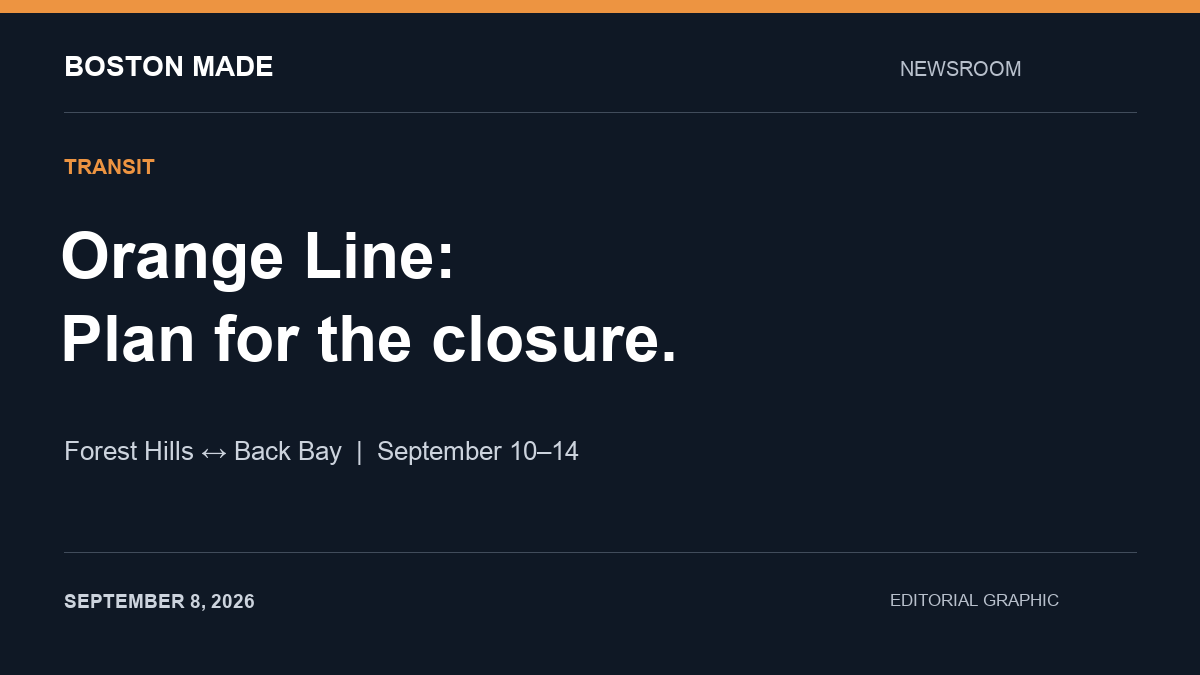
Orange Line Closure September 10–14: What Boston Riders Need to Know
Shuttles replace Orange Line trains between Forest Hills and Back Bay September 10–14, with a fare-free Commuter Rail alternative.



Boston Made Brands Opens Submissions for Mergers, Acquisitions & Restructuring

Boston Made Network Rolls Out Cross-Site Advertising Across Every Brand

The Paxton-Digital Chronicles: A Boston Made Fiction Saga

Boston Made Introduces Music Videos

Building Something Bigger: The Future of Boston Made Pets Is Under Construction

Boston Made Expands Creative Content with New “Bands” Music Video Series
-
 Videos2 months ago
Boston Made Introduces Music Videos
-
 E-Commerce9 months ago
Building Something Bigger: The Future of Boston Made Pets Is Under Construction
-
 Videos2 months ago
Boston Made Expands Creative Content with New “Bands” Music Video Series
-

 E-Commerce9 years ago
Boston Made Launches Online Tech Store
-

 E-Commerce9 months ago
The Future of Pet Care: Exploring Smart Dog Wearables and Innovative Pet Tech
-

 Boston Made+ Exclusive8 months ago
Your Website Isn’t Broken—It’s Confusing (And That’s Why Leads Don’t Convert)
-

 Service8 months ago
What a Real Website Maintenance Plan Includes (And What’s a Scam)
-

 Economic Development1 week ago
Is the Massachusetts Economy in Trouble? Inside the Population and Business Exodus