Connect with us

Weather where you are

Choose your location or share it once. We round your coordinates to about 1 km before sending them to our site and MET Norway for your forecast. Your choice stays in this browser tab.

Stay close to Boston

Get new Boston stories and Boston Made company updates, delivered as browser notifications.

Choose Enable notifications, then allow notifications in your browser.

Your browser subscription is stored by Boston Made and delivered through your browser’s push service. You can turn notifications off in your browser’s site settings. Privacy policy

Economy

Dow Sinks 650 Points as AI Capex Jitters and $100 Oil Cap a Volatile Week

Wall Street ended a whipsaw week lower Friday: the AI-spending worry flipped from too much to too little, crude pushed past $100, and the 10-year yield touched 5%. What it means for BOSSTOX, Lumo and Main Street.

Ecosystem Intelligence Desk

Published

on

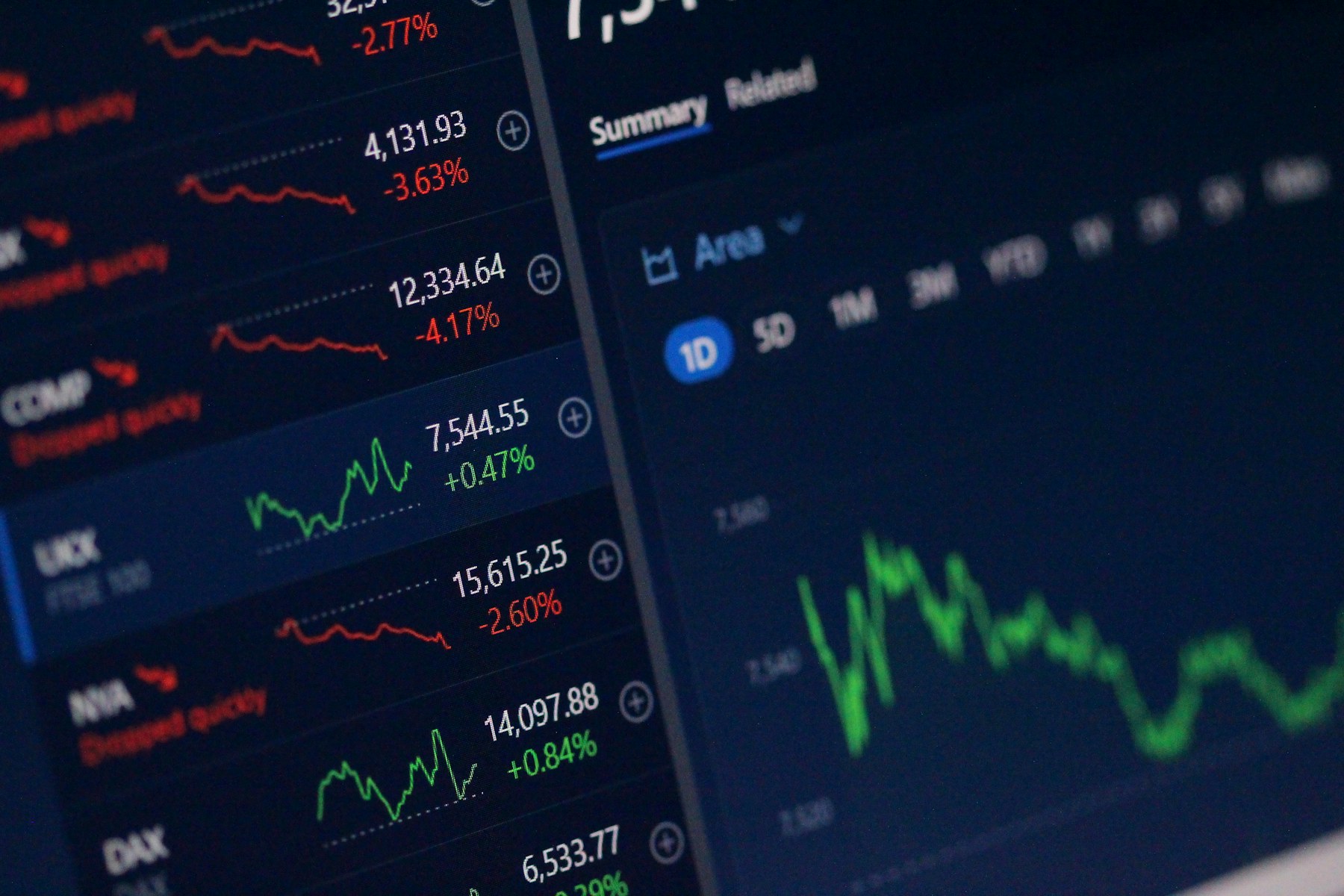
markets screen

BOSTON — Wall Street closed out a volatile week on a sour note Friday, with the Dow Jones Industrial Average sliding more than 650 points as investors wrestled with two problems at once: fresh doubts about how much the biggest technology companies will keep spending on artificial intelligence, and crude oil pushing past $100 a barrel on rising tension in the Middle East.

The numbers at Friday’s close

  • Dow Jones Industrial Average: 52,215.16, down 652.82 points (−1.23%)
  • S&P 500: 7,623.68, down 39.75 (−0.52%)
  • Nasdaq Composite: 25,955.34, down 53.52 (−0.21%)
  • Russell 2000: 2,775.90, down 8.13 (−0.29%)
  • 10-year Treasury yield: 4.99%, up about 3.5 basis points
  • WTI crude (December): $103.44, up 3.99% — the highest since April; Brent topped $116
  • Gold: $4,010, down 1.24%
  • VIX: 19.45, up 2.21%

What moved the market

The AI spending question flipped. For most of 2026 the worry was that Big Tech was spending too much on data centers, chips and power. This week the worry inverted. Meta left its capital-expenditure guidance unchanged in its third-quarter report, and Tesla cut its full-year capex outlook by roughly 20%. “Tech stocks got slammed amid fresh concerns about the outlook for artificial intelligence,” Capital.com analyst Kyle Rodda said, noting the concern has shifted from spending being too high to spending possibly being too low. For the picks-and-shovels names that benefit from every new data center — power, cooling, networking — a slower build-out is a direct hit to the growth story, and it showed: Bloom Energy fell about 11% and Comfort Systems USA about 10.7% intraday.

Oil at $100-plus. WTI and Brent both reached their highest levels since April after reports that the United States and Israel are weighing further strikes on Iran following the November midterms, and after Iran warned it would target Gulf energy infrastructure if attacked. Higher oil feeds straight into inflation expectations, which is why the bond market sold off alongside stocks: the 10-year yield finished just under 5%.

The consumer is in a dark mood. The University of Michigan’s consumer-sentiment index fell to 48.0, near record lows, with one-year inflation expectations at 4.7%. That reading landed the same day American Express said it plans to trim about 5% of its workforce; its shares fell roughly 2.9%.

Hedge funds had a rough day. Reuters reported that several major hedge-fund strategies posted their worst single-day performance since the COVID-era rout of 2020, a sign of how crowded the AI-infrastructure trade had become.

Notable movers

  • Crown Castle jumped about 11.7% and SBA Communications about 7.8% on reports that SpaceX is in talks to lease cell sites. SpaceX itself closed at $147.49 (+1.9%) after Phillip Securities upgraded the stock from Sell to Buy and lifted its price target to $250 from $75.
  • Robert Half rose about 13% after earnings; RingCentral added about 6.6%.
  • Deckers Outdoor slid about 6.2%; Kering, owner of Gucci and Saint Laurent, fell 12.4% after weak third-quarter results; Volvo Cars plunged about 24% on a plan to cut 2,500 jobs.
  • Bitcoin hovered near $81,300, little changed on the day.

The Boston Made read

Three of the week’s threads run straight through the businesses in the Boston Made family.

AI infrastructure is now a two-sided bet. BOSSTOX has spent the fall tracking the companies that sell the compute, cooling, power and networking behind the AI build-out. This week is the first time the market priced in the possibility that the build-out slows. That doesn’t end the thesis — Meta’s guidance was unchanged, not cut — but it means the next leg is about which suppliers have contracted backlogs and which were riding sentiment. Expect BOSSTOX’s coverage to lean harder into backlog and order-book data from here.

$4,000 gold is a Main Street story, not just a trading story. Gold gave back about 1.2% Friday but remains above $4,000 an ounce. At these levels the “cash for gold” market — the local-dealer trade that Kingswell’s Lumo.gold is built to organize, with a live gold price and melt calculator for households deciding whether to sell jewelry or coins — matters to far more people than it did at $2,000 an ounce. A one-day pullback does not change that.

Small business feels the sentiment number first. A consumer-confidence reading of 48 is the kind of figure that shows up in restaurant bookings, home-improvement quotes and event calendars before it shows up in an index. Fenway Web’s clients — remodelers, realtors, churches, musicians — are the businesses that number describes. The desk’s read for them this quarter is unchanged: a clear website and a working lead form matter more in a cautious economy, not less.

What to watch next week

Earnings from Verizon on Monday and Coca-Cola, UPS, SoFi and Robinhood on Tuesday will test whether the consumer caution in the survey data is showing up in actual sales. The midterm elections follow the week after, and the oil market is already trading on what comes after them.

Sources

The Boston Made Newsroom publishes market coverage for general information only. Nothing here is investment advice; consult a licensed professional before making investment decisions.

The institutional news desk of the Boston Made network. Reporting is researched from wire services including The Associated Press and local sources, and written by the desk.

Corporate News

Parking, Tides and 18 Million Visitors: The Research Behind Boston Made’s Grand Strand Launches

Tourism data, seasonal parking rules, and the economics of searching for a space explain why Boston Made launched Grand Strand App and Spot Check App together, and what they still have to prove.

Nathan Strickland

Published

on

Grand Strand app promo: the Myrtle Beach coastline at sunset with “Explore grandstrand.app”
Boston Made, Inc.Office of the Founder & Chairman
From the desk of Nathan StricklandBoston, Massachusetts ·

Dear Sir or Madam,

BOSTON — Boston Made, Inc. has added two consumer platforms to its portfolio, both aimed at the same 60-mile stretch of South Carolina coastline: Grand Strand App, a live local guide and trip concierge, and Spot Check App, a peer-to-peer parking marketplace. A look at the tourism and parking data behind the region shows why the company chose to launch them together, and what the two products will have to prove.

A large market that had a softer year

The Grand Strand is one of the biggest leisure-travel markets on the East Coast. According to Visit Myrtle Beach, the area drew about 18.2 million visitors in 2024, who spent roughly $13.2 billion, up 5.3% from the year before. The organization puts the total economic impact at more than $26 billion and credits tourism with more than 82,000 direct and indirect jobs across the region.

The trend did not hold into 2025. Data released by Visit Myrtle Beach and the Myrtle Beach Area Chamber of Commerce showed tourism down 3% for the year, WMBF News reported in February. Explanations varied, including severe-weather worries, negative social-media attention, and household budgets that kept some travelers home. Local tourism leaders said the recovery would depend on the experiences the destination offers, such as live music, theater, the beach, and food.

Why it matters: In a softer year, the destinations that win are the ones that are easiest to plan and enjoy. That is the gap Grand Strand App is built for. Rather than a static directory, it opens on live conditions: surf, the next tide from the NOAA gauge at Springmaid Pier, beach-safety notes, and weather. Its concierge then suggests three stops with drive times based on the weather, the tide, and the time of day.

Parking is a seasonal policy question

Parking on the Grand Strand changes with the calendar. In Myrtle Beach’s downtown district, which runs from Sixth Avenue South to 21st Avenue North, paid parking returned on March 1, 2026, and runs through September 30, with enforcement from 9 a.m. to midnight, seven days a week, and tickets starting at $30, according to WMBF News. From October 1 through the end of February, city-metered spaces downtown are free under a City Council decision to restore off-season free parking.

The result is a market where demand peaks in exactly the months when public parking costs the most and is hardest to find, while private driveways and garages a few blocks from the beach often sit empty.

The cost of searching is not trivial anywhere. A widely cited 2017 INRIX study estimated that the average U.S. driver spent about 17 hours a year looking for parking, at a cost of about $345 per driver in wasted time, fuel, and emissions, or $72.7 billion nationally. The figures are national and several years old, but the pattern they describe is sharper in a crowded beach town during peak season.

How the two products fit together

Spot Check’s model is simple. Drivers search a live map of driveway, garage, lot, street, covered, and EV-charging spaces, each showing status and an hourly price. They message a host or send a booking request, park, and leave a review. Hosts list a space in about two minutes by dropping a pin, choosing a type, and setting an hourly price and size or clearance.

Grand Strand App acts as the demand funnel. Its navigation includes a “reserve a driveway” link to Spot Check and a “list a parking space” link for owners, and its Grand Strand Season series covers parking topics directly, including free downtown parking, North Myrtle Beach parking, and whether rental guests should use valet service. Spot Check, in turn, publishes a daily Parking Briefing that is syndicated into Boston Made Reader.

The pairing reflects a strategy Boston Made has used across its portfolio: a content product that earns daily attention, linked to a transactional product that serves the need that content keeps surfacing.

What the platforms will have to prove

  • Supply before demand. Any two-sided marketplace has to recruit hosts before drivers will trust the map. Spot Check’s early inventory is small, and growth will depend on reaching homeowners and rental owners near high-traffic areas.
  • Local rules. Renting a driveway can be affected by municipal ordinances, HOA covenants, and rental-property agreements. Hosts will need clear guidance, and the platform will need to keep pace with local policy.
  • Trust and accountability. Reviews are Spot Check’s main trust mechanism today. Clear booking terms, dispute handling, and verified listings will matter as volume grows.
  • Seasonality. With free downtown parking for five months of the year, Spot Check’s value is highest in spring and summer and around events. Grand Strand App’s off-season content, from fall calendars to shoulder-season itineraries, has to keep users engaged in the quieter months.
  • Data quality. A live guide is only as good as its feeds. Grand Strand App’s reliance on marine forecasts and NOAA tide data is a strength, as long as those inputs stay current and clearly labeled.

The bottom line

Grand Strand App and Spot Check App are small, early products in a large regional market. Their bet is that a guide people check every morning can create steady demand for a parking marketplace, and that a parking marketplace gives the guide a practical reason to exist beyond inspiration. Both brands are now profiled on the Boston Made Brands page, and the founding story is on bostonmade.com.

Sources

  • Visit Myrtle Beach, destination statistics: context.visitmyrtlebeach.com
  • WMBF News, “Myrtle Beach tourism down 3% in 2025, local businesses hope for better 2026” (Feb. 5, 2026): wmbfnews.com
  • WMBF News, “Paid parking returning to Myrtle Beach downtown district this weekend” (Feb. 27, 2026): wmbfnews.com
  • INRIX via Parking.net, “Searching for Parking Costs Americans $73 Billion a Year” (2017): parking.net
  • Product details from grandstrand.app and spotcheckapp.com, reviewed October 8, 2026.

Continue Reading

Economy

Fed Minutes Keep Another Rate Hike on the Table as Inflation Stays Stubborn

Nathan Strickland

Published

on

Fed Minutes Keep Another Rate Hike on the Table as Inflation Stays Stubborn
Boston Made, Inc.Office of the Founder & Chairman
From the desk of Nathan StricklandBoston, Massachusetts ·

Dear Sir or Madam,

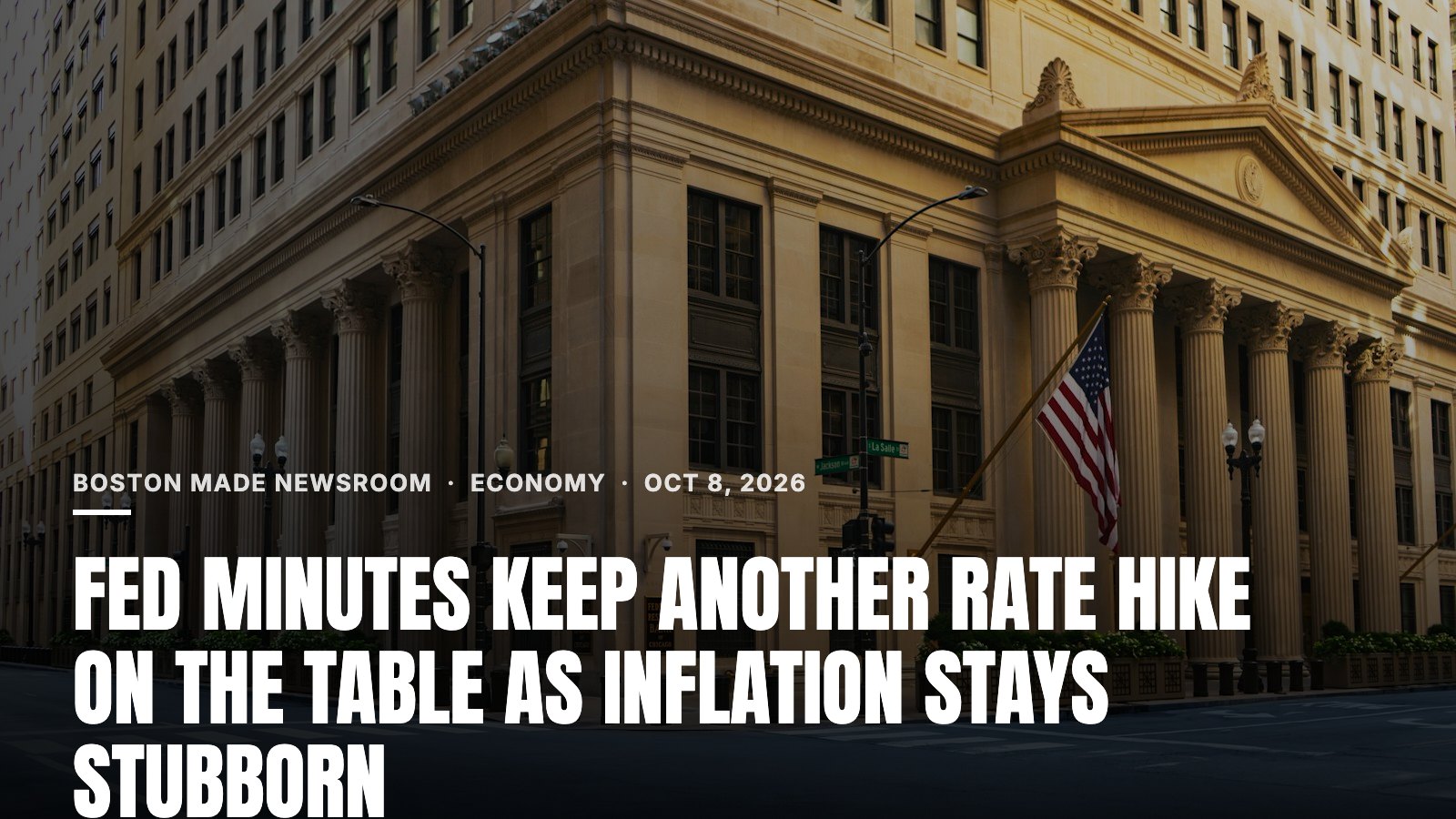
The latest Federal Reserve minutes keep another rate hike on the table as inflation remains stubborn. Officials are balancing the need to restore price stability against the risk of slowing an economy that is still producing jobs.

That tension is keeping markets focused on the language around patience, persistence and financial conditions. A single report may move expectations, but the direction of inflation will determine the policy path.

Households and companies should plan for rates to stay restrictive until the data provides a clearer signal that price pressures are cooling.

Continue Reading

Economy

US Stocks Press Toward Records as Cooler Hiring Eases Inflation Fears

Nathan Strickland

Published

on

US Stocks Press Toward Records as Cooler Hiring Eases Inflation Fears
Boston Made, Inc.Office of the Founder & Chairman
From the desk of Nathan StricklandBoston, Massachusetts ·

Dear Sir or Madam,

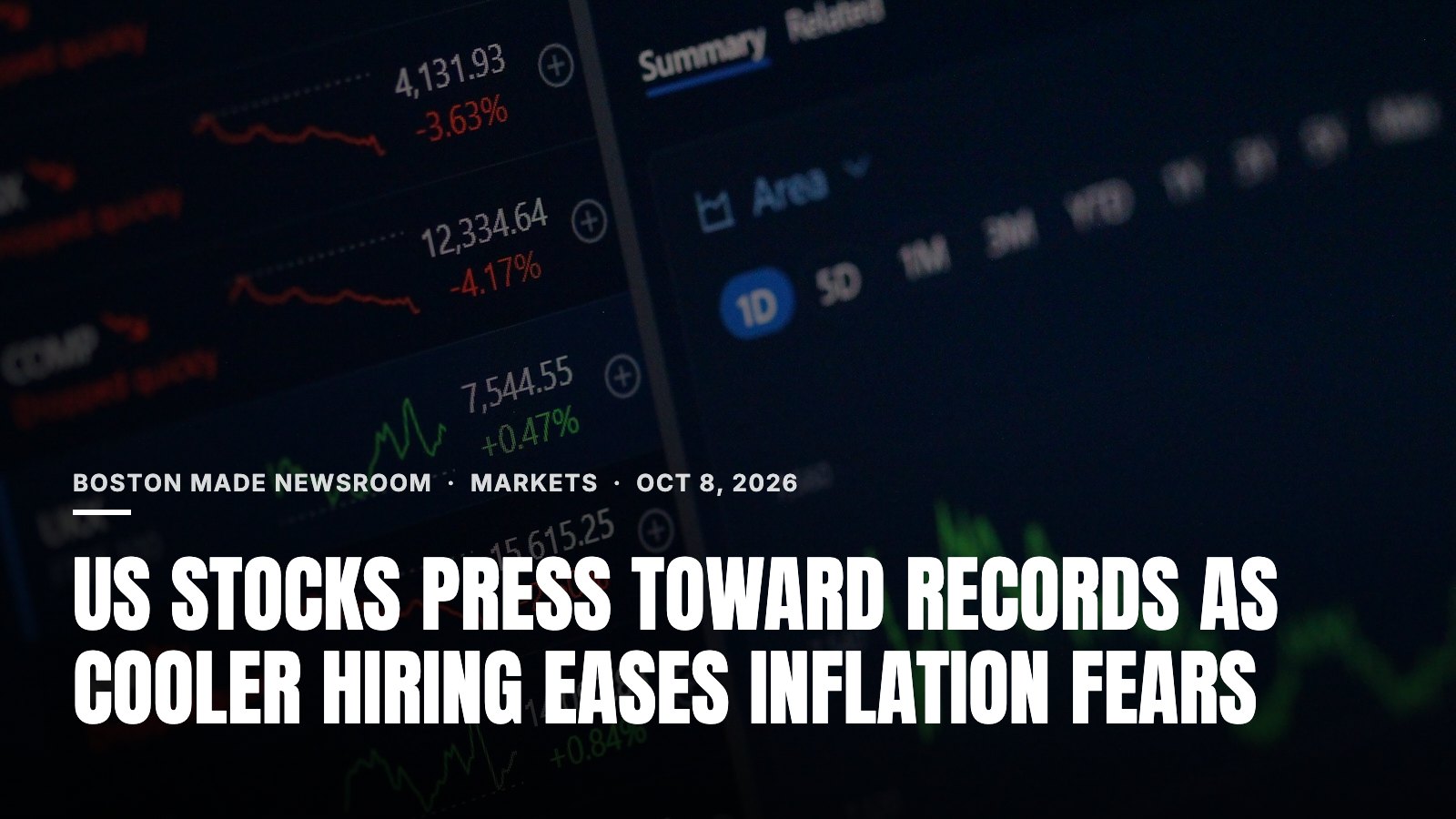
US stocks are pressing toward records as cooler hiring changes the balance between growth and inflation. A softer labor market can reduce pressure on wages while leaving consumers and businesses with enough momentum to keep the expansion moving.

Investors are watching whether that balance can hold. The best outcome is a gradual cooling that gives the Federal Reserve room to ease without signaling a deeper slowdown.

For now, the market is rewarding evidence of resilience, but the next round of employment and inflation data will matter more than any single milestone.

Continue Reading
Advertisement

Advertisement

Ad

Advertisement

Trending

--:--·---·--°