Connect with us

Weather where you are

Choose your location or share it once. We round your coordinates to about 1 km before sending them to our site and MET Norway for your forecast. Your choice stays in this browser tab.

Stay close to Boston

Get new Boston stories and Boston Made company updates, delivered as browser notifications.

Choose Enable notifications, then allow notifications in your browser.

Your browser subscription is stored by Boston Made and delivered through your browser’s push service. You can turn notifications off in your browser’s site settings. Privacy policy

Financial Technology

Getting a Fair Offer for Scrap Gold: Weighing, Testing and Comparing Buyers

Before selling broken chains, single earrings or outdated jewelry, it helps to understand karats, weights, testing methods and how buyers set their offers. This guide covers the steps that lead to a fair, transparent price.

Ecosystem Intelligence Desk

Published

on

Title card: Lumo: The Next Chapter

Lumo (lumo.gold) is an affiliated directory that helps people find local cash-for-gold buyers. Finding a buyer is only the first step. Getting a fair price depends on knowing what is being sold, how it will be weighed and tested and how to compare offers. This guide covers those basics for anyone thinking about selling scrap gold, such as broken chains, single earrings, damaged rings or jewelry that is no longer worn.

Step One: Sort Before Anything Else

A drawer of old jewelry usually contains a mix of materials. Before visiting any buyer, it helps to separate pieces into groups:

Advertisement

Advertisement
  • Possible heirlooms or designer pieces: Items with artistic, historical or brand value may be worth more as jewelry than as melted metal. These deserve an appraisal or a jeweler’s opinion before they are sold as scrap.
  • Clearly stamped gold: Pieces marked with a karat or fineness stamp.
  • Unmarked or uncertain items: These will need testing.
  • Costume jewelry and plated items: Usually of little or no scrap value.

Then sort the gold pieces by karat. Mixing 10-karat and 18-karat items in a single pile can lead to the whole lot being priced at the lower purity.

Step Two: Understand Karats and Purity

Pure gold is 24 karat. Most jewelry is an alloy of gold with other metals, which makes it stronger. The karat number shows how many parts out of 24 are gold:

  • 10K is about 41.7 percent gold, often stamped “417.”
  • 14K is about 58.3 percent gold, often stamped “585.”
  • 18K is 75 percent gold, often stamped “750.”
  • 22K is about 91.7 percent gold, often stamped “916.”

Stamps can be helpful, but they are not proof. Stamps can wear off or be faked, and markings such as “GP,” “GF,” “HGE” or “RGP” generally indicate plating or gold-filled items, which contain only a thin layer of gold.

Step Three: Know the Weight Units

Gold is priced by the troy ounce, which is about 31.1 grams and heavier than a standard kitchen ounce. Many buyers also weigh in grams or in pennyweight (abbreviated dwt). There are 20 pennyweight in a troy ounce, so one pennyweight is about 1.56 grams. When comparing offers, make sure they use the same unit. A price per pennyweight and a price per gram are not directly comparable without converting.

A small digital scale at home can give a rough idea of weight before a visit. A buyer’s scale should be certified for trade use under state weights-and-measures rules and placed where the seller can see the display.

Advertisement

Step Four: Understand How Testing Works

Reputable buyers test items rather than relying on stamps alone. Common methods include:

  • Acid testing: A small scratch on a testing stone is treated with acids of different strengths to estimate karat. It is quick and widely used, though it leaves a small mark on the testing stone, not usually on the item.
  • Electronic testers: Handheld devices measure the metal’s electrical properties to estimate purity.
  • X-ray fluorescence (XRF): A non-destructive machine that analyzes the metal’s composition in seconds. It is generally considered more precise and lets the seller see the result.

A seller is entitled to watch the testing and ask what the results show. If a buyer wants to take items out of sight to test or weigh them, that is a reason for caution.

Step Five: Estimate the Melt Value

The melt value is the value of the pure gold contained in an item, based on the current market price. The basic calculation is:

Advertisement

  1. Weigh the gold in grams.
  2. Multiply by the purity (for example, 0.583 for 14K).
  3. Divide by 31.1 to convert to troy ounces of pure gold.
  4. Multiply by the current spot price per troy ounce.

In a hypothetical example, 10 grams of 14K gold contains about 5.83 grams of pure gold, which is roughly 0.19 troy ounces. That figure, multiplied by the day’s spot price, gives the melt value. No buyer will pay the full melt value. Buyers have refining costs, overhead and margins, so offers are a percentage of melt. Knowing the melt value makes it possible to see what percentage is actually being offered.

Step Six: Compare Offers the Right Way

Getting several quotes is the single best way to get a fair price. When comparing, ask each buyer:

  • What karat did your test show for each item?
  • What weight did you record, and in what unit?
  • What price per gram or pennyweight are you paying for each karat?
  • Are there any fees, deductions or minimums?
  • Will you put the offer in writing?

An offer broken down item by item, or at least karat by karat, is a sign of transparency. A single lump-sum number with no explanation makes comparison difficult.

Red Flags and Good Practices

  • Be cautious of pressure to sell immediately or offers that are good “today only.”
  • Mail-in services can be convenient but make it harder to see the weighing and testing. Read their terms carefully, including return policies.
  • Remove gemstones you want to keep before selling, or ask whether the buyer will return them.
  • Expect to show identification. Many states and localities require buyers to record sellers’ information and sometimes hold items for a period, to deter the sale of stolen goods.
  • Keep a list or photos of what was sold, along with the receipt.

The Bottom Line

A fair scrap-gold sale comes down to transparency: knowing the karat, seeing the weight, watching the test and comparing several written offers against an estimated melt value. A little preparation goes a long way. This guide is general information, not financial or legal advice, and local rules for precious-metal sales vary.

Quick check: About what percentage of pure gold does 14-karat jewelry contain?

  1. 41.7 percent
  2. 58.3 percent
  3. 75 percent
Show answer

B. 58.3 percent. Fourteen out of 24 parts is about 58.3 percent, which is why 14K items are often stamped “585.”

Pupwear Boston Made family Pupwear Dog apparel and gear inspired by Boston the GoldenDoodle. Visit site →

Advertisement

Latest stories

View all

The institutional news desk of the Boston Made network. Reporting is researched from wire services including The Associated Press and local sources, and written by the desk.

Continue Reading

Corporate News

Boston-Based BOSSTOX Launches AI Infrastructure Intelligence Platform for Analysts and Investors

Boston-based BOSSTOX has released a new subscription platform tracking the evidence behind the AI infrastructure buildout — power, cooling, compute, and the companies making it possible.

Ecosystem Intelligence Desk

Published

on

Hands on a keyboard near a green circuit board

Boston-based BOSSTOX has launched a new subscription intelligence platform focused on the physical and digital infrastructure underpinning the artificial intelligence buildout, the company announced this month.

The product, called BOSSTOX AI Infrastructure Intelligence, tracks evidence across power generation and grid interconnection, transformer supply chains, data center construction, cooling technology, servers and networking equipment, and cloud capacity commitments from major hyperscalers.

Advertisement

Advertisement

Rather than forecasting where artificial intelligence models or applications are headed, the platform is built around what the company calls an “evidence layer” — a structured, citation-backed database of public filings, procurement records, construction permits, operator announcements and company disclosures. BOSSTOX says the system is configured with OpenAI-powered analysis but maintained with human review at every step, and that no relationship in the dataset is inferred without a cited source.

BOSSTOX is offering the product across three subscription tiers: a $299-per-month Monitor plan built around bottleneck monitoring and a weekly signal digest; a $799-per-month Signal plan aimed at deeper intelligence briefs and analyst-ready research; and a $1,500-per-month Enterprise plan that includes managed intelligence, private briefings and portal access.

The launch is aimed at analysts, researchers and investors looking for a structured view of where AI infrastructure capital is flowing and where supply constraints are forming, according to the company. BOSSTOX, part of the Boston Made, Inc. family of brands, also operates an educational membership site at info.bosstox.com offering source-grounded market-literacy content; the company notes that its educational content and tools are for informational purposes only and do not constitute investment, financial, legal or tax advice.

The AI Infrastructure Intelligence platform is available now at bosstox.com.

Advertisement

Background

Much of the public conversation about artificial intelligence focuses on software: models, chatbots and applications. Behind that software sits a very physical industry. Training and running large AI models requires data centers full of specialized chips, servers and networking equipment, along with large amounts of electricity and cooling. Building that capacity involves utilities, grid operators, equipment manufacturers, construction firms and cloud providers, each with its own timelines and constraints.

Because these pieces depend on one another, a delay in one area can slow everything else. A data center cannot operate without a grid connection, a grid connection may depend on transformers and other equipment, and new equipment depends on manufacturing capacity. Analysts often describe these limiting factors as bottlenecks.

Much of the information about this buildout is public, but it is scattered. Companies disclose plans in financial filings and earnings calls. Local governments publish permits and zoning decisions. Utilities and grid operators release planning documents. Organizing that material into a coherent picture takes time, which is part of why structured research products exist.

Advertisement

Evidence versus forecasts

Research on emerging industries generally takes one of two approaches. Forecasting attempts to predict where a market is headed, often using models and assumptions about future demand. Evidence-based tracking focuses on what has already been documented, such as signed contracts, issued permits and disclosed spending. The two can complement each other, but they answer different questions. Evidence shows what is happening now and what has been committed; forecasts estimate what might happen next and depend heavily on their assumptions.

What it means for readers following AI infrastructure

For anyone trying to understand the topic, whether out of professional interest or general curiosity, a few research habits apply to any source:

  • Go to primary documents. Company filings, regulatory records and official announcements are the foundation. Summaries are useful, but the original documents carry the details.
  • Separate evidence from interpretation. A permit or contract is a fact; a conclusion drawn from it is an interpretation. Good research makes the difference clear.
  • Check dates. Plans change. An announcement from a year ago may have been revised, delayed or cancelled since.
  • Be cautious with automated analysis. AI tools can help organize information, but their outputs should be checked against cited sources, which is why human review matters.
  • Remember the limits. Educational and informational content can build understanding, but it does not account for any individual’s circumstances.

Key terms

  • AI infrastructure: The physical and digital systems, including data centers, chips, power and networks, that support AI workloads.
  • Hyperscaler: A very large cloud computing provider operating data centers at massive scale.
  • Grid interconnection: The process of connecting a new power source or large electricity user to the electric grid, often involving studies and approvals.
  • Transformer: Electrical equipment that changes voltage levels so power can be transmitted and used safely.
  • Data center cooling: Systems that remove heat generated by computing equipment, using air, liquid or both.
  • Procurement record: A public record of a purchase or contract, often by a government agency.
  • Citation-backed: Supported by references to specific, identifiable sources.

What to watch

Readers who follow AI infrastructure generally keep an eye on several types of public information, without assuming any particular outcome:

  • Company disclosures about capital spending plans and data center projects.
  • Utility and grid operator planning documents describing new load requests.
  • Local permitting and zoning decisions for data center sites.
  • Reports on equipment lead times, such as those for transformers and cooling systems.
  • Announcements of new cloud capacity agreements and how they evolve over time.

Each of these sources can help readers form a more grounded view of how the buildout is progressing and where constraints appear.

This is educational content, not investment advice.

Quick check: In AI infrastructure research, what is a “bottleneck”?

  1. A type of AI chatbot
  2. A limiting factor, such as equipment or power, that slows the overall buildout
  3. A cooling fluid
Show answer

B. A bottleneck is a constraint in one part of the system that holds back progress elsewhere.

Beacon Federal Partners Affiliate Beacon Federal Partners Independent government-contracting firm and Boston Made affiliate. Visit site →

Advertisement

Continue Reading

E-Commerce

Beyond Gold: What Sellers Should Know About Silver, Platinum and Palladium

Gold gets the headlines, but silver, platinum and palladium turn up in jewelry boxes and drawers too. Here is how each metal is marked, tested and priced when you sell.

Ecosystem Intelligence Desk

Published

on

Lumo Opens Online Marketplace for Precious Metals

Lumo, an affiliated directory of local cash-for-gold buyers with live prices at lumo.gold, centers on gold, but many of the people who go looking for a buyer discover they also own other precious metals. Silverware, platinum wedding bands and the occasional palladium piece all have metal value, and each works a little differently. This guide walks through the basics so sellers can sort what they have before they ask for an offer.

Why the Other Metals Matter

A typical drawer of “old jewelry” is rarely all gold. It may hold a sterling silver bracelet, a set of silver-plated flatware, a platinum engagement setting and a handful of costume pieces that contain no precious metal at all. Knowing which is which keeps a seller from two common mistakes: assuming everything shiny is valuable, and overlooking a heavy item that is worth more than it looks.

Advertisement

Advertisement

Silver, platinum and palladium are all traded on world markets, and each has a published spot price that moves through the trading day. A local buyer’s offer is usually based on that spot price, the weight of pure metal in the item and the buyer’s own costs for testing, refining and running a business.

Silver: Common, Heavy and Often Plated

Silver is the precious metal most households own in quantity, usually as jewelry, flatware, serving pieces or coins. Its price per ounce is far lower than gold’s, so silver items need real weight before they add up to a meaningful sum.

  • Sterling silver is 92.5 percent pure silver and is usually stamped “925,” “Sterling” or “Ster.”
  • Coin silver, found in some older American pieces, is typically around 90 percent silver.
  • Fine silver is 99.9 percent pure and is stamped “999” or “Fine.” It is common in bullion bars and rounds.
  • Silver plate is a thin layer of silver over a base metal such as copper or nickel. Marks like “EP,” “EPNS,” “Silverplate” or “Quadruple Plate” signal plating, and plated items carry very little metal value.

Weighted pieces deserve special attention. Many sterling candlesticks, hollow-handled knives and some trophies are filled with cement, pitch or another material for stability. A buyer will account for that filler, so a candlestick that weighs a pound on a kitchen scale may contain only a fraction of that in actual silver.

Platinum: Dense, Durable and Easy to Miss

Platinum is a white metal that is heavier and more resistant to wear than gold. It became popular in fine jewelry, especially engagement and wedding rings, because it holds gemstones securely and does not tarnish. Because it looks similar to white gold and even to polished silver, owners sometimes do not realize what they have.

Platinum jewelry is usually much purer than gold jewelry. Common stamps include:

Advertisement
  • “PLAT” or “PT” followed by a number, such as PT950 or PT900, indicating 95 or 90 percent platinum.
  • “Platinum” or “Plat” on its own, which in many markets indicates a high purity.
  • Mixed marks, such as “Iridplat” or “10% Irid,” which identify a platinum and iridium alloy common in older pieces.

Because platinum’s price has at times been above gold’s and at other times below it, sellers should check the current spot price rather than assuming platinum is automatically worth more.

Palladium: The Newer Jewelry Metal

Palladium belongs to the same family of metals as platinum. It is lighter than platinum, naturally white and hypoallergenic, and it has been used in some wedding bands and as an alloying metal in white gold. Most palladium in the world is used in industry, especially in vehicle catalytic converters, which is one reason its price can swing sharply.

Palladium jewelry may be stamped “PD” or “Pall,” often with a number such as 950. Some buyers handle palladium routinely and others do not, so it is worth asking in advance whether a shop purchases it and how it tests it.

How Buyers Test These Metals

A reputable buyer does not rely on stamps alone, because marks can be worn, misleading or counterfeit. Common testing methods include:

  1. Visual and magnet checks. Precious metals are not magnetic. A strong pull from a magnet suggests a steel or nickel core, although a lack of attraction does not prove an item is genuine.
  2. Acid testing. A small scratch on a testing stone is exposed to acids formulated for different metals and purities. It is quick and inexpensive but leaves a mark on the stone, not usually on the item.
  3. Electronic testers. Handheld devices measure electrical properties to estimate purity.
  4. X-ray fluorescence (XRF). An XRF analyzer reads the surface composition without damaging the piece. It is fast and detailed, though it reads the surface, so thick plating can still require further checks.

Sellers are entitled to watch testing take place and to ask which method is being used.

Advertisement

Understanding the Offer

An offer for any precious metal follows the same basic logic. The buyer estimates the weight of pure metal, multiplies it by a price tied to the current spot quote and then applies a percentage that covers refining, overhead and profit. That percentage varies from shop to shop and from metal to metal. Silver, which is bulky and lower in value per ounce, often carries a wider gap between spot and offer than gold does.

A few practical habits help:

  • Look up the spot price for each metal on the day you plan to sell.
  • Separate items by metal and by stamp before visiting a buyer.
  • Ask for the weight of each group and the price per gram or ounce being offered.
  • Get more than one quote, especially for larger lots of sterling flatware or platinum jewelry.

When Melt Value Is Not the Whole Story

Some items are worth more as objects than as metal. Signed designer jewelry, antique silver from well-known makers, collectible coins and pieces with significant gemstones may command more from a jeweler, antiques dealer or coin specialist than from a buyer who pays for metal content. If an item has a maker’s mark, a pattern name or a known history, it can be worth researching before selling it for scrap.

The same caution applies to gemstones set in platinum or palladium. Most metal buyers pay little or nothing for stones, so sellers may want to have significant stones assessed separately or ask whether they can be removed and returned.

A Simple Checklist Before Selling

  • Sort pieces into gold, silver, platinum, palladium and unknown.
  • Use a loupe or magnifying glass to read stamps, and note them on a list.
  • Set aside anything signed, antique or set with notable stones.
  • Check current spot prices for each metal.
  • Confirm in advance that the buyer purchases the metals you have.
  • Keep your list and the buyer’s receipt together for your records.

Precious metals other than gold are easy to overlook, but a little sorting and a few good questions help sellers understand exactly what they own and what a fair conversation with a buyer looks like.

Quick check: A spoon is stamped “EPNS.” What does that most likely tell a seller?

  1. It is sterling silver at 92.5 percent purity
  2. It is silver plate over a base metal with little metal value
  3. It is a platinum and nickel alloy
Show answer

B. “EPNS” stands for electroplated nickel silver, a thin silver coating over base metal, so its precious-metal content is minimal.


Boston Made Reader Boston Made family Boston Made Reader Free e-reader app for long reads, wires and books. Visit site →

Advertisement

Continue Reading

Financial Technology

Selling Inherited Jewelry: Sorting Heirlooms From Scrap and Documenting Every Piece

Inherited jewelry often mixes treasured heirlooms, valuable pieces and simple scrap. This guide explains how to inventory a collection, read basic markings, decide what deserves an appraisal and document everything before selling.

Ecosystem Intelligence Desk

Published

on

Lumo: The Next Chapter

Lumo (lumo.gold) is an affiliated directory of local cash-for-gold buyers, and one of the most common situations that brings people to such buyers is an inheritance. A jewelry box from a parent or grandparent can hold anything from costume pieces to fine antique jewelry, and it is easy to sell something for its metal weight when it was worth far more as a whole piece, or to keep worthless items while overlooking valuable ones. This guide offers a careful, step-by-step approach. It is general education, not legal, tax or appraisal advice.

Before You Begin: Check the Estate Situation

If the jewelry is part of an estate that is still being settled, make sure you have the right to sell it. Executors, family members and, in some cases, legal or tax professionals may need to be involved. Inherited items can also raise questions about valuation for estate purposes. When in doubt, consult a qualified attorney or tax professional before selling anything.

Advertisement

Advertisement

It is also worth talking with family members early. Pieces with sentimental value may matter deeply to someone, and a conversation before anything is sold can prevent lasting regret.

Step 1: Make a Complete Inventory

Lay everything out on a clean, well-lit surface, ideally on a soft cloth to prevent scratches or lost stones. Give each piece a number and record:

  • A short description, such as “yellow metal ring with clear center stone.”
  • Any visible markings or stamps.
  • Approximate size and condition.
  • Any known history: who owned it, when it was acquired, where it came from.
  • Any original boxes, receipts, appraisals or certificates found with it.

Step 2: Photograph Everything

Take clear photos of each piece from several angles, including close-ups of markings, clasps and stones. Photograph pieces next to a ruler for scale. These images are useful for insurance, family records, appraisals and comparing buyer offers. Keep them stored safely in more than one place.

Step 3: Look for Markings

Many pieces carry small stamps indicating metal content or maker. A jeweler’s loupe or magnifying glass helps. Common markings include:

  • Karat marks for gold, such as 10K, 14K, 18K or 22K, or numerical equivalents such as 417, 585, 750 and 916, which indicate parts per thousand of pure gold.
  • Silver marks, such as 925 or “Sterling.”
  • Platinum marks, such as PLAT or 950.
  • Plated or filled marks, such as GP (gold plated), GF (gold filled), HGE (heavy gold electroplate) or RGP (rolled gold plate), which indicate only a thin layer of gold over another metal.
  • Maker’s marks or signatures, which can add significant value if the piece was made by a known designer or firm.

Markings are helpful but not definitive. Some genuine pieces are unmarked, especially older or repaired items, and some markings can be misleading. Testing by a professional provides more certainty.

Advertisement

Step 4: Sort Into Categories

With your inventory in hand, sort pieces into broad groups:

  1. Keep: Items with strong sentimental value, regardless of monetary worth.
  2. Potentially valuable as whole pieces: Signed or designer jewelry, antique or vintage pieces with fine craftsmanship, pieces with significant gemstones, and items with notable history. These may be worth more than their metal content.
  3. Likely scrap: Broken chains, single earrings, damaged rings, worn or bent pieces with no special design or maker, and dental gold. These are typically valued mainly for metal content.
  4. Costume or non-precious: Items without precious metal markings that test as base metal. Some vintage costume jewelry has collector value, so do not discard it automatically.
  5. Uncertain: Anything you cannot identify. Set these aside for professional evaluation.

Step 5: Get Professional Opinions on Valuable Pieces

For items that may be worth more than scrap value, consider an independent appraisal before selling. An appraiser who is not also bidding to buy the item can give a more objective assessment. Look for appraisers with recognized gemological or appraisal credentials, and ask:

  • What type of value the appraisal reflects, such as fair market value or insurance replacement value, since these can differ substantially.
  • How fees are calculated. Many reputable appraisers charge a flat or hourly fee rather than a percentage of the item’s value.
  • Whether the appraisal will be provided in writing with photos and descriptions.

For fine or signed pieces, estate jewelers and auction houses may offer better outcomes than scrap buyers, though they involve different timelines and fees.

Advertisement

Step 6: Handle Gently

Avoid aggressive cleaning before evaluation. Harsh chemicals, ultrasonic cleaners and abrasive polishing can damage stones, remove patina valued by collectors or loosen settings. A gentle wipe with a soft cloth is generally enough. Do not attempt to remove stones or disassemble pieces.

Step 7: Selling Scrap Gold Thoughtfully

For pieces in the scrap category, a few principles help:

  • Separate items by karat before visiting buyers, so each group can be weighed and priced accurately.
  • Know the approximate weight of each group, ideally measured on an accurate scale.
  • Check the current market price of gold for context, understanding that buyers pay less than the spot price to cover refining and business costs.
  • Get quotes from more than one buyer, and ask each to explain how they calculated their offer.
  • Watch the testing and weighing, and request a written receipt.

Step 8: Keep a Record

Document what you sold, to whom, when, for how much and how the price was calculated. Keep receipts and photos together with the original inventory. These records can be important for estate accounting, family communication and tax purposes.

The Bottom Line

Inherited jewelry deserves patience. By inventorying, photographing, reading markings, sorting carefully and seeking independent opinions on valuable pieces, families can honor sentimental items, recognize real value and sell scrap with confidence. A careful process protects both the money and the memories.

Quick check: What does a “GF” stamp on a piece of jewelry usually indicate?

  1. Solid 24-karat gold
  2. Gold filled, a layer of gold bonded over another metal
  3. Genuine freshwater pearls
Show answer

B. GF means gold filled, so the piece contains only a layer of gold rather than solid gold throughout.

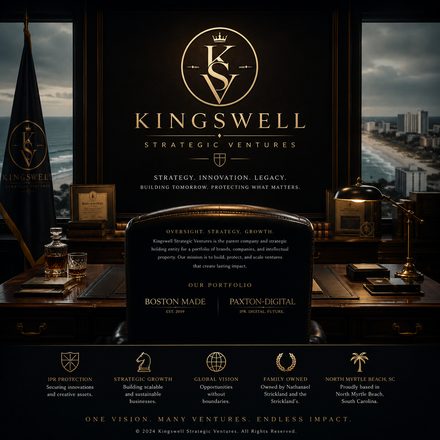
Kingswell Strategic Ventures Boston Made family Kingswell Strategic Ventures Holding company that owns Boston Made, Inc. and Paxton-Digital, and sets long-term strategy. Visit site →

Advertisement

Continue Reading
Advertisement

Advertisement

Ad

Advertisement

Trending

--:--·---·--°