
Connect with us

Boston History

The Siege of Boston: Washington’s First Great Test

George Washington arrived outside Boston in 1775 to turn a collection of provincial forces into an army capable of confronting Britain.

Nathanael Strickland

Published

on

31 Days of Boston — Day 21

George Washington arrived outside Boston in 1775 to turn a collection of provincial forces into an army capable of confronting Britain.


When George Washington arrived in Massachusetts in the summer of 1775, he inherited an extraordinary problem. Thousands of armed men surrounded British-held Boston, but enthusiasm was not the same thing as an organized national army.

Washington had to impose discipline, manage supplies, navigate regional rivalries, confront disease, and maintain a siege without enough gunpowder for the kind of battle he might have wanted.

Boston’s geography shaped everything. The town sat on a peninsula connected by a narrow neck, while surrounding heights could dominate military movement.

The siege also forced Americans to think continentally. New England militia were becoming part of a Continental Army commanded by a Virginian.

For months, neither side found an easy solution. Then artillery captured at Fort Ticonderoga made an extraordinary winter journey to Massachusetts. The guns would help Washington transform geography into victory.

Research & Further Reading

For deeper research, consult authoritative collections including the Massachusetts Historical Society, Boston Public Library, National Park Service, Library of Congress, Massachusetts Archives, and relevant museum and university collections. Readers should verify contested details against primary and scholarly sources.


Explore More from Boston Made

Boston Made is an independent editorial and archival platform. Historical stories are intended to encourage further exploration of primary sources, museums, libraries, and scholarly research.

As a passionate advocate for canine wellness and innovation, I find great joy in staying informed and up-to-date with the latest news. I am not only an avid reader but also a dedicated journaler, capturing my thoughts and ideas on paper to reflect and grow. However, my true passion lies in my love for dogs and my dream of establishing a revolutionary news network dedicated to all things canine. Through my company, Boston Made Pets, I aim to elevate the world of dog wearables and accessories while also providing a platform for dog lovers to stay informed, connected, and empowered. Join me on this exciting journey as we build a community that celebrates the unique bond between humans and their beloved furry companions.

Continue Reading
Click to comment

Leave a Reply

Your email address will not be published. Required fields are marked *

Boston History

The Great Boston Fire of 1872: Twelve Hours of Destruction

In November 1872, fire swept through Boston’s commercial district, destroying hundreds of buildings and reshaping downtown.

Nathanael Strickland

Published

on

31 Days of Boston — Day 26

In November 1872, fire swept through Boston’s commercial district, destroying hundreds of buildings and reshaping downtown.


On the evening of November 9, 1872, fire broke out in Boston’s commercial district. Dense construction, narrow streets, combustible materials, and difficult firefighting conditions helped the flames spread.

The fire consumed blocks of valuable property. Warehouses and businesses burned as crowds watched a familiar cityscape disappear.

Boston’s firefighters fought under punishing conditions. The disaster exposed weaknesses in urban design, construction, water access, and emergency response.

Yet Boston rebuilt. Property lines, architecture, regulations, and commercial patterns evolved. The fire became part of a larger nineteenth-century story shared by rapidly growing American cities: prosperity produced density, density magnified disaster, and disaster forced modernization.

Walk through downtown today and the 1872 fire can seem invisible. That is precisely why the story matters. Cities often hide their catastrophes beneath the buildings that replaced them.

Research & Further Reading

For deeper research, consult authoritative collections including the Massachusetts Historical Society, Boston Public Library, National Park Service, Library of Congress, Massachusetts Archives, and relevant museum and university collections. Readers should verify contested details against primary and scholarly sources.


Explore More from Boston Made

Boston Made is an independent editorial and archival platform. Historical stories are intended to encourage further exploration of primary sources, museums, libraries, and scholarly research.

Continue Reading

Boston History

Anthony Burns: The Fugitive Slave Case That Shook Boston

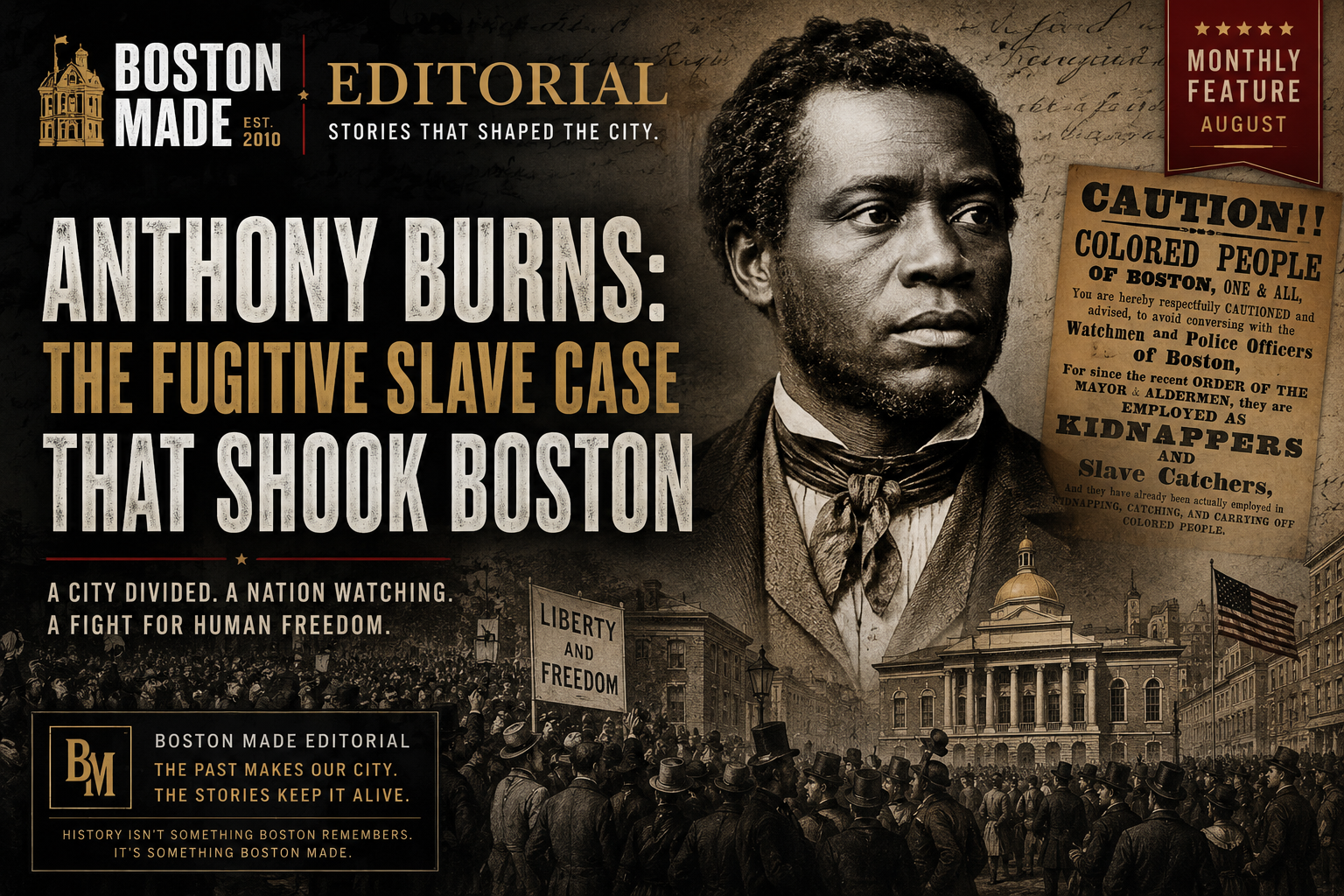
The 1854 arrest of Anthony Burns transformed Boston into a fortified stage for America’s escalating conflict over slavery.
Nathanael Strickland

Published

on

31 Days of Boston — Day 25

The 1854 arrest of Anthony Burns transformed Boston into a fortified stage for America’s escalating conflict over slavery.


In 1854, Anthony Burns, a young man who had escaped slavery in Virginia, was arrested in Boston under the Fugitive Slave Act.

The case electrified the city. Abolitionists organized resistance. An attempt to free Burns from the courthouse failed and resulted in violence. Federal authorities were determined to enforce the law.

When Burns was marched toward the waterfront to be returned to Virginia, the route was heavily guarded. Boston—city of the Tea Party, the Massacre, and revolutionary memory—became the setting for the forced return of a man to slavery.

The symbolism was devastating. Buildings along the route displayed signs of protest. Thousands witnessed the procession.

Burns was later purchased out of slavery by supporters, but the episode’s political impact endured. It radicalized many Northerners and demonstrated the reach of federal slave law into free states. Boston’s old language of liberty had collided with America’s central contradiction.

Research & Further Reading

For deeper research, consult authoritative collections including the Massachusetts Historical Society, Boston Public Library, National Park Service, Library of Congress, Massachusetts Archives, and relevant museum and university collections. Readers should verify contested details against primary and scholarly sources.


Explore More from Boston Made

Boston Made is an independent editorial and archival platform. Historical stories are intended to encourage further exploration of primary sources, museums, libraries, and scholarly research.

Continue Reading

Boston History

The Abolitionists: When Boston Became a Battleground Over Slavery

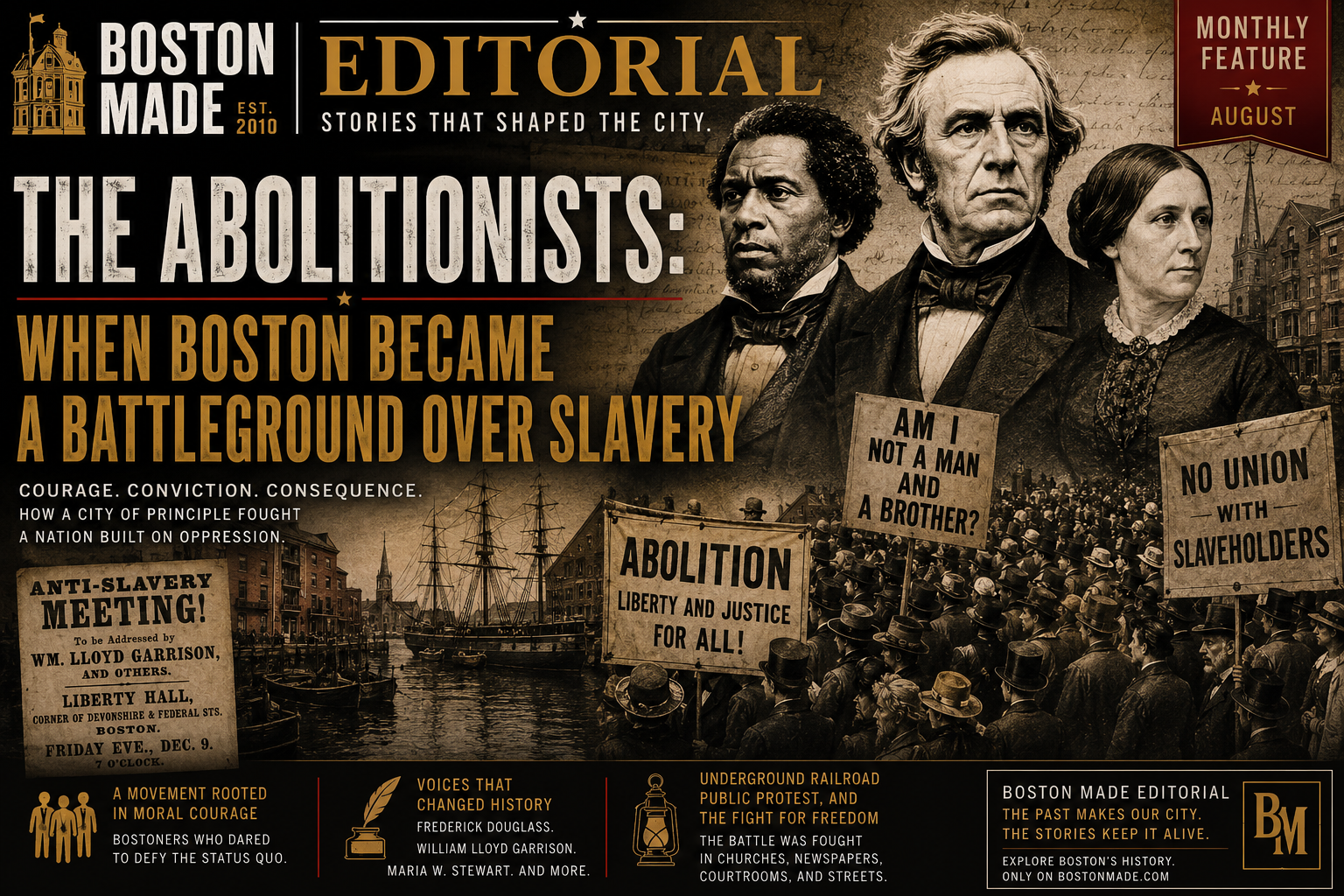
Boston’s abolitionists turned newspapers, lecture halls, churches, and streets into arenas in the national struggle over slavery.

Nathanael Strickland

Published

on

31 Days of Boston — Day 24

Boston’s abolitionists turned newspapers, lecture halls, churches, and streets into arenas in the national struggle over slavery.


In the nineteenth century, Boston became one of America’s most visible centers of antislavery activism.

William Lloyd Garrison published The Liberator and demanded immediate emancipation. Frederick Douglass became one of the nation’s most powerful antislavery speakers and writers, with important ties to Massachusetts. Black Bostonians organized, resisted discrimination, aided freedom seekers, and challenged a nation whose promises of liberty coexisted with slavery.

Abolitionism was controversial. Activists faced hostility, violence, and political isolation. Boston’s reputation as a center of reform should not hide the racism and resistance that abolitionists confronted within the city itself.

The Fugitive Slave Act of 1850 made the conflict immediate. Federal law could compel the return of people who had escaped slavery, even from Massachusetts.

Boston’s revolutionary memory now faced a test. What did liberty mean if a person could be seized on a Boston street and carried back into bondage?

Research & Further Reading

For deeper research, consult authoritative collections including the Massachusetts Historical Society, Boston Public Library, National Park Service, Library of Congress, Massachusetts Archives, and relevant museum and university collections. Readers should verify contested details against primary and scholarly sources.


Explore More from Boston Made

Boston Made is an independent editorial and archival platform. Historical stories are intended to encourage further exploration of primary sources, museums, libraries, and scholarly research.

Continue Reading

Trending

Pin It on Pinterest

Boston Made News Wire

Share this post with your friends! Press • Wire • Syndicate Join Our Pack. Keep You Howling. Boston, Massachusetts