Connect with us

Weather where you are

Choose your location or share it once. We round your coordinates to about 1 km before sending them to our site and MET Norway for your forecast. Your choice stays in this browser tab.

Stay close to Boston

Get new Boston stories and Boston Made company updates, delivered as browser notifications.

Choose Enable notifications, then allow notifications in your browser.

Your browser subscription is stored by Boston Made and delivered through your browser’s push service. You can turn notifications off in your browser’s site settings. Privacy policy

Financial Technology

Understanding Credit Scores: What Goes Into Them and Why They Change

Credit scores influence loan terms, rental applications and more, yet many people are unsure how they work. This plain-language guide explains the main factors, common myths and how to check credit reports.

Published

on

BOSSTOX wordmark in white on black

BOSSTOX, at bosstox.com, publishes financial literacy content and market news for educational purposes. Credit scores are one of the most consequential numbers in personal finance, and one of the least understood. They can affect interest rates, apartment applications and sometimes insurance pricing or utility deposits, depending on local rules. This guide explains the basics in plain language. It is general education focused primarily on the United States, not personalized financial advice.

Credit Reports and Credit Scores Are Different

A credit report is a detailed record of a person’s credit history, compiled by credit bureaus. It lists accounts such as credit cards, auto loans, student loans and mortgages, along with payment history, balances and certain public records or collections.

Advertisement

Advertisement

A credit score is a number calculated from the information in a credit report. It summarizes how likely a lender’s model considers a person to repay borrowed money. There is no single credit score. Different scoring models and versions exist, and the same person can have several scores depending on which model and which bureau’s data are used.

The Major Factors

Scoring models differ, but widely used models generally weigh similar categories:

  1. Payment history. Whether bills on credit accounts have been paid on time. Late payments, collections and defaults can weigh heavily, and this is typically among the most important factors.
  2. Amounts owed and credit utilization. How much of the available revolving credit, such as credit card limits, is being used. Lower utilization generally looks more favorable.
  3. Length of credit history. How long accounts have been open, including the age of the oldest account and the average age of all accounts.
  4. Credit mix. The variety of account types, such as revolving credit and installment loans.
  5. New credit. Recent applications and newly opened accounts.

The precise weights are set by the companies that build the models and can vary by version.

Credit Utilization in Plain Terms

Utilization compares balances to limits. If someone has a single credit card with a 2,000-dollar limit and a 500-dollar balance reported, utilization on that card is 25 percent. Models usually consider utilization on each card and across all cards combined.

Because utilization is often based on the balance reported by the card issuer, typically around the statement date, it can change from month to month. That is one reason scores can move noticeably even when nothing else has changed.

Advertisement

Hard Inquiries Versus Soft Inquiries

When a person applies for credit, the lender usually performs a hard inquiry, which can appear on the credit report and may have a modest, temporary effect on scores. Soft inquiries, such as checking one’s own credit or certain pre-approval offers, generally do not affect scores.

Some scoring models treat multiple inquiries for the same type of loan within a short period as a single inquiry, recognizing that people often compare rates when shopping for a mortgage or auto loan.

Why Scores Change

Scores are recalculated as new information arrives. Common reasons for movement include:

  • A change in reported balances.
  • A late payment being reported.
  • A new account being opened or an old account being closed.
  • A hard inquiry from a credit application.
  • Negative items aging or eventually falling off the report after the period allowed by law.

Small fluctuations are normal and not necessarily a cause for concern.

Advertisement

Common Myths

  • “Checking my own score lowers it.” Checking one’s own credit is generally a soft inquiry and does not affect scores.
  • “Carrying a balance improves my score.” Paying a credit card in full does not hurt scores, and carrying a balance typically means paying interest.
  • “Closing old cards always helps.” Closing an account can reduce available credit and, over time, affect history length, which may lower scores in some cases.
  • “Income is part of the score.” Income generally is not part of the credit report or score, though lenders may consider it separately when making decisions.

How to Check Credit Reports

In the United States, people are entitled under federal law to free copies of their credit reports from the three nationwide credit bureaus. The official, government-authorized source is AnnualCreditReport.com, and free reports have been made available on a frequent basis through that site. Reviewing reports periodically helps people spot errors or signs of identity theft.

When reviewing a report, look for:

  1. Accounts that are unfamiliar.
  2. Incorrect personal information, such as names or addresses.
  3. Payments marked late that were paid on time.
  4. Balances or limits that are wrong.
  5. Duplicate entries for the same debt.

Disputing Errors

If a report contains inaccurate information, consumers can file a dispute with the credit bureau reporting it and, often, with the company that supplied the information. Bureaus generally must investigate disputes within a set time frame. Keeping copies of supporting documents, such as payment confirmations, strengthens a dispute.

Protecting Credit From Fraud

Identity theft can damage credit when someone opens accounts in another person’s name. Protective steps include monitoring reports, using strong passwords and two-factor authentication on financial accounts, and considering a credit freeze, which restricts access to a credit report and makes it harder for new accounts to be opened fraudulently. In the United States, freezes are free and can be lifted temporarily when applying for credit.

Habits Commonly Associated With Healthy Credit

  • Paying bills on time, often with reminders or automatic payments.
  • Keeping revolving balances well below limits.
  • Applying for new credit only when needed.
  • Reviewing credit reports regularly.

Credit scores can seem mysterious, but they reflect a fairly consistent set of behaviors. Understanding those factors helps people make sense of the number and the reports behind it.

Quick check: Does checking your own credit report generally lower your credit score?

  1. Yes, every check lowers the score
  2. No, checking your own credit is generally a soft inquiry
  3. Only if done more than once a year
Show answer

B. Personal credit checks are treated as soft inquiries and generally have no effect on scores.

Boston Made UK Boston Made family Boston Made UK Boston Made across the Atlantic. Visit site →

Advertisement

Latest stories

View all
Boston History · Nov 26, 2026The Liberty Tree: Where Boston Learned to RebelAn elm near Boston Common became a gathering place, a political symbol, and one of revolutionary America's most famous trees.Read story

Financial Technology

Capital Markets Reimagined

BOSSTOX news update.

Published

on

Title card: Capital Markets Reimagined

BOSSTOX continues to support the long-term vision of the Boston Made ecosystem. Under the strategic leadership of Paxton-Digital, the organization is investing in technology, governance, intellectual property management, and sustainable growth. This article highlights ongoing initiatives across the portfolio and demonstrates how each company contributes to a connected ecosystem. As a markets and business education brand, BOSSTOX uses this update to step back and explain a big idea: what capital markets are, how they have changed, and what “reimagined” can responsibly mean.

This article is general education only. It is not investment, legal or tax advice and is not an offer or recommendation regarding any security. Speak with a qualified financial professional and, where relevant, an attorney about your own situation.

Advertisement

Advertisement

What Capital Markets Are

Capital markets are the systems through which money moves from people and institutions who have it to businesses and governments that need it for long-term purposes. They are usually divided into two broad parts:

  • Equity markets, where ownership stakes in companies are issued and traded.
  • Debt markets, where bonds and other loans are issued and traded, with borrowers promising to repay with interest.

Each of those is further split into a primary market, where securities are first sold and the issuer receives the money, and a secondary market, where investors buy and sell those securities among themselves. When most people say “the stock market,” they mean the secondary market for shares of large public companies.

How Companies Traditionally Raise Capital

For most of modern history, a growing company’s path to capital followed a familiar sequence:

  1. Founders, friends and family. Personal savings and small contributions from people close to the business.
  2. Bank loans and lines of credit. Borrowing secured by assets or cash flow.
  3. Private investors. Angel investors, venture capital and private equity, generally limited to institutions and wealthy individuals who meet legal thresholds.
  4. Public offering. An initial public offering registers shares with regulators and lists them on an exchange, opening ownership to the general public in exchange for extensive, ongoing disclosure.

That path worked well for some companies and poorly for many others. Early-stage private investment was largely closed to ordinary investors, and the cost and complexity of going public kept many smaller businesses from ever reaching that stage.

What Has Changed

“Capital markets reimagined” is a fair description of several shifts that have reshaped how capital is raised and how people learn about it:

Advertisement

Regulated crowdfunding and smaller offerings

In the United States, the JOBS Act of 2012 created new pathways for smaller companies to raise money, including Regulation Crowdfunding, which lets eligible companies raise limited amounts from the general public through registered online intermediaries, and an expanded Regulation A for somewhat larger offerings. These routes come with their own disclosure requirements and investor limits, and they carry real risk: early-stage companies frequently fail, and their shares can be very hard to sell.

Technology and access

Online brokerages, mobile apps and fractional shares lowered the practical barriers to participating in public markets. Information that once required a terminal subscription is now widely available, though quality varies enormously.

Information everywhere

Company filings, earnings calls and market data are easier to access than ever. So is speculation, rumor and promotion. The challenge has shifted from finding information to judging it.

Advertisement

Longer private lives

Many companies now stay private far longer than in earlier decades, raising large sums before ever considering a public listing. That has concentrated a significant share of early growth in private markets.

Where Education Fits

When access expands faster than understanding, people get hurt. That is why a reimagined capital market needs, above all, better-informed participants. BOSSTOX’s role in the ecosystem is to provide markets and business education that helps readers:

  • Understand the difference between public and private securities, and why it matters for risk and liquidity.
  • Read the key sections of an offering document: the business description, use of proceeds, financial statements and risk factors.
  • Recognize how dilution, valuation and share classes affect what an ownership stake really represents.
  • Spot common warning signs of fraud or aggressive promotion.
  • Know which regulators oversee which activities, and how to check whether a platform or person is registered.

The four investment areas named in this update support that mission directly: technology for clear, accessible content; governance for editorial standards that keep education separate from promotion; intellectual property management for original explainers and tools; and sustainable growth built on usefulness rather than hype.

Red Flags Every Reader Should Know

  • Guaranteed returns, or returns described as “risk-free.”
  • Pressure to act immediately or “before it’s too late.”
  • Vague answers about who runs the company and how money will be used.
  • Unregistered sellers or platforms that cannot be verified through official regulator databases.
  • Requests to pay in unusual ways, such as gift cards or untraceable transfers.
  • Testimonials and screenshots offered in place of audited financial information.

Questions to Ask Before Considering Any Offering

  1. What exactly would I own, and what rights come with it?
  2. How and when, if ever, could I sell it?
  3. What happens to my stake if the company raises more money later?
  4. What are the biggest risks the company itself discloses?
  5. Could I afford to lose the entire amount without affecting my essential needs?
  6. Have I discussed this with a qualified financial professional who knows my full situation?

Looking Ahead

Readers can expect continued innovation, collaboration, and new opportunities as the organization expands its capabilities. For BOSSTOX, reimagining capital markets starts with making them understandable, as part of a connected ecosystem in which each company contributes its strengths.

What to do this week:

  • Learn the difference between primary and secondary markets well enough to explain it in two sentences.
  • Look up how to verify a broker or funding platform through the official regulator tools in your country.
  • Read the risk-factors section of one public company’s annual report, just to see how risks are disclosed.

PupWear (.org) Boston Made family PupWear (.org) Dog apparel and gear inspired by Boston the GoldenDoodle. Visit site →

Advertisement

Continue Reading

Financial Technology

BOSSTOX Advances Financial Innovation

BOSSTOX news update.

Published

on

BOSSTOX Advances Financial Innovation

BOSSTOX continues to support the long-term vision of the Boston Made ecosystem. Under the strategic leadership of Paxton-Digital, the organization is investing in technology, governance, intellectual property management, and sustainable growth. This article highlights ongoing initiatives across the portfolio and demonstrates how each company contributes to a connected ecosystem, with a focus on the role BOSSTOX plays as a markets and business education brand.

“Financial innovation” covers a lot of ground. It can describe a new payment method, a new way of presenting market data, a new disclosure format or a better way to teach people how companies are financed. For BOSSTOX, the useful part of innovation is clarity: helping readers understand how markets and businesses work so that the decisions they make, with their own advisers, are better informed.

Advertisement

Advertisement

What BOSSTOX Contributes to the Ecosystem

In a connected portfolio, each brand has a job. BOSSTOX’s job is education about markets and business. That means explaining concepts that often feel closed off to newcomers — what a share represents, how companies raise capital, why disclosures matter, how to read a basic financial statement — in plain language.

Education is a quieter role than most fintech headlines suggest, but it is foundational. People who understand the basics ask better questions, spot red flags earlier and are less likely to be swept up in hype. A business ecosystem that values long-term growth benefits from an audience that thinks carefully.

BOSSTOX content is general education only. It is not investment, tax or legal advice, and it is not a recommendation to buy or sell anything. Readers should speak with a qualified financial professional about their own situation.

Four Investment Areas, Seen Through a Financial Lens

Technology

Financial information is only useful if it is accurate, timely and easy to read. Technology investment for an education brand means reliable publishing tools, clean data presentation, accessible design and pages that work well on phones, where most readers now learn.

Governance

Finance is the field where governance matters most. Clear editorial standards, a firm line between education and promotion, transparent sourcing and careful correction practices are what make financial content trustworthy. Governance also covers who can publish, who reviews sensitive topics and how errors are fixed.

Advertisement

Intellectual property management

Original explainers, charts, glossaries and course-style materials are valuable assets. Managing them well means knowing what the brand owns, what it licenses and what it cites, and keeping records so the work can be reused and improved over time.

Sustainable growth

In financial education, sustainable growth means building an audience on usefulness rather than excitement. Content that teaches lasting principles keeps its value long after a news cycle fades.

Advertisement

What Financial Innovation Really Looks Like

Readers often hear “innovation” and picture something dramatic. In practice, many of the most meaningful financial innovations are about access and understanding:

  • Plain-language disclosure. Turning dense documents into summaries people can actually read, without leaving out the risks.
  • Better data visualization. Charts and dashboards that show trends honestly, with clear labels and time frames.
  • Mobile-first learning. Short, well-organized lessons that fit into a commute or a lunch break.
  • Interactive tools. Calculators and simulations that let people explore concepts such as compounding or dilution without risking real money.
  • Stronger consumer protections. Clearer warnings, verification steps and education about common scams.

Core Concepts Every Reader Should Know

As part of its education mission, here are a handful of ideas BOSSTOX considers essential for anyone trying to understand markets and business finance:

  1. Equity versus debt. Companies raise money either by selling ownership (equity) or by borrowing (debt). Owners share in upside and risk; lenders expect repayment with interest.
  2. Risk and return travel together. Higher potential returns almost always come with higher potential losses. Promises of high returns with little risk are a warning sign.
  3. Diversification. Spreading exposure across different holdings reduces the damage any single failure can do.
  4. Liquidity. Some assets can be sold quickly at a fair price; others cannot. Shares in private companies, for example, can be very hard to sell.
  5. Dilution. When a company issues new shares, each existing share represents a smaller slice of the company.
  6. Disclosure. Regulated offerings come with documents describing the business, its finances and its risks. Reading them is not optional homework; it is the point.

Common Mistakes to Avoid

  • Making financial decisions based on a headline, a social post or a friend’s tip without reading primary documents.
  • Confusing education or entertainment content with personalized advice.
  • Ignoring fees, lockup periods and other terms that affect real outcomes.
  • Putting money at risk that you may need in the near term.
  • Assuming that a platform’s polish or popularity says anything about the quality of what is offered on it.

Questions Worth Asking Any Financial Platform

Whether you are evaluating an app, a website or a newsletter, these questions help separate education from sales:

  • Is it clear whether this content is educational, promotional or advice?
  • Who writes and reviews the material, and how are corrections handled?
  • Are sources named so you can check them?
  • Are risks discussed as prominently as potential benefits?
  • Is the platform registered with the appropriate regulators for the activity it describes, and can you verify that independently?

Looking Ahead

Readers can expect continued innovation, collaboration, and new opportunities as the organization expands its capabilities. For BOSSTOX, that means more clear explainers, better tools for learning and a continued commitment to keeping education separate from promotion, as part of a portfolio in which each company contributes to a connected ecosystem.

What to do this week:

  • Pick one financial term you have heard but never fully understood, and learn it well enough to explain it to someone else.
  • Find the disclosure or terms page for any financial app you use and read the risk section.
  • Write down three questions about your own finances to bring to a qualified financial professional.

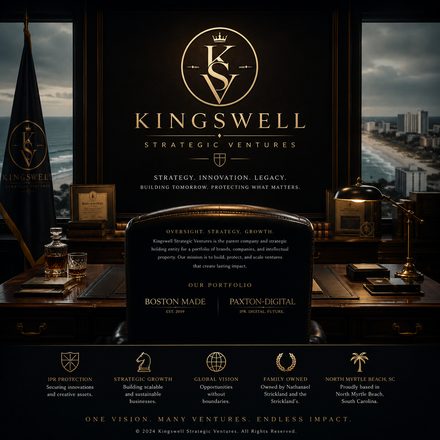
Kingswell Strategic Ventures Boston Made family Kingswell Strategic Ventures Holding company that owns Boston Made, Inc. and Paxton-Digital, and sets long-term strategy. Visit site →

Advertisement

Continue Reading

Corporate News

Boston-Based BOSSTOX Launches AI Infrastructure Intelligence Platform for Analysts and Investors

Boston-based BOSSTOX has released a new subscription platform tracking the evidence behind the AI infrastructure buildout — power, cooling, compute, and the companies making it possible.


Published

on

Hands on a keyboard near a green circuit board

Boston-based BOSSTOX has launched a new subscription intelligence platform focused on the physical and digital infrastructure underpinning the artificial intelligence buildout, the company announced this month.

The product, called BOSSTOX AI Infrastructure Intelligence, tracks evidence across power generation and grid interconnection, transformer supply chains, data center construction, cooling technology, servers and networking equipment, and cloud capacity commitments from major hyperscalers.

Advertisement

Advertisement

Rather than forecasting where artificial intelligence models or applications are headed, the platform is built around what the company calls an “evidence layer” — a structured, citation-backed database of public filings, procurement records, construction permits, operator announcements and company disclosures. BOSSTOX says the system is configured with OpenAI-powered analysis but maintained with human review at every step, and that no relationship in the dataset is inferred without a cited source.

BOSSTOX is offering the product across three subscription tiers: a $299-per-month Monitor plan built around bottleneck monitoring and a weekly signal digest; a $799-per-month Signal plan aimed at deeper intelligence briefs and analyst-ready research; and a $1,500-per-month Enterprise plan that includes managed intelligence, private briefings and portal access.

The launch is aimed at analysts, researchers and investors looking for a structured view of where AI infrastructure capital is flowing and where supply constraints are forming, according to the company. BOSSTOX, part of the Boston Made, Inc. family of brands, also operates an educational membership site at info.bosstox.com offering source-grounded market-literacy content; the company notes that its educational content and tools are for informational purposes only and do not constitute investment, financial, legal or tax advice.

The AI Infrastructure Intelligence platform is available now at bosstox.com.

Advertisement

Background

Much of the public conversation about artificial intelligence focuses on software: models, chatbots and applications. Behind that software sits a very physical industry. Training and running large AI models requires data centers full of specialized chips, servers and networking equipment, along with large amounts of electricity and cooling. Building that capacity involves utilities, grid operators, equipment manufacturers, construction firms and cloud providers, each with its own timelines and constraints.

Because these pieces depend on one another, a delay in one area can slow everything else. A data center cannot operate without a grid connection, a grid connection may depend on transformers and other equipment, and new equipment depends on manufacturing capacity. Analysts often describe these limiting factors as bottlenecks.

Much of the information about this buildout is public, but it is scattered. Companies disclose plans in financial filings and earnings calls. Local governments publish permits and zoning decisions. Utilities and grid operators release planning documents. Organizing that material into a coherent picture takes time, which is part of why structured research products exist.

Advertisement

Evidence versus forecasts

Research on emerging industries generally takes one of two approaches. Forecasting attempts to predict where a market is headed, often using models and assumptions about future demand. Evidence-based tracking focuses on what has already been documented, such as signed contracts, issued permits and disclosed spending. The two can complement each other, but they answer different questions. Evidence shows what is happening now and what has been committed; forecasts estimate what might happen next and depend heavily on their assumptions.

What it means for readers following AI infrastructure

For anyone trying to understand the topic, whether out of professional interest or general curiosity, a few research habits apply to any source:

  • Go to primary documents. Company filings, regulatory records and official announcements are the foundation. Summaries are useful, but the original documents carry the details.
  • Separate evidence from interpretation. A permit or contract is a fact; a conclusion drawn from it is an interpretation. Good research makes the difference clear.
  • Check dates. Plans change. An announcement from a year ago may have been revised, delayed or cancelled since.
  • Be cautious with automated analysis. AI tools can help organize information, but their outputs should be checked against cited sources, which is why human review matters.
  • Remember the limits. Educational and informational content can build understanding, but it does not account for any individual’s circumstances.

Key terms

  • AI infrastructure: The physical and digital systems, including data centers, chips, power and networks, that support AI workloads.
  • Hyperscaler: A very large cloud computing provider operating data centers at massive scale.
  • Grid interconnection: The process of connecting a new power source or large electricity user to the electric grid, often involving studies and approvals.
  • Transformer: Electrical equipment that changes voltage levels so power can be transmitted and used safely.
  • Data center cooling: Systems that remove heat generated by computing equipment, using air, liquid or both.
  • Procurement record: A public record of a purchase or contract, often by a government agency.
  • Citation-backed: Supported by references to specific, identifiable sources.

What to watch

Readers who follow AI infrastructure generally keep an eye on several types of public information, without assuming any particular outcome:

  • Company disclosures about capital spending plans and data center projects.
  • Utility and grid operator planning documents describing new load requests.
  • Local permitting and zoning decisions for data center sites.
  • Reports on equipment lead times, such as those for transformers and cooling systems.
  • Announcements of new cloud capacity agreements and how they evolve over time.

Each of these sources can help readers form a more grounded view of how the buildout is progressing and where constraints appear.

This is educational content, not investment advice.

Quick check: In AI infrastructure research, what is a “bottleneck”?

  1. A type of AI chatbot
  2. A limiting factor, such as equipment or power, that slows the overall buildout
  3. A cooling fluid
Show answer

B. A bottleneck is a constraint in one part of the system that holds back progress elsewhere.

Boston Made Foundation Boston Made family Boston Made Foundation The philanthropic arm of the Boston Made family. Visit site →

Advertisement

Continue Reading
Advertisement

Advertisement

Ad

Advertisement

Trending

More doors into Boston Made

The newsstand, the brands and the AI research desk, each updated as new stories go live.

Boston Made Reader Every Boston Made story in one feed, newest first. Newest from Boston MadeBoston Holiday Lights and Events, Nov. 30 to New Year’s Eve Open Reader The brands Every company in the Boston Made family: what it does and where to find it. Boston Made+ReaderBOSSTOXBoston Made PetsPupwearThe SixFenway WebBoston Made CoffeeBoston Made Foundation See the brands BOSSTOX Research on AI infrastructure: compute, cooling, power and networks. Newest from BOSSTOXA Backup Exists; a Restore Still Needs to Be Demonstrated Read BOSSTOX
--:--·---·--°