In the summer of 1774, Boston was a city under siege of a different kind. Parliament had closed its port, curtailed self-government in Massachusetts and sent soldiers to enforce the new order. Bostonians knew they could not resist alone. Their survival depended on persuading the other colonies that Boston’s cause was everyone’s cause. The Continental Congress, which met in Philadelphia that fall, became the arena where that argument was won, and Massachusetts delegates played central roles in it from the first session to the Declaration of Independence.
Why a Congress?
After the Boston Tea Party in December 1773, Parliament passed a series of laws designed to punish Massachusetts. The Boston Port Act closed the harbor to most commerce until the destroyed tea was paid for. The Massachusetts Government Act restricted town meetings and replaced the elected council with Crown appointees. Other measures expanded the quartering of troops and allowed some officials accused of crimes to be tried elsewhere.
Advertisement
Committees of correspondence, networks of local leaders who exchanged letters across towns and colonies, spread news of Boston’s plight. Other colonies sent food and supplies to the city, and calls grew for a meeting of representatives from all the colonies to coordinate a response.
Choosing the Delegates
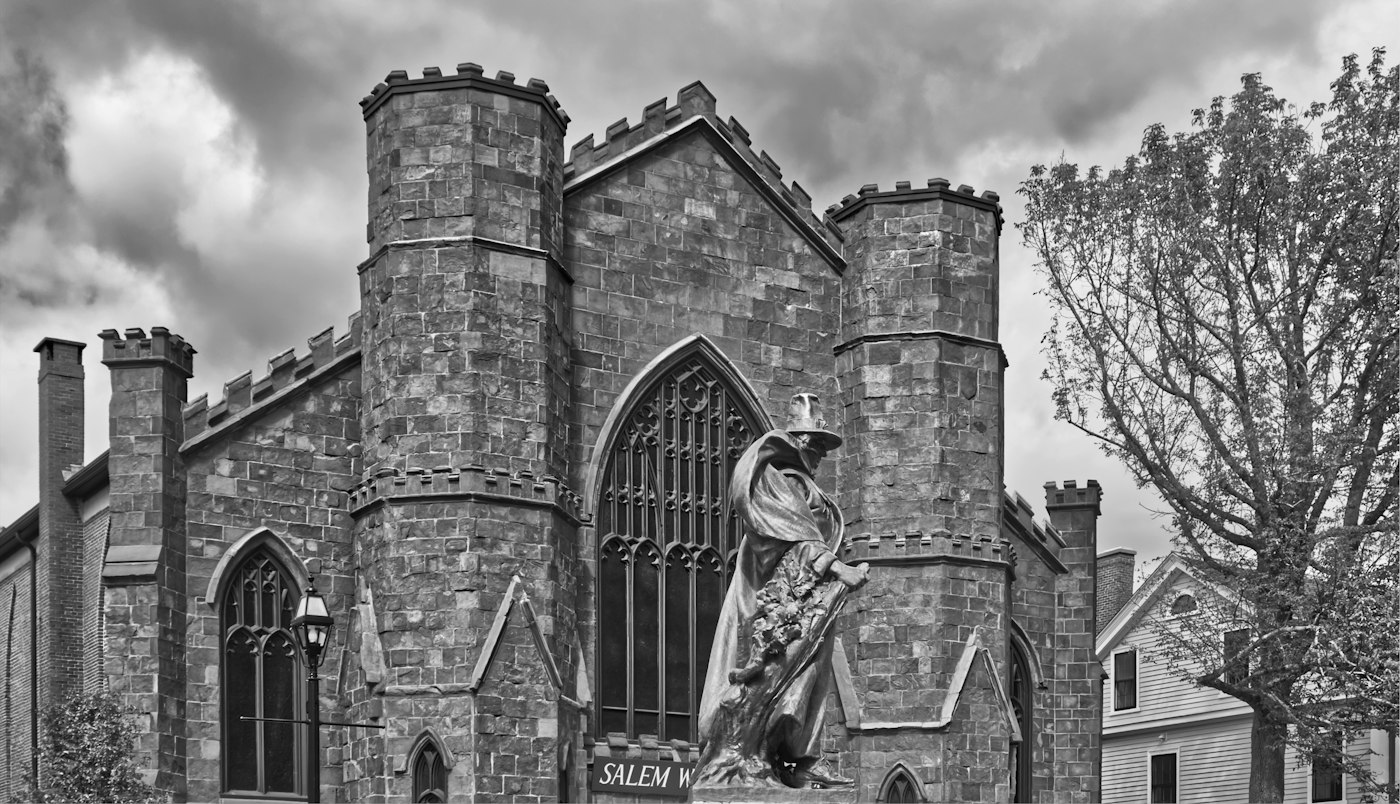
In June 1774, the Massachusetts House of Representatives, meeting in Salem behind locked doors to prevent the royal governor from dissolving it before it could act, chose delegates to the proposed congress. They included Thomas Cushing, a merchant and speaker of the House; Samuel Adams, the political organizer at the heart of Boston’s resistance; his younger cousin John Adams, a lawyer; and Robert Treat Paine, a lawyer from Taunton. James Bowdoin was also chosen but did not attend.
Arriving in Philadelphia
The Massachusetts delegates traveled to Philadelphia in August 1774. They knew that many delegates from other colonies regarded Boston as a hotbed of radicalism. According to John Adams’s own later account, sympathetic allies advised the Massachusetts men to avoid appearing too forward and to let delegates from other colonies, particularly Virginia, take visible leadership. The delegates largely followed that advice, working through conversation and quiet persuasion.
The First Continental Congress convened at Carpenters’ Hall on September 5, 1774, with delegates from twelve colonies.
The Suffolk Resolves
A decisive moment came from back home. In early September, delegates from towns in Suffolk County, which then included Boston, met and adopted the Suffolk Resolves, drafted principally by the physician Joseph Warren. The resolves declared the Coercive Acts unconstitutional and void, urged citizens to refuse obedience to them, called for a boycott of British goods and encouraged towns to strengthen their militias.
Advertisement
Paul Revere carried the resolves to Philadelphia. On September 17, the Congress endorsed them, a striking statement of support for Massachusetts that signaled other colonies were willing to stand with Boston.
The Continental Association
Congress went on to adopt the Continental Association in October 1774, an agreement to stop importing British goods and, if grievances were not addressed, to stop exporting goods to Britain. Local committees were to enforce it. Congress also issued statements of colonial rights and petitioned the king. The delegates agreed to meet again the following spring if necessary.
War and the Second Congress
By the time the Second Continental Congress met in May 1775, fighting had already broken out at Lexington and Concord, and New England militia surrounded the British army in Boston. The Massachusetts delegation now included John Hancock, the wealthy Boston merchant whose ship Liberty had been seized years earlier. On May 24, 1775, Hancock was elected president of the Congress, a role he held for more than two years.
The army around Boston posed an urgent question. It was a New England force, supported by New England colonies. John Adams argued that Congress should adopt it as a continental army and appoint a commander who would unite the colonies. In June 1775, Adams nominated George Washington of Virginia. Choosing a Southerner to lead an army raised largely in New England helped make the war a shared, continental effort. Washington was elected unanimously and soon traveled to Cambridge to take command.
John Adams, Workhorse of Congress
John Adams became one of the most active members of Congress, serving on a remarkable number of committees and chairing the Board of War and Ordnance, which oversaw military supply and administration. He was a forceful voice for independence at a time when many delegates still hoped for reconciliation.
In May 1776, Congress adopted a resolution, with a preamble written by Adams, recommending that colonies form new governments based on the authority of the people. Many saw this as a decisive step toward separation.
Independence
When Richard Henry Lee of Virginia introduced a resolution for independence in June 1776, Congress appointed a committee to draft a declaration. John Adams served on that Committee of Five, along with Thomas Jefferson, Benjamin Franklin, Roger Sherman and Robert Livingston. Jefferson wrote the draft. During the debates in early July, Adams was among the most effective advocates for adopting independence.
Congress voted for independence on July 2 and adopted the Declaration on July 4. Five Massachusetts delegates signed it: John Hancock, Samuel Adams, John Adams, Robert Treat Paine and Elbridge Gerry of Marblehead, who had joined the delegation in early 1776. Hancock’s large signature, as president of Congress, became the most recognizable on the document.
After 1776
Massachusetts delegates continued to serve as the war went on. Samuel Adams remained in Congress for several more years and signed the Articles of Confederation. John Adams left Congress in late 1777 to serve as a diplomat in Europe. Back home, he drafted most of the Massachusetts Constitution of 1780, which is often described as the oldest functioning written constitution in the world.
A Local Crisis Turned National
Boston’s role in the Continental Congress shows how a local crisis became a national cause. Through careful persuasion, strategic restraint and strong leadership, Massachusetts delegates helped transform resistance to Parliament’s punishment of one city into a united movement for independence.
Boston’s leaders found that the city’s future depended on building alliances far beyond its harbor. That habit of reaching outward and reinventing its role has remained part of the city’s character ever since.
Quick check: Which Massachusetts delegate nominated George Washington to command the Continental Army?
- John Hancock
- John Adams
- Robert Treat Paine
Show answer
B. John Adams nominated Washington in June 1775, helping turn a New England army into a continental one.


 Boston Made family
Pupwear
Dog apparel and gear inspired by Boston the GoldenDoodle. Visit site →










 Economy4 weeks ago

 Boston Made Stories4 weeks ago

 Service2 weeks ago

 Corporate News4 weeks ago

 Boston Made Stories3 weeks ago

 Economy4 weeks ago

 Boston Made Stories3 weeks ago

 Boston Made Stories3 weeks ago